
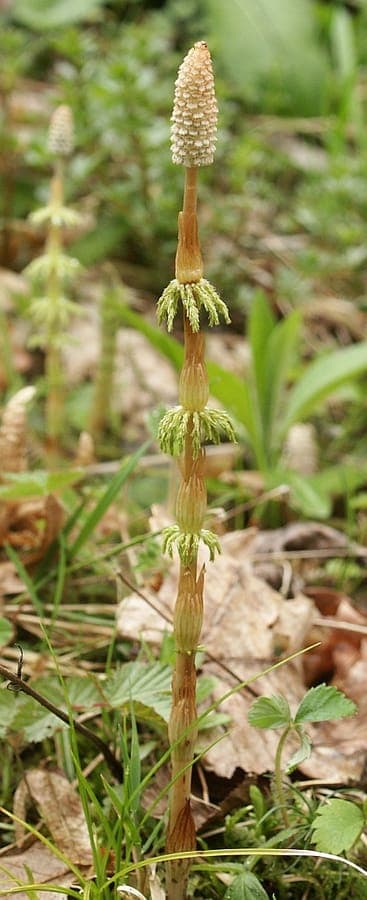
Wikimedia Commons / CC BY-SA 3.0, via Wikimedia Commons
Wood horsetail: complete guide
Equisetum sylvaticum
Want to see Wood horsetail: complete guide in your garden?
1 minute, no credit card
Overview
Wood horsetail (Equisetum sylvaticum) is a graceful, ancient plant that brings a soft, feathery texture to shaded, damp corners of the garden. Unlike flowering perennials, it reproduces via spores and spreads through underground rhizomes, making it a survivor from prehistoric times. Native to moist woodlands across northern Europe and parts of North America - including regions like British Columbia, the Baltic States, and Scandinavia - this forb thrives where few other plants dare: in consistently wet, acidic soil under dappled shade.
It's not a plant for every garden, though. Wood horsetail can be vigorous, even invasive, if not managed properly. But in the right setting - a wild garden, a boggy edge, or a shaded stream bank - it's a standout. On gardenworld.app, you can design a moisture-rich planting scheme that integrates this species seamlessly with other shade lovers.
Appearance & bloom cycle
Wood horsetail reaches 30 to 60 cm in height and forms upright, hollow stems with a distinctive, airy branching pattern. Each segment gives rise to whorls of delicate, drooping side branches, creating a lacy, almost fern-like silhouette. In early spring (April to June), fertile stems appear first - shorter, tan-coloured, and topped with brown spore cones. These fade quickly, making way for the green, sterile stems that dominate through summer.
There's no traditional bloom; instead, the plant's ornamental appeal lies in its texture and seasonal rhythm. The foliage remains fresh until autumn, when it turns yellow and dies back. On gardenworld.app, bloom months are logged as April, May, and June, reflecting its active reproductive window.
Ideal location
This species prefers light to full shade, scoring a 4 on the light scale (1 = full shade, 10 = full sun). It thrives under deciduous trees like alder or birch, where spring sun filters through before leaf canopy closes. Avoid hot, south-facing sites - direct midday sun will scorch the stems and dry out the soil too fast.
Ideal spots include north-facing slopes, woodland edges, or beside a pond where humidity stays high. If you're planting in an urban garden, consider a sheltered courtyard or a shaded patio with consistent moisture.
Soil requirements
Wood horsetail demands acidic to slightly acidic soil, with a pH between 4.0 and 6.5. It loves organic-rich, moisture-retentive substrates like peat-loam or silty clay. Sandy soils are too free-draining unless heavily amended with compost or leaf mould.
Never add lime or alkaline fertilisers - they'll raise the pH and weaken the plant. If your soil is neutral or alkaline, consider growing it in a raised bog bed or a semi-submerged container. A soil test from your local garden centre or the analysis tool on gardenworld.app can help determine if your site is suitable.
Free design
Want to see Wood horsetail: complete guide in your garden? Make a free design now.
Watering
Consistent moisture is non-negotiable. The soil should never dry out - even brief droughts can cause stems to collapse. During dry spells in summer, water deeply two to three times per week. In naturally wet areas, irrigation may not be needed at all.
This plant tolerates standing water for short periods and can grow at the margins of ponds or in rain gardens. Just ensure the water isn't stagnant for weeks, as poor oxygen levels can damage rhizomes.
Pruning
No regular pruning is required. Let the stems die back naturally in autumn. Cut them down to ground level in late November or December to tidy the bed and reduce spore spread.
If the plant starts spreading beyond its bounds, install a root barrier (at least 50 cm deep) to contain the rhizomes. Never compost the trimmings - the tough stems decompose slowly and may regrow from spores.
Maintenance calendar
- January: Dormant. Check for waterlogged soil.
- February: Prepare soil if accessible. Add compost if not frozen.
- March: Keep soil moist. Remove any lingering debris.
- April: Fertile stems emerge. Begin consistent watering.
- May: Sterile stems develop. Monitor spread.
- June: Peak growth. No feeding required.
- July–August: Water frequently during dry spells.
- September: Reduce watering as growth slows.
- October: No pruning yet.
- November: Cut back dead stems.
- December: Dormancy. Minimal care needed.
Winter hardiness
Wood horsetail is fully hardy in USDA zones 3–8. It withstands freezing temperatures without protection. The top growth dies back, but rhizomes survive deep in the soil. In areas with harsh winters, a light mulch of leaf litter can offer extra insulation, though it's rarely necessary.
Companion plants
Pair with moisture-loving, shade-tolerant species: yellow archangel (Lamiastrum galeobdolon), marsh marigold (Caltha palustris), sweet woodruff (Galium odoratum), and Carex species like C. remota. Avoid drought-tolerant plants such as lavender or sedum - they'll struggle in the same conditions.
A mixed planting of these companions creates a naturalistic, woodland feel, perfect for wild gardens.
Closing
Wood horsetail isn't for the tidy, formal garden, but it shines in naturalistic designs. With the right conditions - acidic, wet soil and shade - it grows reliably and adds a prehistoric elegance. Just be mindful of its spreading habit.
You can find Equisetum sylvaticum at garden centres across the UK and North America. Use gardenworld.app to visualise how it fits into your shade garden layout and plan companion plantings ahead of time.
Want to see Wood horsetail: complete guide in your garden? Make a free design now.
Upload a photo, pick a style, and get a photorealistic design with plant list in under a minute.
No credit card required


Similar plants
Meadow horsetail: complete guide
Equisetum pratense
Meadow horsetail (Equisetum pratense): primitive spore-plant for wet meadows. Growing tips, management, and landscape design uses.
Common horsetail: complete guide
Equisetum arvense
Discover how to grow and care for Common horsetail (Equisetum arvense) in your garden, with tips on planting, watering, and controlling its spread in moist soils.
River horsetail: complete guide
Equisetum fluviatile
River horsetail (Equisetum fluviatile) thrives in wet, acidic soils and shallow water. Ideal for ponds and bog gardens in USDA zones 3-8.