
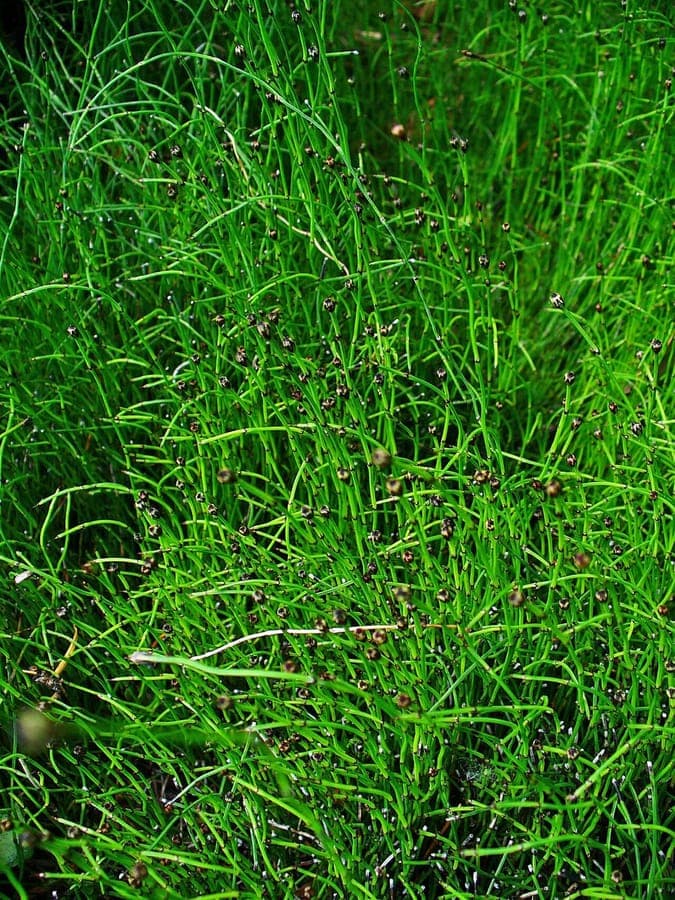
H. Zell / CC BY-SA 3.0, via Wikimedia Commons
Dwarf scouringrush: complete guide
Equisetum scirpoides
Want to see Dwarf scouringrush: complete guide in your garden?
1 minute, no credit card
Overview
Dwarf scouringrush (Equisetum scirpoides) is a small, herbaceous perennial that brings a prehistoric charm to modern gardens. Unlike flashy ornamentals, this plant thrives quietly in wet, shady corners where few others survive. Native to cool regions including Alaska, British Columbia, the Baltic States, and parts of Siberia, it's built for resilience. It spreads slowly via underground rhizomes and forms a dense, moss-like carpet 5–15 cm tall. Its upright, jointed stems are dark green and hollow-classic traits of the Equisetaceae family. If you're dealing with soggy soil under trees or along a stream, this plant could be your best ally. On gardenworld.app, you can design a layout that uses Dwarf scouringrush to solve wet area challenges in your garden.
Appearance & bloom cycle
Don't expect flowers-this is a spore-bearing plant, like its ancient relatives. In early spring (March to May), fertile stems emerge with a small, cone-shaped strobilus at the tip. These turn brown and release spores before dying back. The rest of the year, the plant stays green with fine, rush-like stems that grow in clusters. It doesn't die back completely in winter but may turn slightly dull or bronzed in harsh conditions. The visual appeal lies in its texture and uniform growth habit-perfect for subtle, naturalistic designs.
Ideal location
Choose full shade to partial shade. Dwarf scouringrush struggles in hot afternoon sun, which can scorch its delicate stems. Ideal spots include the edge of a pond, a bog garden, or beneath deciduous trees like alder or birch where light is dappled. It also works well in shaded rock crevices with consistent moisture. Because it spreads, consider using a root barrier or planting it in a submerged pot to prevent it from creeping into unwanted areas. For gardeners in urban settings, this plant fits well in shaded courtyard gardens with high humidity. Check gardenworld.app for custom planting schemes that feature this plant in damp, low-light zones.
Soil requirements
The soil must stay consistently moist. A mix rich in organic matter-like composted leaf mold or well-rotted compost-works best. The pH should be slightly acidic to neutral (5.5–7.0). Avoid heavy clay unless amended with grit and organic material. In containers, use a blend of loam, compost, and coarse sand. This plant tolerates periodic flooding but not drought. If your soil drains too fast, add a layer of mulch to lock in moisture.
Free design
Want to see Dwarf scouringrush: complete guide in your garden? Make a free design now.
Watering
Keep the soil damp year-round. During summer (June–August), water daily if in pots or during dry spells. In the ground, natural rainfall may suffice in temperate zones, but check weekly. If the top 2 cm of soil feels dry, it's time to water. Use rainwater when possible-this plant prefers it over chlorinated tap water. Overhead misting helps in dry, sheltered spots where humidity drops.
Pruning
No pruning is needed for shaping, but you can trim back tired or damaged stems in late winter or early spring (February–March). Use sharp scissors for clean cuts. If the plant spreads beyond its zone, dig and divide it, or install a physical barrier. Regular trimming isn't necessary, but removing old growth encourages fresh, upright stems.
Maintenance calendar
- Jan: Inspect for frost damage
- Feb: Cut back old stems
- Mar: Watch for spore cones and new growth
- Apr: Maintain soil moisture
- May: Monitor spread in borders
- Jun: Water daily in heat
- Jul: Check for drying edges
- Aug: Continue consistent watering
- Sep: Reduce watering slightly
- Oct: Leave stems for winter interest
- Nov: No action needed
- Dec: Mulch lightly in exposed areas
Winter hardiness
Dwarf scouringrush is hardy in USDA zones 3–8. It survives temperatures down to -40°C. In milder zones, it remains evergreen; in colder areas, it may look ragged but rebounds fast in spring. No winter protection is usually required, though a thin mulch of pine needles or straw helps in windy or dry sites.
Companion plants
Pair it with moisture-loving plants like Japanese fern (Dryopteris erythrosora), Carex vulpinoidea, or Iris versicolor. Avoid aggressive spreaders like mint or goldenrod that could overwhelm it. Its low height makes it ideal as a foreground plant in shaded beds. It also looks great beside mossy stones or in woodland troughs. You might find it at garden centres like those in the UK that specialize in bog plants, or online nurseries with a focus on native species.
Closing
Dwarf scouringrush won't win flower shows, but it's a quiet hero for tough garden spots. With minimal care and a knack for thriving where others fail, it earns its place in any damp, shady corner. Just keep its spread in check. Whether you're building a bog garden or reviving a soggy patch under trees, this plant delivers texture and resilience. For design ideas that highlight its strengths, browse planting plans on gardenworld.app-where practical solutions meet beautiful garden layouts.
Want to see Dwarf scouringrush: complete guide in your garden? Make a free design now.
Upload a photo, pick a style, and get a photorealistic design with plant list in under a minute.
No credit card required


Similar plants
Meadow horsetail: complete guide
Equisetum pratense
Meadow horsetail (Equisetum pratense): primitive spore-plant for wet meadows. Growing tips, management, and landscape design uses.
Common horsetail: complete guide
Equisetum arvense
Discover how to grow and care for Common horsetail (Equisetum arvense) in your garden, with tips on planting, watering, and controlling its spread in moist soils.
River horsetail: complete guide
Equisetum fluviatile
River horsetail (Equisetum fluviatile) thrives in wet, acidic soils and shallow water. Ideal for ponds and bog gardens in USDA zones 3-8.