
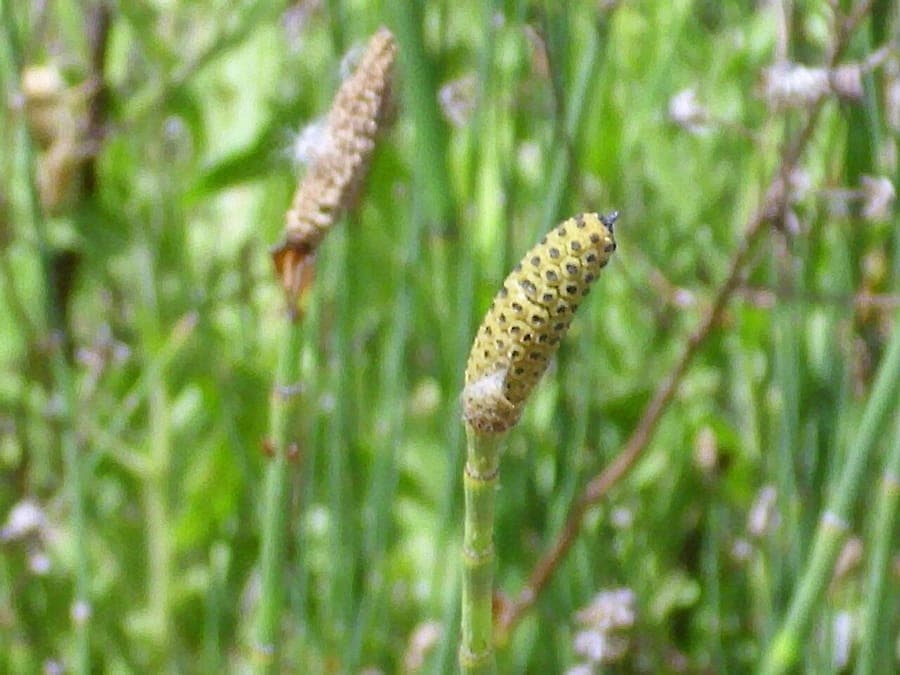
Javier martin / Public domain, via Wikimedia Commons
Branched horsetail: complete guide
Equisetum ramosissimum
Want to see Branched horsetail: complete guide in your garden?
1 minute, no credit card
Overview
Equisetum ramosissimum, known commonly as branched horsetail, is a strikingly primitive plant from the Equisetaceae family. It's not a flowering plant but a living fossil, with ancestors dating back over 300 million years. This species thrives in damp, shady spots across Europe, North Africa, and parts of Asia-from Austria and Belarus to Bangladesh and Angola. In gardens, it brings a unique, almost otherworldly texture thanks to its fine, bushy stems and upright habit.
Unlike many ornamental plants, it spreads via underground rhizomes and can become invasive if not controlled. However, its resilience and ability to thrive where few others survive make it a valuable addition to specific garden settings. It's not one for the formal border, but perfect for wild corners, pond edges, or bog gardens.
If you're designing a wetland-style space, gardenworld.app offers custom garden plans that integrate branched horsetail seamlessly into your layout.
Appearance & bloom cycle
Branched horsetail forms dense clumps of slender, jointed stems that reach 30–60 cm in height. The stems are hollow, segmented, and bright green, with multiple tiers of delicate, whorled branches that give it a soft, feathery look. This dense branching is what sets it apart from the sparser Equisetum arvense.
It doesn't flower in the traditional sense. Instead, in early spring (March to May), fertile stems appear-short, tan-colored cones on non-branching stalks. These release spores into the air before dying back. The green, branched stems emerge shortly after and persist from May through October.
The plant dies back completely in winter, with new shoots emerging in March. There's no autumn color-just a clean retreat underground until the next season.
Ideal location
Full shade to partial shade is best. While it can tolerate morning sun, direct afternoon sun in summer scorches the stems, especially in USDA zones 7 and above. A spot under deciduous trees, along a stream, or at the edge of a pond mimics its natural habitat.
If planting in containers-recommended to limit spread-use a pot at least 30 cm deep and place it where it gets dappled light. Avoid south-facing, exposed areas.
You can find branched horsetail at garden centres across the UK and North America. Look for it in spring, often sold in aquatic plant sections or shade plant aisles.
Free design
Want to see Branched horsetail: complete guide in your garden? Make a free design now.
Soil requirements
It demands consistently moist to wet soil. Heavy clay that retains water works well, as long as it's not compacted. A mix of loam, compost, and leaf mould helps retain moisture while providing nutrients. The ideal pH is between 5.5 and 7.5-slightly acidic to neutral.
Avoid sandy soils unless amended with organic matter. If your garden is dry, consider creating a sunken bed or bog garden to keep the root zone wet.
Watering
Keep the soil constantly damp. In summer, potted plants may need watering daily. Use rainwater when possible-branched horsetail is sensitive to lime and chlorine in tap water.
For containers, place the pot in a saucer with 2–3 cm of water, but ensure the base isn't sitting directly in it to prevent rot. Check moisture levels every few days, especially during heatwaves.
Pruning
No pruning is required. Remove dead or damaged stems in early spring (March) to make room for new growth. If the plant spreads too aggressively, cut back outer shoots and install a root barrier (at least 50 cm deep) to contain rhizomes.
Wear gloves when handling-some people experience skin irritation from the silica-rich sap.
Maintenance calendar
- January: Dormant; no action needed
- February: Check potted plants for root rot
- March: Cut back old stems; watch for new shoots
- April: Fertile cones appear; increase watering
- May: Full growth begins; keep soil moist
- June: Monitor for sun scorch in hot climates
- July: Watch for spreading; install barriers if needed
- August: Maintain consistent moisture
- September: Growth slows; reduce watering frequency
- October: Stems yellow and die back
- November: Leave dead stems for winter texture or remove
- December: Fully dormant; protect pots from hard frost
Winter hardiness
Hardy in USDA zones 5–9 (-20°C to -1°C). The plant dies to the ground in winter but regrows from rhizomes in spring. Potted specimens should be moved to a sheltered spot or wrapped in hessian to protect roots from freezing.
Companion plants
Pair it with moisture-loving species like yellow flag iris (Iris pseudacorus), ferns (Dryopteris spp.), marsh marigold (Caltha palustris), or sedges (Carex comans). It also contrasts well with bold-leaved plants like Ligularia or hostas.
For a cohesive wetland design, gardenworld.app features curated planting schemes that include branched horsetail as a textural backbone.
Closing
Branched horsetail isn't for every garden-it demands specific conditions and can spread fast. But in the right setting, it adds a prehistoric elegance that few plants can match. Think beyond neat borders and embrace its wild nature. With careful planning, perhaps using tools from gardenworld.app, you can create a damp, shaded haven where this ancient plant truly thrives.
Want to see Branched horsetail: complete guide in your garden? Make a free design now.
Upload a photo, pick a style, and get a photorealistic design with plant list in under a minute.
No credit card required


Similar plants
Meadow horsetail: complete guide
Equisetum pratense
Meadow horsetail (Equisetum pratense): primitive spore-plant for wet meadows. Growing tips, management, and landscape design uses.
Common horsetail: complete guide
Equisetum arvense
Discover how to grow and care for Common horsetail (Equisetum arvense) in your garden, with tips on planting, watering, and controlling its spread in moist soils.
River horsetail: complete guide
Equisetum fluviatile
River horsetail (Equisetum fluviatile) thrives in wet, acidic soils and shallow water. Ideal for ponds and bog gardens in USDA zones 3-8.