
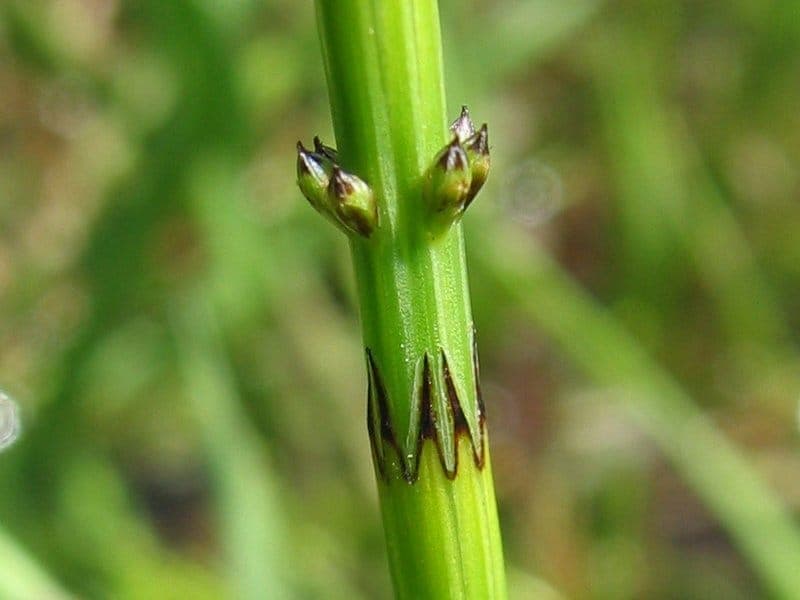
Kristian Peters -- Fabelfroh 16:29, 12 August 2006 (UTC) / CC BY-SA 3.0, via Wikimedia Commons
Marsh horsetail: complete guide
Equisetum palustre
Want to see Marsh horsetail: complete guide in your garden?
1 minute, no credit card
Overview
Marsh horsetail, or Equisetum palustre, is a primitive perennial that brings a prehistoric feel to modern gardens. This non-flowering herb, part of the Equisetaceae family, thrives in consistently moist soils and partial shade. Native across much of Europe, northern Asia, and parts of North America, it's a tough survivor that spreads via rhizomes and returns reliably each spring from USDA zones 4 to 7. While not a true fern, its segmented, hollow stems resemble miniature bamboo and give it a unique texture in garden beds.
In the wild, you'll find it along ditches, in wet woodlands, or low-lying meadows. In gardens, it performs best when planted near water features or in damp borders. On gardenworld.app, you can create a custom garden layout that factors in moisture levels and light exposure to find the perfect spot for this ancient-looking plant.
Appearance & bloom cycle
Marsh horsetail grows 20 to 60 cm tall, with upright, jointed stems that are light green and hollow. It doesn't produce flowers. Instead, reproduction happens via spores released from cone-like strobili that form at the tips of fertile stems in spring. These brownish cones appear from May through September, often before the sterile green stems fully emerge. The sterile stems persist through summer, photosynthesizing and supporting the plant's spread.
The plant looks full and lush from May to September, with new growth appearing in early spring. By late autumn, the stems turn brown and die back, remaining as structure through winter. This dieback isn't a sign of failure-it's part of its natural cycle. The plant re-emerges from its deep rhizomes the following year.
Ideal location
Choose a spot with light to partial shade, rating 7 out of 10 for light tolerance. Marsh horsetail does best under dappled tree cover-think birch, alder, or willow-or along the north or east side of a building. It tolerates morning sun but burns easily in hot afternoon light, especially in zones 6 and 7 during dry summers.
Avoid full sun in southern exposures unless soil moisture is constantly maintained. On gardenworld.app, you can simulate seasonal light patterns to determine if your chosen spot meets the plant's needs before you buy or plant.
Soil requirements
Soil must stay consistently moist, with a pH between 5.5 and 6.5. Ideal textures include loam or sandy loam with high organic content. Avoid fast-draining sandy soils or heavy clay that cracks when dry. If your soil is too dry, amend it with compost or well-rotted manure to improve water retention.
This plant thrives in wetland margins and soggy areas but isn't fully aquatic. It needs at least 15–20 cm of moist soil year-round. In drier gardens, consider installing a subsurface water reservoir or using a drip irrigation line to maintain moisture.
Free design
Want to see Marsh horsetail: complete guide in your garden? Make a free design now.
Watering
Watering is non-negotiable. The soil should never dry out. During dry spells, water daily at the base to keep moisture levels stable. Use rainwater when possible-this plant is sensitive to lime and chlorine in tap water. If you're setting up a bog garden or pond edge, Marsh horsetail will integrate naturally.
Signs of underwatering include browning stem tips and stunted growth. Once you see browning, act fast-rehydrate and mulch to prevent further stress. A thick mulch of leaf litter or wood chips helps retain moisture and mimics its natural forest floor habitat.
Pruning
Marsh horsetail doesn't need pruning for shape. However, in early spring, remove dead stems from the previous season to make way for new growth. Use clean, sharp shears to avoid damaging emerging shoots. Never cut green stems-they won't regrow.
Because it spreads via underground rhizomes, consider planting it in a root barrier-40x40 cm, at least 30 cm deep-to prevent it from overtaking neighboring plants. This is especially important in mixed borders or small gardens.
Maintenance calendar
- January: Dormant; check for frost heave
- February: Clear debris; prepare for growth
- March: Cut back old stems; test soil moisture
- April: New shoots emerge; keep soil moist
- May: Spore cones appear; increase watering
- June: Peak growth; monitor for sun scorch
- July: Maintain moisture; avoid disturbance
- August: Watch for drying edges
- September: Allow natural dieback
- October: Leave dead stems for winter protection
- November: No action needed
- December: Dormant; no fertilizing
Winter hardiness
Hardy in USDA zones 4–7, Marsh horsetail survives winters with no protection. Top growth dies back in autumn, but rhizomes remain viable underground. It re-emerges in March or April, depending on local climate. In colder zones, a light mulch of straw or leaves can help insulate roots during extreme cold snaps.
Companion plants
Pair with moisture-loving plants like Marsh marigold (Caltha palustris), Sedges (Carex spp.), or Bog bean (Menyanthes trifoliata). Avoid drought-tolerant species like Lavender or Sedum. In naturalistic gardens, it blends well with ferns, mosses, and moisture-dependent perennials.
You can find Marsh horsetail at garden centres in spring, especially at independent nurseries or wetland plant specialists. If it's not in stock, ask for similar Equisetum species. On gardenworld.app, browse plant alternatives based on your garden's moisture and light levels.
Closing
Marsh horsetail is an underappreciated gem for wet areas. Its architectural form and low maintenance make it ideal for bog gardens, shaded damp spots, or educational landscapes. While it spreads, smart planting-like using root barriers-keeps it in check. Once established, it requires little beyond consistent moisture.
For gardeners dealing with soggy soil, this plant isn't a problem-it's a solution. Use gardenworld.app to design a wet-tolerant garden scheme where Marsh horsetail plays a starring role.
Want to see Marsh horsetail: complete guide in your garden? Make a free design now.
Upload a photo, pick a style, and get a photorealistic design with plant list in under a minute.
No credit card required


Similar plants
Meadow horsetail: complete guide
Equisetum pratense
Meadow horsetail (Equisetum pratense): primitive spore-plant for wet meadows. Growing tips, management, and landscape design uses.
Common horsetail: complete guide
Equisetum arvense
Discover how to grow and care for Common horsetail (Equisetum arvense) in your garden, with tips on planting, watering, and controlling its spread in moist soils.
River horsetail: complete guide
Equisetum fluviatile
River horsetail (Equisetum fluviatile) thrives in wet, acidic soils and shallow water. Ideal for ponds and bog gardens in USDA zones 3-8.