
MPF / CC BY-SA 3.0, via Wikimedia Commons
Common horsetail: complete guide
Equisetum arvense
Want to see Common horsetail: complete guide in your garden?
1 minute, no credit card
Overview
Common horsetail, or Equisetum arvense, is a primitive perennial that's been around since long before flowering plants evolved. It's a member of the Equisetaceae family and thrives in damp, often disturbed soils across temperate zones. In the UK and North America, you'll commonly find it popping up along ditches, stream banks, and wet meadows. While its unique appearance can add texture to a garden, it's also notorious for being invasive due to its deep, creeping rhizomes. If you're considering planting it, think carefully about containment. A smart way to plan ahead is by using gardenworld.app to design a layout that keeps horsetail's spread in check from the start.
Appearance & bloom cycle
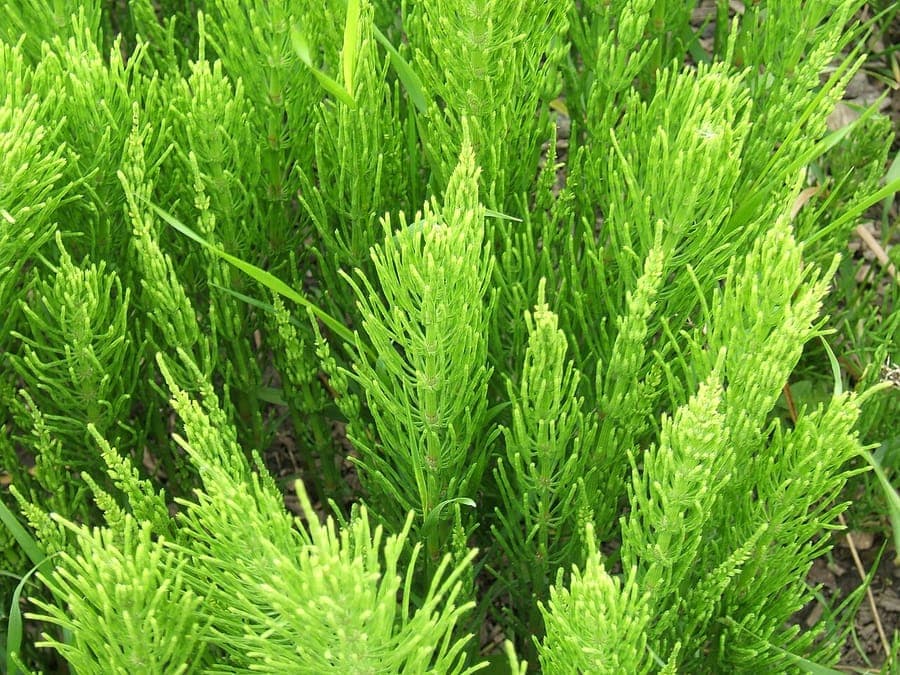
Horsetail doesn't bloom like typical garden plants – it reproduces via spores. In early spring, usually March to April, fertile, pale brown stems emerge. These non-photosynthetic stalks are topped with a cone-like strobilus that releases spores. After spore dispersal, these stems die back. Then, from May onward, the familiar green, hollow, and jointed stems appear. These can grow 15 to 60 cm tall and branch out in whorls, giving the plant its horsetail name. The foliage is a bright, fresh green, with tiny scale-like leaves fused into sheaths at each node. There are no true flowers or seeds.
Ideal location
Common horsetail prefers partial to full shade, with a light requirement of about 7 out of 10. It does best in moist, sheltered areas – think woodland edges, shaded pond margins, or low-lying garden spots that stay damp. Full sun is risky, especially in summer, as it can dry out the soil too fast. Because it spreads aggressively through underground runners, it's wise to grow it in a submerged pot or use root barriers. If you're designing a bog garden or damp border, consider using gardenworld.app to map out containment zones and companion planting spots.
Soil requirements
This plant thrives in acidic to neutral soils, with a pH range of 4.0 to 7.0. It dislikes chalky or alkaline conditions, which can stunt growth or kill it outright. The soil must be consistently moist but not waterlogged. Heavy clay can work if it retains moisture, but adding sand or organic matter improves drainage and root development. Avoid fertilisers high in nutrients – horsetail prefers poor, sandy, or gravelly soils. In fact, it often colonises compacted or disturbed ground, making it a common weed in pavement cracks and neglected corners.
Free design
Want to see Common horsetail: complete guide in your garden? Make a free design now.
Watering
Keep the soil damp at all times. During dry spells, especially from May to September, check moisture levels every few days. Horsetail doesn't handle drought well – the stems will turn yellow and collapse. Water deeply but infrequently if the soil is well-draining, or more often in sandy soils. Rainwater is ideal, as tap water with high lime content can raise pH over time. In container planting, ensure pots don't dry out completely between waterings.
Pruning
Pruning isn't necessary for health, but you can cut back the spent fertile stems in late spring. The green stems can be trimmed if they're encroaching on other plants or look untidy. Use clean shears to prevent disease spread. Never compost the cuttings – they can regrow from fragments. Dispose of them in the general waste or burn them.
Maintenance calendar
- Jan: Monitor for early growth, keep rhizomes in check
- Feb: No action required
- Mar: Watch for fertile stems, prepare to remove after spore release
- Apr: Remove spent brown stems, increase watering as temps rise
- May: Cut back dead stalks, inspect for spreading rhizomes
- Jun: Maintain moisture, check for invasiveness
- Jul: Water regularly during dry periods
- Aug: Trim overgrowth if needed
- Sep: Allow stems to die back naturally
- Oct: Clear debris, do not disturb roots
- Nov: Leave plant intact for winter interest
- Dec: Minimal care, avoid wet soil compaction
Winter hardiness
Common horsetail is hardy in USDA zones 3 to 8. It dies back in winter but returns vigorously each spring from its deep rhizome network. The aerial stems turn brown and collapse, but the roots survive freezing temperatures. No winter protection is needed, though potted plants should be moved to sheltered spots or insulated to prevent rootball freeze-thaw cycles.
Companion plants
Pair horsetail with moisture-loving species like marsh marigold (Caltha palustris), tussock sedge (Carex stricta), or lizard's tail (Saururus cernuus). Avoid planting near shallow-rooted perennials or drought-tolerant species like lavender or sedum. In a wildlife garden, horsetail provides cover for small insects and amphibians. Use it as a structural accent in bog gardens or rain gardens.
Closing
Common horsetail is a living fossil with undeniable character. While it's not for every garden, it has its place in wetland designs, naturalistic plantings, or educational plots. The key is control – contain it early, monitor its spread, and enjoy its prehistoric charm. Whether you're revamping a pond edge or creating a damp woodland corner, tools like gardenworld.app help you plan smartly so horsetail enhances your garden without taking it over.
Want to see Common horsetail: complete guide in your garden? Make a free design now.
Upload a photo, pick a style, and get a photorealistic design with plant list in under a minute.
No credit card required


Similar plants
Meadow horsetail: complete guide
Equisetum pratense
Meadow horsetail (Equisetum pratense): primitive spore-plant for wet meadows. Growing tips, management, and landscape design uses.
River horsetail: complete guide
Equisetum fluviatile
River horsetail (Equisetum fluviatile) thrives in wet, acidic soils and shallow water. Ideal for ponds and bog gardens in USDA zones 3-8.
Great scouring-rush: complete guide
Equisetum hyemale
Complete growing guide for Great scouring-rush (Equisetum hyemale). Learn about care, ideal conditions, watering, and companion plants for this unique perennial.