
Wikimedia Commons / CC BY-SA 3.0, via Wikimedia Commons
Epiphyllum oxypetalum: complete guide
Epiphyllum oxypetalum
Want to see Epiphyllum oxypetalum: complete guide in your garden?
1 minute, no credit card
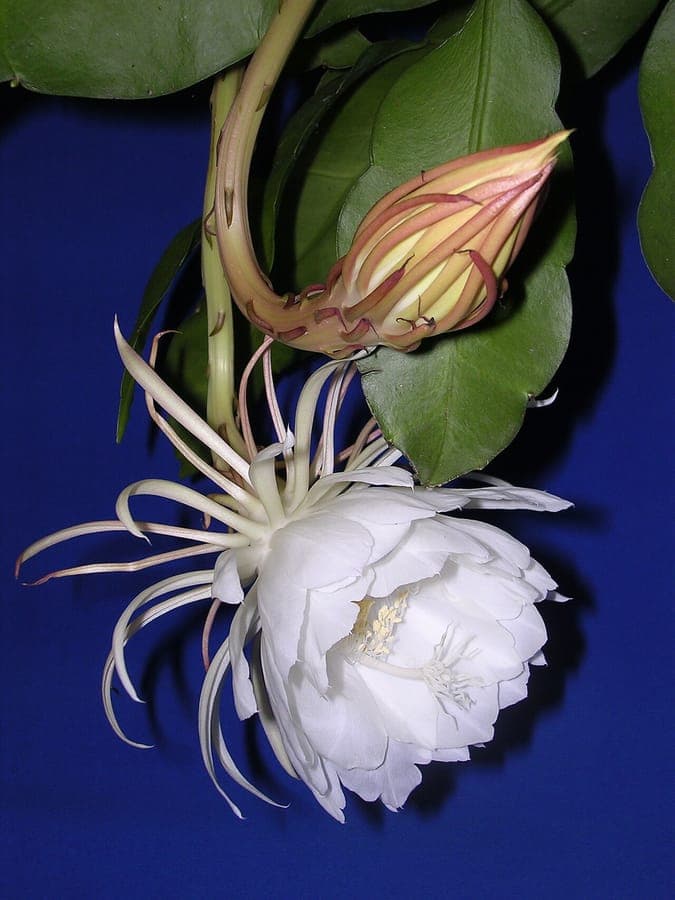
The Epiphyllum oxypetalum, commonly known as Dutchman's-pipe cactus or "Queen of the Night," is a remarkable epiphytic cactus from Central America. This plant is celebrated for its spectacular, fragrant flowers that bloom only at night and last just a single evening.
Overview
The Dutchman's-pipe cactus is a slender, stem-like cactus that naturally grows on trees as an epiphyte. Native to Mexico, Guatemala, Honduras, and other Central American regions, it blooms either in winter or spring depending on growing conditions. The flowers are large, pure white, and intensely fragrant, especially in the evening and night hours.
Appearance and Bloom
As an epiphyte, Epiphyllum oxypetalum grows on trees in its natural habitat. Its stems are flat, ribbon-like, and lack the spines found on typical cacti. The flowers are truly spectacular: they can reach 20 centimeters in diameter, with white petals and a sweet, powerful fragrance. Blooming occurs in the evening and night; flowers open during twilight and close at sunrise. After flowering, the plant produces fruits that may be red or yellow.
Ideal Location
Place your Dutchman's-pipe cactus where it receives abundant indirect light. Direct sunlight can damage the plant, especially during hot afternoon hours. An east or west-facing windowsill is ideal. If your plant turns yellow or reddish, it is likely receiving too much sun. In very low light conditions, however, the plant will not bloom.
Soil
Use airy, well-draining cactus soil. The plant prefers a mixture of cactus substrate with added perlite or sand. The soil must not remain moist; waterlogging is the plant's greatest enemy. Ensure the pot has drainage holes.
Watering
Water moderately during the growing season (spring and summer). Allow the soil to dry partially between waterings. In autumn and winter, water much less frequently, only enough to prevent the soil from completely drying out. Excessive watering can cause root rot. Use room-temperature water and avoid cold tap water.
Pruning
The Epiphyllum oxypetalum requires minimal pruning. Remove dead or damaged stems. You may lightly prune the plant after flowering to keep it more compact. Pruning encourages branching and more flowers for the next season.
Maintenance Calendar
Spring: Begin watering as new growth appears. Feed the plant twice monthly with cactus fertilizer. Provide more light. Summer: Move the plant to a shaded spot outdoors if temperatures exceed 20 degrees Celsius. Water regularly but not excessively. Autumn: Gradually reduce watering. Stop feeding after September. Winter: Minimize watering. Provide cooler temperatures (10-15 degrees Celsius) to encourage blooming.
Winter Hardiness
The Epiphyllum oxypetalum is cold-sensitive. Keep the plant above 10 degrees Celsius. In winter, your plant can tolerate brief periods of 5 degrees Celsius, but this is not ideal. Protect it from temperature fluctuations and drafts.
Companion Plants
The Dutchman's-pipe cactus grows well with other epiphytic cacti such as Schlumbergera and Selenicereus. You can also group it with other tropical houseplants that prefer indirect light, such as Monstera or Alocasia. This combination creates a beautiful jungle atmosphere in your interior.
Closing
The Epiphyllum oxypetalum is a fascinating plant for enthusiasts of exotic flowers. With proper care, especially regarding light, drainage, and winter treatment, you will be rewarded each spring or winter with beautiful, fragrant flowers. Most garden centres stock cactus substrate and fertilizers suitable for this plant. Enjoy the unique experience of witnessing this spectacular bloom that flowers for only one night.
Want to see Epiphyllum oxypetalum: complete guide in your garden? Make a free design now.
Upload a photo, pick a style, and get a photorealistic design with plant list in under a minute.
No credit card required


Similar plants
Plains prickly pear: complete guide
Opuntia polyacantha
All about plains prickly pear cactus: hardiness, soil, placement and care. One of the most cold-tolerant cacti for temperate gardens.
Saguaro: complete guide
Carnegiea gigantea
Everything about growing saguaro cactus: container care, watering, overwintering, and companion plants for this iconic desert giant.
Cylindropuntia imbricata: complete guide
Cylindropuntia imbricata
The Tree Cholla offers distinctive segmented stems and vibrant red flowers. A unique ornamental succulent perfect for sunny, dry gardens and large containers.