
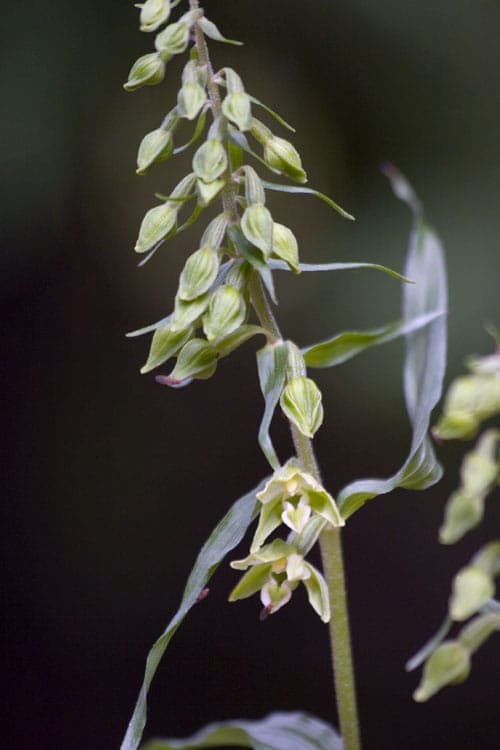
Rictor Norton & David Allen from London, United Kingdom / CC BY 2.0, via Wikimedia Commons
Green-flowered helleborne: complete guide
Epipactis phyllanthes
Want to see Green-flowered helleborne: complete guide in your garden?
1 minute, no credit card
Overview
Epipactis phyllanthes, commonly known as the Green-flowered helleborne, is a delicate native orchid found across western and northern Europe, including the UK, Ireland, and parts of Scandinavia. Unlike its tropical cousins, this orchid thrives in cool, temperate woodlands, where it blends into the undergrowth with quiet elegance. Though rare in the wild due to habitat loss, it's a rewarding addition to a shaded, naturalistic garden.
This orchid isn't showy, but its subtle green blooms and upright habit make it a conversation piece among observant gardeners. On gardenworld.app, you can design a woodland-style scheme that integrates this orchid seamlessly with existing trees and shrubs.
Appearance & bloom cycle
The Green-flowered helleborne grows between 20 and 50 cm tall, with a slender, upright stem that carries alternate, lance-shaped leaves 5–10 cm long. From May through July, it produces a one-sided raceme of drooping green flowers, each about 1.5 cm in length. The blooms have a faint wine-like scent, which attracts wasps – their primary pollinators. The lip of the flower is slightly notched and often tinged with pink or brown.
After flowering, seed capsules form and split open in autumn, releasing fine dust-like seeds. These require a symbiotic relationship with specific mycorrhizal fungi in the soil to germinate, making natural establishment slow and unpredictable.
Ideal location
This orchid prefers partial to full shade, scoring a 3 on the light scale (10 being full sun). An open woodland setting under deciduous trees like oak, beech, or ash is ideal. Dappled sunlight throughout the day provides enough energy without scorching the foliage. Avoid south-facing, exposed spots or deep evergreen shade.
A sheltered spot, protected from drying winds, helps maintain humidity. In urban gardens, a north- or east-facing border beneath trees works well. Use gardenworld.app to visualise how this orchid fits into your existing layout, especially in shaded corners where few plants thrive.
Soil requirements
Epipactis phyllanthes grows best in moist, humus-rich, well-drained clay-loam soil with a pH of 6.5 to 7.0. It dislikes acidic soils, so avoid planting under conifers or in ericaceous beds. The soil should stay consistently damp but never waterlogged.
Organic matter is crucial. Mix in leaf mould or well-rotted wood chips to improve soil structure and foster beneficial fungi. Never use peat-based composts – they're too acidic and unsustainable. Source plants from ethical nurseries that grow them in symbiosis with native fungi.
Free design
Want to see Green-flowered helleborne: complete guide in your garden? Make a free design now.
Watering
Water regularly during spring and early summer when the plant is actively growing. In dry spells, water twice a week, preferably with rainwater. Tap water with high lime or chlorine content can harm sensitive roots. Avoid wetting the foliage in full sun to prevent fungal issues.
Once established, the plant relies on natural rainfall, but monitor during prolonged droughts. Reduce watering in late summer as growth slows, and stop supplemental watering in winter.
Pruning
No pruning is needed. Allow the flower stem to die back naturally after blooming – this lets the plant reabsorb nutrients. Cut back dead stems in late winter or early spring before new growth emerges. Be careful not to damage emerging shoots, which can be fragile.
Do not compost plant debris unless you're certain it's disease-free, as pathogens can linger in the soil.
Maintenance calendar
- Jan: Check root zone, remove old foliage if present
- Feb: Apply light mulch of leaf mould
- Mar: Keep soil moist, watch for new shoots
- Apr: Protect from slugs, no other action
- May: Blooming begins, water during dry periods
- Jun: Peak bloom, observe for pollinators
- Jul: Flowers fade, stems remain intact
- Aug: Reduce watering, maintain humidity
- Sep: Seed pods mature, allow natural dispersal
- Oct: Pods open, minimal care
- Nov: Leave dead foliage for winter insulation
- Dec: Dormant period, no watering needed
Winter hardiness
This orchid is hardy in USDA zones 7–9. It dies back to ground level in autumn, with the rhizome surviving underground. A natural leaf litter layer provides sufficient winter protection. In harsh winters, a thin mulch of wood chips or bracken can help, but avoid thick, moisture-trapping coverings that encourage rot.
Ensure the soil doesn't freeze while waterlogged – that's the main risk.
Companion plants
Pair Epipactis phyllanthes with other shade-loving, moisture-tolerant plants. Good companions include wood anemone (Anemone nemorosa), dog's mercury (Mercurialis perennis), male fern (Dryopteris filix-mas), and bluebell (Hyacinthoides non-scripta). These share similar soil and light needs and create a cohesive woodland floor.
Avoid invasive spreaders like ivy or mint, which can smother the orchid. Also steer clear of heavy mulching plants that block light.
Closing
The Green-flowered helleborne isn't a beginner's plant, but with patience and the right conditions, it can become a long-lived feature in your garden. It needs consistent moisture, neutral soil, and undisturbed ground. Once settled, it may slowly spread via rhizomes.
Buy from reputable garden centres in the UK that propagate plants ethically-never take from the wild. On gardenworld.app, you can simulate how this orchid performs in your garden's microclimate and plan companion plantings accordingly.
Want to see Green-flowered helleborne: complete guide in your garden? Make a free design now.
Upload a photo, pick a style, and get a photorealistic design with plant list in under a minute.
No credit card required


Similar plants
Ram's-head lady's slipper: complete guide
Cypripedium arietinum
Everything you need to know about growing Cypripedium arietinum, a rare woodland orchid for cool, moist garden settings. Soil, care and planting tips.
Sparrow's-egg lady's slipper: complete guide
Cypripedium passerinum
Everything about growing Cypripedium passerinum, a cold-hardy subarctic orchid suited to cool, moist, shaded garden spots. Soil, care and companion plants.
Algerian Butterfly-orchid: complete guide
Platanthera algeriensis
Everything about Platanthera algeriensis, the rare Mediterranean orchid with greenish flowers native to Algeria, Morocco, Corsica and Spain.