
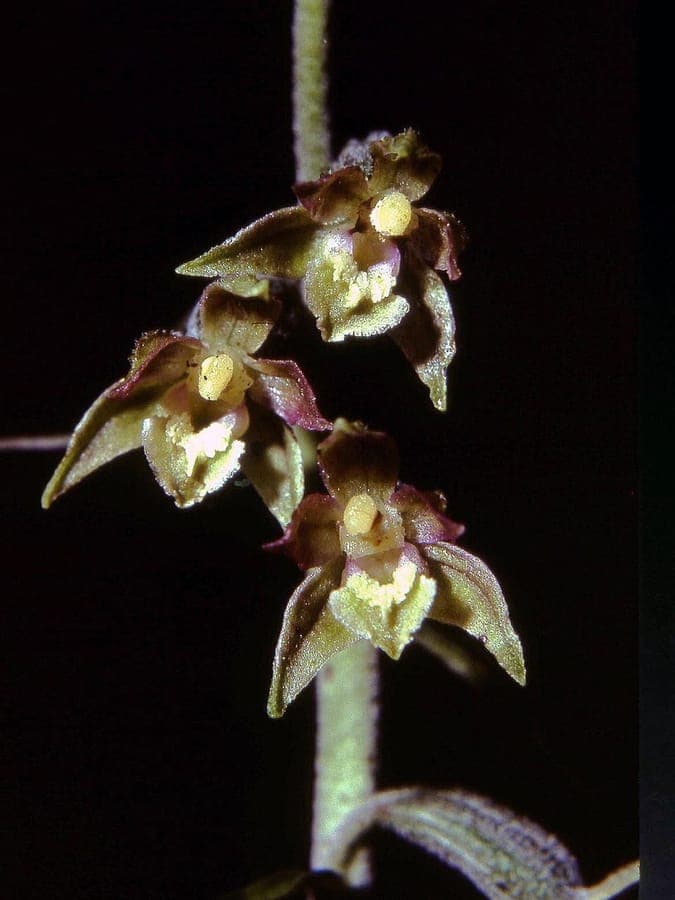
Orchi / CC BY-SA 3.0, via Wikimedia Commons
Small-leaved helleborine: complete guide
Epipactis microphylla
Want to see Small-leaved helleborine: complete guide in your garden?
1 minute, no credit card
Overview
Epipactis microphylla, commonly known as the small-leaved helleborine, is a subtle yet captivating orchid native to woodlands across southern and central Europe. It's not a showstopper like tropical orchids, but its quiet charm and ecological importance make it a prized find for native plant enthusiasts. Unlike many garden orchids, this species thrives in temperate climates and can adapt to a woodland garden setting – if you respect its specific needs.
This perennial forb grows from a creeping rhizome and depends heavily on symbiotic fungi in the soil (mycorrhizae) for nutrient uptake. You can't just dig it up from the wild or plant it in regular potting mix and expect success. It's a commitment to a natural ecosystem, not just a decorative addition. On gardenworld.app, you can design a native woodland layout that integrates this orchid with compatible ground cover and tree species to support its long-term survival.
Appearance & bloom cycle
The small-leaved helleborine reaches 8 to 12 inches (20–30 cm) in height. Its slender, slightly reddish stem is lined with small, oval leaves just 0.4 to 0.8 inches (1–2 cm) long – living up to its name. The leaves are arranged alternately and have a slightly leathery texture.
Flowering occurs from late June through July. The inflorescence is a loose raceme bearing 5 to 15 small flowers. Each bloom is pale green to pinkish, with a white or greenish lip marked with fine purple veins. The flowers are delicate and unscented to humans, but they emit a faint aroma that attracts small hoverflies and wasps – hence the Dutch name 'wespenorchis'.
Unlike flashy garden perennials, this plant doesn't shout for attention. It blends into the understory, revealing its beauty only upon close inspection.
Ideal location
This orchid thrives in dappled shade to partial shade, ideally under deciduous trees like beech or oak with a light canopy. Full sun will scorch the leaves and dry out the roots, while deep shade limits photosynthesis. A north- or east-facing woodland edge is perfect.
In the garden, choose a spot that gets morning sun but afternoon shade. Avoid south-facing open areas. If your garden lacks trees, consider planting it near a shrub border with light cover, such as hazel or dogwood. Use gardenworld.app to map sunlight patterns in your yard and pinpoint the best microclimate for this orchid.
Soil requirements
The soil must be well-drained yet consistently moist, rich in organic matter, and slightly alkaline to neutral (pH 6.5–7). Avoid acidic peat, heavy clay, or sandy soils that drain too fast. A loamy mix with leaf mold from a deciduous forest works best, as it likely contains the mycorrhizal fungi the plant needs.
If your soil is too acidic, amend it slowly with crushed oyster shells or limestone grit. Don't use synthetic fertilizers – they can disrupt the fungal network and burn delicate roots. A thin top-dressing of composted leaf litter each spring helps maintain fertility and moisture.
Free design
Want to see Small-leaved helleborine: complete guide in your garden? Make a free design now.
Watering
Keep the soil evenly moist but never waterlogged. During dry spells in summer, water gently with rainwater in the early morning. Tap water, especially if hard, can raise pH too quickly or deposit harmful salts.
Do not let the soil dry out completely, particularly in the first year after planting. Mulch lightly with pine needles or shredded leaves to conserve moisture and buffer root zone temperature. Avoid thick mulch – it can smother emerging shoots in spring.
Pruning
No pruning is required. Allow the flower stem to die back naturally in autumn. Removing it prematurely can weaken the plant and reduce next year's flowering. Only cut away diseased or damaged foliage, and do so with sterilized tools to prevent infection.
Maintenance calendar
- January: Check mulch layer. No feeding.
- February: Dormant. No action needed.
- March: Gently remove old leaves. Watch for new shoots.
- April: Hand-weed carefully-roots are shallow and fragile.
- May: Maintain soil moisture. Watch for drought signs.
- June: Bloom begins. Avoid disturbing flower spikes.
- July: Peak bloom. No pruning.
- August: Reduce watering slowly if rains return.
- September: Begin weaning off supplemental water.
- October: Leave all plant material in place.
- November: Apply a light mulch if winters are harsh.
- December: Full dormancy. No intervention.
Winter hardiness
The small-leaved helleborine is hardy in USDA zones 6 to 8, tolerating winter lows down to -23°C (-10°F). The above-ground parts die back in autumn, but the rhizome survives underground. A light mulch of leaf litter (1–2 inches) insulates against freeze-thaw cycles.
In areas with little snow cover, a thin layer of straw can help. Avoid plastic covers-they trap moisture and encourage rot. Let nature take its course; this orchid evolved to survive European winters without human intervention.
Companion plants
Pair with woodland natives that share similar growing conditions: wood anemone (Anemone nemorosa), European ginger (Asarum europaeum), snowdrop (Galanthus nivalis), and early dog-violet (Viola reichenbachiana). These create a layered, naturalistic effect without competing for resources.
Avoid aggressive spreaders like mint or goldenrod. Opt instead for slow-growing grasses such as Brachypodium sylvaticum to add subtle texture.
Closing
The small-leaved helleborine isn't for everyone. It demands patience, observation, and a respect for natural processes. But for gardeners who value quiet beauty and ecological integrity, it's a treasure. Never collect from the wild-this harms fragile populations. Instead, source responsibly cultivated plants from UK garden centres or online native nurseries.
With thoughtful placement and compatible companions, this orchid can thrive for years. Plan your woodland oasis on gardenworld.app and see how Epipactis microphylla fits into a balanced, living garden design.
Want to see Small-leaved helleborine: complete guide in your garden? Make a free design now.
Upload a photo, pick a style, and get a photorealistic design with plant list in under a minute.
No credit card required


Similar plants
Ram's-head lady's slipper: complete guide
Cypripedium arietinum
Everything you need to know about growing Cypripedium arietinum, a rare woodland orchid for cool, moist garden settings. Soil, care and planting tips.
Sparrow's-egg lady's slipper: complete guide
Cypripedium passerinum
Everything about growing Cypripedium passerinum, a cold-hardy subarctic orchid suited to cool, moist, shaded garden spots. Soil, care and companion plants.
Algerian Butterfly-orchid: complete guide
Platanthera algeriensis
Everything about Platanthera algeriensis, the rare Mediterranean orchid with greenish flowers native to Algeria, Morocco, Corsica and Spain.