
Rasbak / CC BY-SA 3.0, via Wikimedia Commons
Square-stemmed willowherb: complete guide
Epilobium tetragonum
Want to see Square-stemmed willowherb: complete guide in your garden?
1 minute, no credit card
Overview
Square-stemmed willowherb, or Epilobium tetragonum, is a modest yet striking perennial that thrives in cool, moist environments across Europe. It belongs to the Onagraceae family and gets its name from the distinctly four-angled stems - a telltale feature that sets it apart from other Epilobium species. Native to regions including Austria, the Baltic States, and parts of North Africa, this plant prefers damp woodlands, stream banks, and shaded meadows.
In garden settings, it's an underrated gem for wildlife gardens and naturalistic planting schemes. It's not commonly found in mainstream nurseries, but its low maintenance and ecological benefits make it worth seeking out. On gardenworld.app, you can design a planting plan that incorporates square-stemmed willowherb into damp borders or native wildflower mixes, ensuring it lands in the right microclimate.
Appearance & bloom cycle
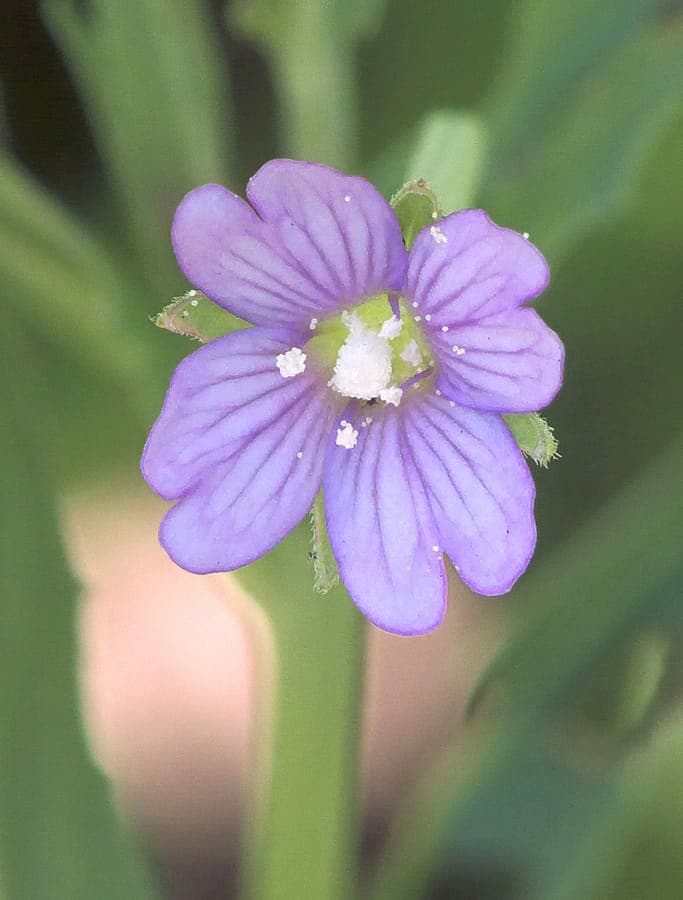
This herbaceous perennial grows 30 to 60 cm tall, forming upright, slender stems with opposite, lance-shaped leaves. The leaves are dark green, slightly toothed, and arranged in neat pairs along the square stem. From June to late August, it produces small, soft pink flowers, each about 1 to 1.5 cm wide, with four petals arranged in a cross pattern.
The blooming period lasts roughly 8 to 10 weeks, depending on moisture levels and local pests like slugs. After flowering, elongated seed capsules form and split open when ripe, releasing fine, cottony seeds that disperse on the breeze - a hallmark of many willowherbs.
The plant spreads slowly via short rhizomes and self-seeding, forming loose colonies over time. It's not invasive, but does best when given space to establish naturally.
Ideal location
Square-stemmed willowherb performs best in light to partial shade, with a light requirement of 6 out of 10 (where 10 is full sun). Ideal spots include under open tree canopies, along shaded stream edges, or in a damp north- or east-facing border.
Avoid hot, dry south-facing sites, as the plant will wilt and may fail to bloom. Too much shade, however, reduces flowering and weakens stem strength. Use gardenworld.app to overlay seasonal sun patterns on your garden layout and pinpoint the perfect spot for planting without guesswork.
Soil requirements
It demands moist, well-drained to slightly wet soil with a pH between 7.0 and 7.5. Chalky or calcareous substrates are ideal - think loamy sand or clay-loam with good organic content. Avoid acidic peat or waterlogged, anaerobic soils unless amended with ground limestone.
Incorporate leaf mould or well-rotted compost annually to boost humus levels. The roots are shallow but resilient, spreading gently via underground stems. This makes it suitable for naturalising in woodland gardens or damp meadow-style plantings.
Free design
Want to see Square-stemmed willowherb: complete guide in your garden? Make a free design now.
Watering
Consistent moisture is key. Water deeply once or twice a week during dry spells, especially in the first two growing seasons. In consistently damp climates (like the UK), it may require little supplemental watering once established.
Use rainwater when possible - tap water with high chlorine content can stress the plant. Mulch with leaf litter or bark chips to retain moisture and suppress competing weeds. Avoid standing water, but don't let the soil dry out completely.
Pruning
Pruning isn't essential, but can improve appearance and control spread. After flowering, cut back spent stems to about 10 cm above ground level to discourage slugs and fungal issues.
If you want to prevent self-seeding, deadhead before capsules split. Leave some seed heads in place over winter to support overwintering insects and provide visual interest in the dormant garden.
Use clean, sharp secateurs and sanitise between cuts to avoid spreading disease. This is especially important if you're working with multiple perennials in close proximity.
Maintenance calendar
- January: No action needed. Check for collapsed stems.
- February: Prepare soil; test pH and add lime if below 7.0.
- March: Clear old mulch; watch for early shoots.
- April: Plant new specimens. Water if spring is dry.
- May: Stake if needed. Monitor for slugs.
- June: Bloom begins. Maintain moisture.
- July: Peak flowering. Replenish mulch.
- August: Flowering winds down. Begin seed management.
- September: Cut back or leave for winter structure.
- October: Top-dress with compost.
- November: No work, unless replanting.
- December: Inspect for winter wet damage.
Winter hardiness
Square-stemmed willowherb is hardy in USDA zones 5 to 8. Foliage dies back in autumn, but the rhizomes survive under leaf litter or snow cover. No winter protection is usually needed.
In areas with heavy, saturated clay soils, however, winter wet can lead to root rot. Improve drainage with grit or organic matter. Leave old stems standing until early spring to provide insulation and habitat.
Companion plants
Pair with moisture-loving species that share similar growing conditions:
- Helleborus foetidus – for winter structure and early blooms
- Carex acutiformis – for bold texture and ground cover
- Primula elatior – for spring colour
- Lysimachia clethroides – for vertical interest and late blooms
- Ferns like Dryopteris affinis – for lush, shaded contrast
These combinations create layered, wildlife-friendly plantings that thrive in cool, damp corners.
Closing
Square-stemmed willowherb won't dominate your border, but it adds quiet elegance and ecological value. It's perfect for the thoughtful gardener who appreciates subtle details - like angular stems and delicate blooms - and values low-impact gardening.
You can find Epilobium tetragonum at select garden centres in Europe, particularly in the spring. In the UK, try independent nurseries or order online. Larger chains like garden centres affiliated with Truffaut or Jardiland may carry it seasonally. Use gardenworld.app to build a seasonal planting schedule that aligns with your garden's conditions and keeps this plant thriving year after year.
Want to see Square-stemmed willowherb: complete guide in your garden? Make a free design now.
Upload a photo, pick a style, and get a photorealistic design with plant list in under a minute.
No credit card required


Similar plants
Shortfruit evening primrose: complete guide
Oenothera brachycarpa
Everything about Oenothera brachycarpa - the shortfruit evening primrose from the American Southwest. Growing tips, placement and care for your garden.
Sundrops (Oenothera tetragona): complete guide
Oenothera tetragona
Everything about Oenothera tetragona - the cheerful daytime-blooming sundrops perennial. Growing tips, placement, pruning and care for a long summer display.
Seabeach evening primrose: complete guide
Oenothera humifusa
Full guide to Oenothera humifusa, the seabeach evening primrose native to the US Atlantic coast. Yellow blooms, silvery foliage, drought-tolerant.