
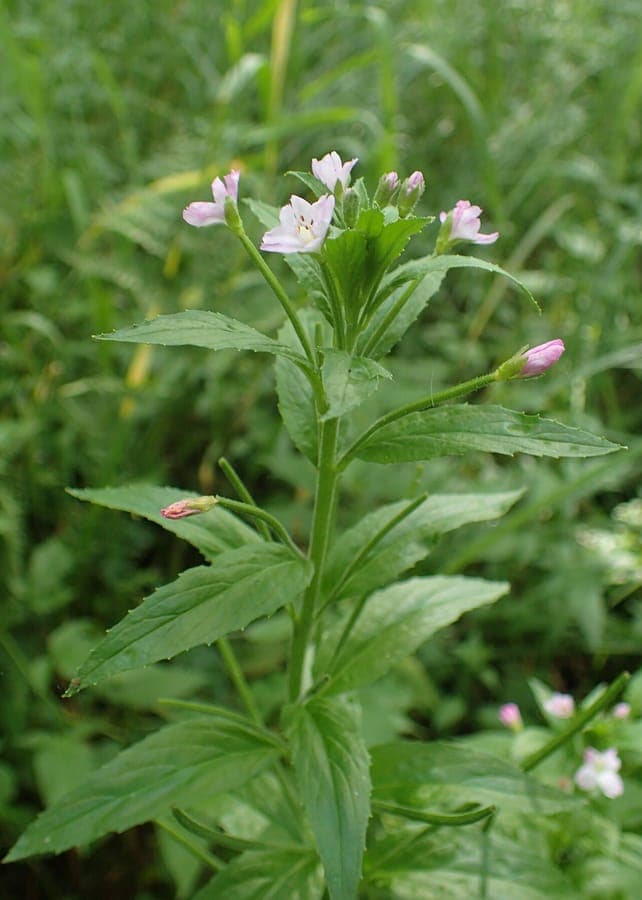
Krzysztof Ziarnek, Kenraiz / CC BY-SA 4.0, via Wikimedia Commons
Hoary willowherb: complete guide
Epilobium parviflorum
Want to see Hoary willowherb: complete guide in your garden?
1 minute, no credit card
Overview
Hoary willowherb (Epilobium parviflorum) is a resilient, herbaceous perennial that thrives in damp, open habitats across Europe and parts of North Africa. In the garden, it's an excellent choice for wet areas where many other plants struggle. Native to regions including Belgium, Austria, and the UK, this forb brings subtle beauty to informal plantings, woodland edges, and moist borders. It's not flashy, but its quiet charm and ecological value make it a solid performer in sustainable gardens.
In recent years, gardeners have started to appreciate its low-impact presence. It fits naturally into meadow-style designs and pairs well with other moisture-loving natives. If you're planning a damp garden scheme, you can use gardenworld.app to visualise how hoary willowherb integrates into your layout, ensuring both aesthetic harmony and ecological function.
Appearance & bloom cycle
Hoary willowherb grows 30 to 70 cm tall, with upright, densely hairy stems that give it a soft, downy texture-hence the name 'hoary'. The narrow, lance-shaped leaves are arranged oppositely and have finely toothed margins. The foliage is medium green, sometimes with a greyish tinge due to the fine hairs.
From June through September, the plant produces small purple flowers, each about 1 to 1.5 cm across. The blooms have four petals and are arranged in loose, terminal racemes. While individual flowers are modest, the cumulative effect over summer is a delicate haze of purple that attracts hoverflies, bees, and other pollinators. Deadheading isn't necessary, but trimming spent stems can encourage a tidier look.
Ideal location
This plant prefers full sun to partial shade, scoring a 7 on the light scale (1–10). That means it needs at least 5 to 6 hours of direct sunlight daily for strong growth and flowering. In full sun, it develops a bushier habit and more blooms. In heavy shade, it tends to stretch and flower poorly.
Ideal spots include the edges of ponds, damp swales, or moist woodland borders. It also works well in rain gardens or areas with seasonal standing water. Avoid dry, exposed sites-hoary willowherb won't survive prolonged drought.
Soil requirements
Hoary willowherb grows best in moist, loamy or clay-loam soils with a pH between 7.0 and 7.5. It tolerates occasional waterlogging but needs reasonable drainage to prevent root rot. Avoid acidic soils below pH 6.5, as this can lead to yellowing leaves and stunted growth.
Before planting, amend the soil with well-rotted compost or garden manure to boost organic content and water retention. Mulching with leaf mould or straw helps maintain moisture and suppress weeds. The plant spreads gently by seed, so if you want to limit self-sowing, remove seed heads before they split. You can track its spread and plan spacing using gardenworld.app's planting tools.
Free design
Want to see Hoary willowherb: complete guide in your garden? Make a free design now.
Watering
Keep the soil consistently moist, especially during the first growing season. Young plants need watering twice a week in dry spells. Mature plants are somewhat drought-tolerant but perform best with regular moisture.
Use rainwater when possible, as tap water can raise soil pH over time. Avoid wetting the foliage to reduce the risk of powdery mildew. A 5 cm layer of organic mulch is highly recommended to conserve moisture and regulate soil temperature.
Pruning
Pruning is minimal. After flowering, cut back the spent flower stems to ground level to maintain neatness and prevent excessive self-seeding. If you want the plant to reseed naturally, leave a few stems until late autumn to provide food for finches and other small birds.
In early spring, remove any remaining dead foliage before new growth emerges. This improves air circulation and reduces disease risk.
Maintenance calendar
- February – March: Clear old stems; check for emerging weeds.
- April – May: Apply a thin layer of compost; monitor soil moisture.
- June – September: Water during dry periods; inspect for pests or mildew.
- October – November: Cut back or leave for wildlife; collect seeds if desired.
- December – January: No action needed; plant is dormant.
Winter hardiness
Hoary willowherb is hardy to USDA zone 5 (-20°C). The top growth dies back in autumn, but the root system survives winter and resprouts in spring. No winter protection is required, even in harsh climates.
Companion plants
Pair hoary willowherb with other moisture-loving plants like meadowsweet (Filipendula ulmaria), marsh marigold (Caltha palustris), or tussock sedge (Carex elata 'Aurea'). It also complements purple loosestrife (Lythrum salicaria) and Joe-Pye weed (Eutrochium maculatum) in a damp border.
Avoid aggressive spreaders like giant hogweed or mint, which can overwhelm it. Stick to well-behaved perennials for balanced planting.
Closing
Hoary willowherb is a quiet achiever-unspectacular but reliable. It supports biodiversity, asks little in return, and adds seasonal interest to wet areas. For gardeners aiming for low-maintenance, wildlife-friendly spaces, it's a smart choice.
You can find it at garden centres across the UK and Europe. Try national chains or independent nurseries specialising in native plants. Use gardenworld.app to plan your planting scheme and ensure hoary willowherb fits seamlessly into your garden's ecosystem.
Want to see Hoary willowherb: complete guide in your garden? Make a free design now.
Upload a photo, pick a style, and get a photorealistic design with plant list in under a minute.
No credit card required


Similar plants
Shortfruit evening primrose: complete guide
Oenothera brachycarpa
Everything about Oenothera brachycarpa - the shortfruit evening primrose from the American Southwest. Growing tips, placement and care for your garden.
Sundrops (Oenothera tetragona): complete guide
Oenothera tetragona
Everything about Oenothera tetragona - the cheerful daytime-blooming sundrops perennial. Growing tips, placement, pruning and care for a long summer display.
Seabeach evening primrose: complete guide
Oenothera humifusa
Full guide to Oenothera humifusa, the seabeach evening primrose native to the US Atlantic coast. Yellow blooms, silvery foliage, drought-tolerant.