
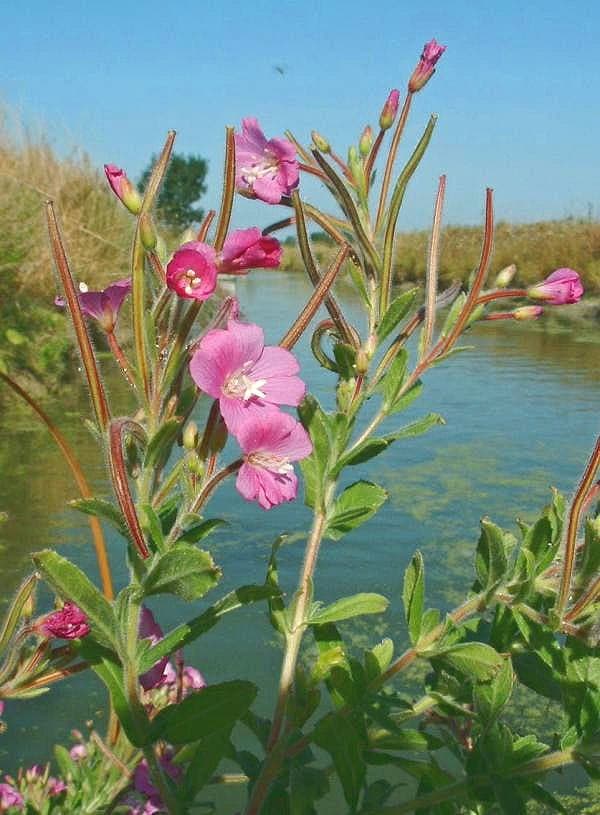
Jeffdelonge at French Wikipedia / CC BY-SA 3.0, via Wikimedia Commons
Great willowherb: complete guide
Epilobium hirsutum
Want to see Great willowherb: complete guide in your garden?
1 minute, no credit card
Overview
Great willowherb (Epilobium hirsutum) is a striking, upright herbaceous perennial that brings height and summer colour to moist garden areas. Native across much of Europe, including the UK, it naturally occurs along stream banks, ditches, and damp meadows. It's a tough plant that thrives where others might struggle-especially in consistently moist, open spots. On gardenworld.app, you can design a garden layout that makes the most of Great willowherb's potential, particularly near water features or boggy patches.
Belonging to the Onagraceae family, this species spreads readily by seed and can self-seed vigorously, so it's best suited to informal or wildlife gardens where a little wildness is welcome. It's not a plant for tightly controlled borders unless you're prepared to manage its spread.
Appearance & bloom cycle
Great willowherb typically reaches 60–120 cm in height, with erect, densely hairy stems that may have a purplish tinge. The leaves are lance-shaped, opposite, toothed, and covered in fine, rough hairs-giving the plant its 'hairy' name. The foliage is medium green and can feel slightly rough to the touch.
From June to September, it produces showy clusters of four-petalled magenta-purple flowers, each about 2–3 cm across. The flowers have a pale yellow centre and eight prominent stamens, attracting bees, hoverflies, and butterflies. After blooming, long, slender seed pods form and split open to release fluffy, wind-dispersed seeds-similar to willow cotton.
This long bloom period makes it a valuable addition to any pollinator garden, especially when paired with other late-summer nectar sources.
Ideal location
Choose a full sun to partial shade spot with a light score of at least 7/10. Great willowherb isn't suited to deep shade but tolerates light afternoon shade, especially in hot summers. It performs best in moist, open conditions-ideal for pond margins, rain gardens, or damp borders.
It's hardy in USDA zones 5–8, meaning it survives UK winters with no protection. Give each plant at least 40 cm of space to develop, as it can spread both by seed and creeping roots. On gardenworld.app, you can simulate how Great willowherb fits into your garden's light and moisture zones before planting.
Soil requirements
This plant prefers moist, well-drained, calcareous soils with a pH between 7.5 and 8.0. It does well in loamy or silty soils but struggles in dry, sandy, or acidic conditions. While it likes consistent moisture, it won't tolerate waterlogged roots for long.
Avoid rich soils or heavy feeding-Great willowherb actually blooms better in moderately fertile ground. Over-fertilizing leads to leggy growth and reduced flowering.
Free design
Want to see Great willowherb: complete guide in your garden? Make a free design now.
Watering
Water regularly during the first growing season, especially in dry spells. Once established, it's somewhat drought-tolerant if the soil stays cool and moist. In drier gardens, apply a mulch of leaf mould or composted bark in spring to help retain moisture.
Avoid overhead watering if possible, as wet foliage in humid conditions can encourage fungal issues.
Pruning
Pruning isn't essential, but cutting back spent flower stems in late summer or early autumn helps control self-seeding. Trim stems to ground level after flowering if you want to limit spread. For a more natural look, leave some seed heads standing through winter to provide visual interest and food for birds.
Remove any damaged or diseased growth during the growing season with clean secateurs.
Maintenance calendar
- March/April: Clear away old stems and check for new shoots.
- May: Plant new specimens in moist soil. Keep soil consistently damp.
- June – August: Peak bloom. Monitor for aphids or mildew. No feeding required.
- September: Begin cutting back faded stems.
- October: Finish pruning. Lift and relocate seedlings if needed.
- November – February: Dormant period. No active care needed.
Winter hardiness
Great willowherb is fully hardy in USDA zones 5–8 (-20°C to -15°C). The top growth dies back in autumn, but the roots survive winter and re-sprout in spring. No winter protection is needed, even in harsh conditions. It's a reliable perennial that returns year after year with minimal fuss.
Companion plants
Pair Great willowherb with other moisture-loving plants like Meadowsweet (Filipendula ulmaria), Purple loosestrife (Lythrum salicaria), or Marsh marigold (Caltha palustris). For contrast, plant it beside goldenrods (Solidago) or yellow irises.
Avoid pairing it with drought-tolerant species like lavender or sedum, which prefer dry, poor soils.
Closing
Great willowherb is a bold, easy-care plant that adds vertical interest and pollinator appeal to damp garden corners. Its long bloom time and low maintenance make it a favourite for naturalistic planting schemes. Just be mindful of its tendency to self-seed-keep it in check in smaller gardens.
Buy Great willowherb at garden centres like Wyevale, Hillier, or local independents. It's often sold in 1–2 litre pots. You can also grow it from seed, though flowering typically starts in the second year. With the right spot and a little space, this native beauty will thrive for years.
Want to see Great willowherb: complete guide in your garden? Make a free design now.
Upload a photo, pick a style, and get a photorealistic design with plant list in under a minute.
No credit card required


Similar plants
Shortfruit evening primrose: complete guide
Oenothera brachycarpa
Everything about Oenothera brachycarpa - the shortfruit evening primrose from the American Southwest. Growing tips, placement and care for your garden.
Sundrops (Oenothera tetragona): complete guide
Oenothera tetragona
Everything about Oenothera tetragona - the cheerful daytime-blooming sundrops perennial. Growing tips, placement, pruning and care for a long summer display.
Seabeach evening primrose: complete guide
Oenothera humifusa
Full guide to Oenothera humifusa, the seabeach evening primrose native to the US Atlantic coast. Yellow blooms, silvery foliage, drought-tolerant.