
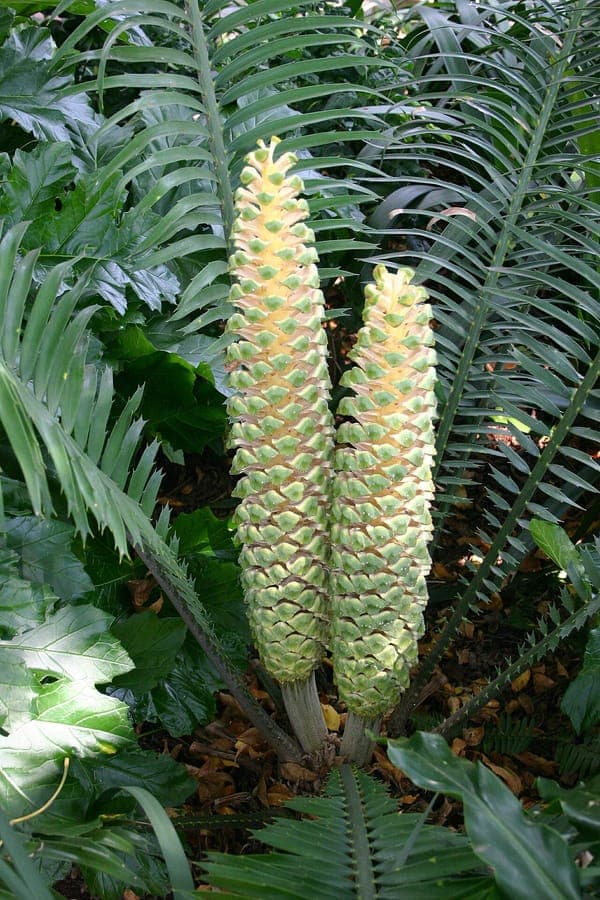
Rotational / Public domain, via Wikimedia Commons
Ground cycad: complete guide
Encephalartos villosus
Want to see Ground cycad: complete guide in your garden?
1 minute, no credit card
Overview
The Ground Cycad, scientifically known as Encephalartos villosus, is an exceptional plant species from the Zamiaceae family. This cycad is native to South Africa, ranging from the Eastern Cape to KwaZulu-Natal and Eswatini. The name "ground cycad" refers to its growth habit - this plant does not grow very tall and often spreads horizontally close to the ground.
Encephalartos villosus is a very rare plant in gardens outside Africa, which makes it particularly attractive to collectors and plant enthusiasts. Under its former name Encephalartos plumosus, this plant carried botanical history. The characteristic dense, hairy fine branches (from which the name "villosus" comes - hairy) give this cycad a very distinctive appearance.
Appearance and Growth
Encephalartos villosus is a compact cycad that typically grows 0.5 to 1.5 meters tall, though old specimens may grow larger. The trunk is usually invisible or nearly invisible, hidden beneath a mass of leaves. This distinguishes it from many other cycad species that have distinct tree-like forms.
The leaves are feather-shaped and consist of dozens of small leaflets growing close together. They have a leathery texture and vary from bright green to bluish-green depending on light and season. The hairy, dense nature of the foliage gives the plant its unique appearance.
Encephalartos villosus is dioecious, meaning male and female cones grow on separate plants. The female cones are large and yellow-orange in color, highly decorative. The male cones are smaller and more yellow. These cones appear only once every 2-3 years in cultivated plants.
Ideal Location
The Ground Cycad grows best in bright light, ideally in full sun. In South Africa, it grows in open savanna landscapes. However, in warm climates, some filtered afternoon light may be beneficial. A location with at least 5-6 hours of direct sunlight daily is ideal.
The plant tolerates wind very well, making it suitable for open gardens. However, it does equally well indoors in a greenhouse or conservatory, provided it receives adequate light.
Soil
Encephalartos villosus requires exceptionally well-draining soil. This is non-negotiable - standing water will cause roots to rot. Use a cactus/succulent potting mix with extra perlite or pumice. A pH of 6.5 to 7.5 is ideal.
In garden settings, plant in raised beds or mounding soil that does not waterlog. If the climate receives heavy rainfall, add large quantities of sand and perlite.
Free design
Want to see Ground cycad: complete guide in your garden? Make a free design now.
Watering
This is where caution is necessary: Encephalartos villosus tolerates drought much better than waterlogging. Allow the soil to dry thoroughly between waterings. During the growing season (spring and summer), this may mean watering once every two weeks, but during the dormant period (fall and winter) only once a month or less.
Ensure pots have excellent drainage. When in doubt, water less rather than more.
Pruning
Encephalartos villosus requires virtually no pruning. If older leaves turn yellow and die, you can gently remove them from the plant, but be careful not to damage the growing point. This growing point in the center is the plant's heart and cannot regenerate if damaged.
Maintenance Calendar
Spring (March-May): Begin regular watering as growth starts. Monitor for new cones.
Summer (June-August): Maintain regular watering during dry periods. Protect from extreme heat with light shade if needed.
Autumn (September-October): Gradually reduce watering. Prepare the plant for its dormant period.
Winter (November-February): Minimal watering. Plant is nearly dormant.
Winter Hardiness
Encephalartos villosus is not frost-hardy and cannot survive outdoors in temperate climates. This is a tropical/subtropical plant. In cold regions, it must grow in pots and be moved indoors for winter. Optimal temperatures range between 15-25°C. Avoid temperatures below 10°C.
Companion Plantings
If this plant grows outdoors in warm climates:
- Aloe species - Same dry growing conditions
- Euphorbia candelabrum - Structural contrast
- Echeveria succulents - Textural difference and color
- Ornithogalum mutans - Flower addition
- Ficus carica - Fruit trees with Mediterranean character
Closing Thoughts
Encephalartos villosus is not for every garden, but for those with a passion for unusual plants, it is a grail plant. The refined foliage, the possibility of spectacular cones, and sheer rarity make it an investment for experienced gardeners. It requires attention to detail, especially regarding drainage and watering, but rewards patient cultivation with decades of exceptional beauty.
Visitors to gardenworld.app can discover how to integrate this rare plant into their design, especially for those in warmer regions where tropical and subtropical plants can thrive.
Visitors to gardenworld.app receive specialized advice on cultivating exotic plants and how to expertly integrate them into your front yard.
Want to see Ground cycad: complete guide in your garden? Make a free design now.
Upload a photo, pick a style, and get a photorealistic design with plant list in under a minute.
No credit card required


Similar plants
Encephalartos senticosus: complete guide
Encephalartos senticosus
Jozini cycad: a primitive, striking seed plant from South Africa with architectural leaves. For dry, sunny gardens. Slow-growing and extremely rare.
Natal grass cycad: complete guide
Stangeria eriopus
Discover the Natal grass cycad (Stangeria eriopus), a rare ornamental plant from South Africa. Learn all about caring for, growing and maintaining it indoors and outdoors.
Dioon edule: complete guide
Dioon edule
The Mexican cycad is a majestic, slowly-growing palm fern with feathery fronds. Learn about cultivation, care, and creating a tropical atmosphere indoors.