
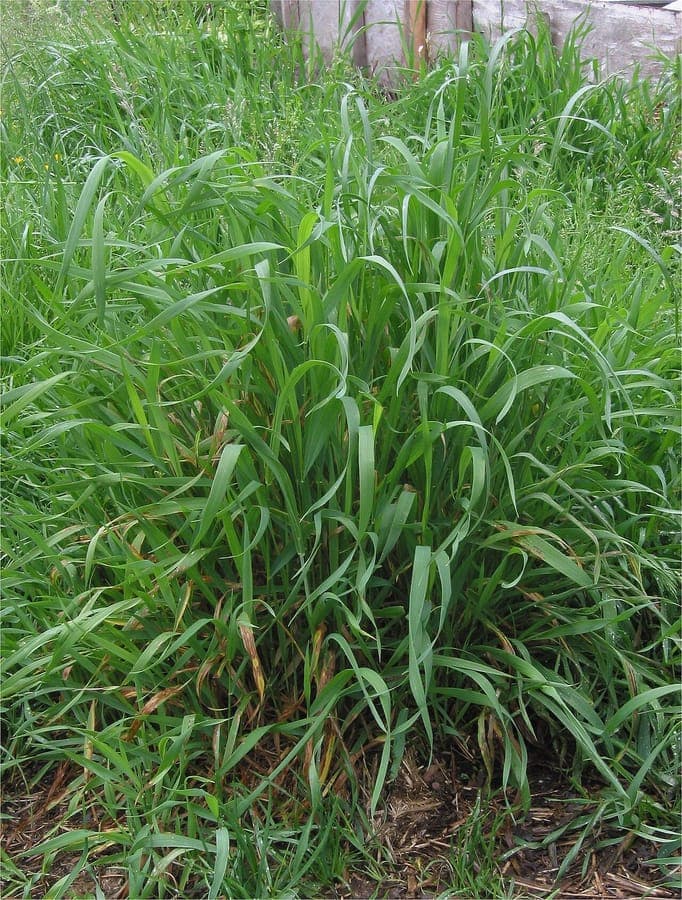
Rasbak / CC BY-SA 3.0, via Wikimedia Commons
Quackgrass: complete guide
Elymus repens
Want to see Quackgrass: complete guide in your garden?
1 minute, no credit card
Overview
Quackgrass, or Elymus repens, is a hardy perennial grass that divides gardeners: some curse it as relentless weed, others respect it for its tenacity. Native to temperate regions of Europe and Asia-including Austria, the Baltic States, and parts of Central Asia-it's now widespread across North America and northern Europe. It spreads aggressively via rhizomes that can extend up to 2 meters per year underground, sneaking beneath borders and popping up where least expected. Though often considered a nuisance, it holds value in erosion control and poor soils. If you're designing a low-maintenance or wild garden, understanding its behavior is key. On gardenworld.app, you can map out planting zones that either contain or avoid invasive species like quackgrass.
Appearance & bloom cycle
Quackgrass grows in upright clumps, reaching 30–100 cm in height. Leaves are narrow, 15–40 cm long and 3–8 mm wide, with a rough texture and a pale green to blue-green tint. From June to September, it produces slender, erect spikes 5–15 cm long. The flowers are greenish and inconspicuous, lacking petals, but produce viable seed heads if left unchecked. However, most spread occurs through underground rhizomes-creeping, white, jointed stems that root at nodes. These can lie dormant for months, then sprout rapidly when disturbed. A single fragment of rhizome just 2 cm long can generate a new plant.
Ideal location
Quackgrass thrives in full sun to light shade, scoring a 7/10 on the light scale. Aim for at least 5–6 hours of direct sunlight daily. It colonizes open fields, roadsides, and neglected garden corners. In cultivated plots, it often appears along fence lines, garden beds, or where soil has been disturbed. If planting intentionally-for instance, on a slope prone to erosion-use physical barriers. Install root barriers (plastic or metal) at least 60 cm deep to prevent lateral spread. Avoid planting near vegetable beds or flower borders unless you're prepared for constant management.
Soil requirements
This grass tolerates a wide pH range-5.2 to 7.8-making it adaptable to acidic sands and heavier clays. It prefers well-drained soils but survives temporary waterlogging. Fertility isn't a barrier; in fact, rich soils promote faster rhizome growth. Avoid adding compost or nitrogen-heavy fertilizers near quackgrass patches. While it grows in poor soils, its resilience increases when nutrients are available, making control tougher.
Free design
Want to see Quackgrass: complete guide in your garden? Make a free design now.
Watering
Once established, quackgrass is drought-tolerant thanks to rhizomes that reach 1.5 meters deep. During establishment-first 4–6 weeks-water every 2–3 days, applying 1–2 liters per m². After that, rainfall is usually sufficient. In prolonged droughts, the foliage may brown, but revival occurs within days of rain. Overwatering isn't harmful, but it encourages denser growth, so minimal irrigation is best if control is your goal.
Pruning
Cutting back the top growth won't kill quackgrass but can weaken it over time. Mow or trim 2–3 times per growing season, cutting to 10 cm above soil. This reduces energy storage in rhizomes. Never leave clippings on site-rhizome fragments can regrow. Use a lawn mower with a bag or collect by hand. For spot control, dig out entire rhizome networks, ensuring no pieces remain. A garden fork helps lift soil gently while preserving root integrity for full removal.
Maintenance calendar
- Jan: Monitor for early shoots in mild climates
- Feb: Inspect borders; remove visible rhizomes
- Mar: Prepare tools; start light soil turnover
- Apr: Hand-pull young plants; avoid tilling
- May: Watch for rapid vertical growth
- Jun: First flowering; mow before seed set
- Jul: Second mowing; check for spread
- Aug: Inspect along paths and beds
- Sep: Final cut to reduce overwintering biomass
- Oct: Carefully dig and remove rhizomes
- Nov: Mulch non-infested areas to suppress germination
- Dec: Review season's progress; plan for spring
Winter hardiness
Quackgrass is winter-hardy in USDA zones 3–7. It withstands temperatures down to -40°C. Above-ground foliage dies back in winter, but rhizomes remain alive below frost line. In milder winters, green shoots may persist. No winter protection is needed, and snow cover can actually insulate rhizomes. This hardiness makes eradication difficult-plants rebound quickly in spring.
Companion plants
Due to its invasive nature, quackgrass isn't a reliable companion for most garden plants. It outcompetes shallow-rooted perennials and vegetables. However, in wild or restoration areas, it may coexist with aggressive natives like goldenrod (Solidago spp.) or switchgrass (Panicum virgatum), provided space is ample. Avoid pairing with delicate species. If using in erosion control, isolate it with deep edging. On gardenworld.app, you can design buffer zones and visualize how plant spread impacts long-term layout.
Closing
Quackgrass demands respect. Whether you're battling it or using it strategically, success lies in consistency. Manual removal, sharp tools, and patience are essential. Chemical controls exist but aren't always necessary-persistent digging and mowing work well. Before planting anything near quackgrass, assess your goals. And for smarter garden planning, use gardenworld.app to map rhizome-prone areas and optimize your space.
Want to see Quackgrass: complete guide in your garden? Make a free design now.
Upload a photo, pick a style, and get a photorealistic design with plant list in under a minute.
No credit card required


Similar plants
Sporobolus pungens: complete guide
Sporobolus pungens
Sporobolus pungens is a stoloniferous Mediterranean coastal grass with outstanding salt and drought tolerance, perfect for seaside and dry gardens.
Mediterranean aegilops: complete guide
Aegilops biuncialis
Everything about Aegilops biuncialis, a Mediterranean annual grass with ornamental spikes and outstanding drought tolerance for dry gardens.
Silver bluestem: complete guide
Bothriochloa saccharoides
Full guide to Bothriochloa saccharoides (silver bluestem): site, soil, watering, winter hardiness, pruning, and garden companions.