
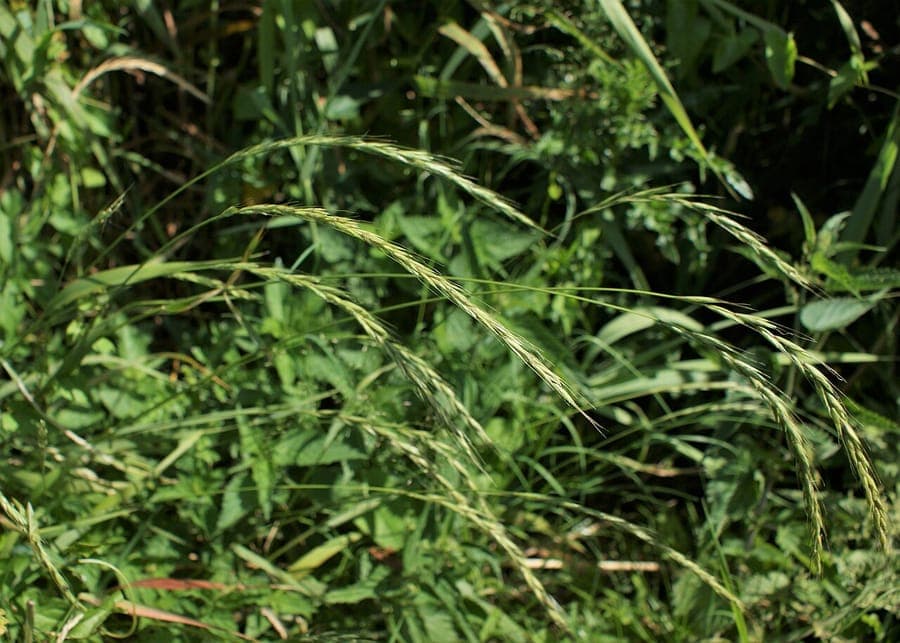
Krzysztof Ziarnek, Kenraiz / CC BY-SA 4.0, via Wikimedia Commons
Bearded couch: complete guide
Elymus caninus
Want to see Bearded couch: complete guide in your garden?
1 minute, no credit card
Overview
Bearded couch (Elymus caninus) is a striking, clump-forming perennial grass native to woodlands, hedgerows and damp meadows across central and eastern Europe. In the garden, it brings vertical structure, subtle texture and quiet beauty from early summer through to winter. It reaches 80–150 cm in height and blooms from June to July. Unlike aggressive couch grasses, this species spreads gently by seed, not rhizomes, making it safe for mixed borders. It's fully hardy, low-maintenance and perfect for moist, semi-shaded areas where many ornamentals struggle.
On gardenworld.app, you can design a planting scheme that integrates Bearded couch into damp, naturalistic corners of your garden. Its soft grey-green foliage and tall flower spikes work well in wildflower meadows or beside ponds.
Appearance & bloom cycle
The leaves are narrow, 30–50 cm long, with a silvery-grey sheen and rough edges. They form dense, upright tussocks that remain attractive well into autumn. In early June, stiff flowering stems rise above the foliage, bearing long, slender spikes 10–20 cm in length. These start with a purplish tint and develop a soft, bristly 'beard' – the source of its common name. The inflorescence matures to pale grey and persists through winter, adding movement and texture to the dormant garden.
Seeds shed naturally in September, often carried by wind or small animals. While self-seeding is possible, it's not invasive. The plant dies back in winter, but the dried stems provide structure until late February.
Ideal location
Bearded couch thrives in partial shade to full sun, but performs best in light shade, especially under deciduous trees or along woodland edges. It tolerates sun if the soil stays consistently moist. Avoid hot, dry south-facing beds unless you're able to irrigate regularly. It's ideal for damp corners, boggy borders or near stream banks where few other grasses survive.
This isn't a grass for dry, sandy soils. It needs reliable moisture, especially during establishment and dry summers.
Soil requirements
Prefers moist, humus-rich, well-drained soil with a pH between 5.5 and 7.0. Clay and loam soils are ideal; sandy soils can work if amended with compost or leaf mould to increase water retention. At planting, mix in well-rotted manure or compost to boost organic content. Avoid high-nitrogen fertilisers – they promote weak, floppy growth.
Use gardenworld.app to run a soil analysis and get custom recommendations for improving moisture retention and companion planting.
Free design
Want to see Bearded couch: complete guide in your garden? Make a free design now.
Watering
Water regularly during the first growing season and in dry spells. Once established, it's moderately drought-tolerant but will show stress – drooping or browning leaves – if left too dry. Water deeply once a week during summer droughts. Never let the root zone dry out completely. No supplemental watering is needed in winter.
Pruning
Cut back hard in late winter or early spring, just before new growth emerges. Trim old foliage to 10–15 cm above ground level using sturdy secateurs or shears. The old growth can be brittle and sharp, so wear gloves. Remove all cut material to prevent fungal issues. No deadheading is required – let the seed heads stand for winter interest.
If you want to collect seeds, leave a few spikes intact until September.
Maintenance calendar
- January: Dormant. Check for collapsed stems.
- February: Prepare tools for pruning.
- March: Cut back old growth. Add compost if needed.
- April: New shoots appear. Watch for slugs.
- May: Rapid leaf development. No feeding.
- June: Flowering begins. Peak visual impact.
- July: Full bloom. Seeds begin to form.
- August: Seed heads mature. Minimal care.
- September: Seeds dispersed. Optional seed collection.
- October: Stems remain upright. Good structure.
- November: Gradual dieback. Leave standing.
- December: Fully dormant. No maintenance.
Winter hardiness
Bearded couch is extremely hardy, thriving in USDA zones 4–7. It withstands temperatures down to -25°C without protection. The crown survives under snow cover, and old foliage helps insulate the base. In exposed gardens, a light mulch of straw or leaf litter around young plants can help, but it's rarely necessary.
Companion plants
Pair with moisture-loving perennials like Iris sibirica, Filipendula ulmaria, Molinia caerulea or Carex elata 'Aurea'. It also complements shrubs such as Cornus alba or Salix purpurea. For woodland edges, try pairing with Digitalis, Alchemilla mollis or Geranium phaeum. Avoid vigorous, sun-loving perennials that might outcompete it.
Closing
Bearded couch is an underrated grass with real garden value. It's not flashy, but it earns its place through reliability, texture and long seasonal interest. It asks for little – just consistent moisture and a yearly trim. Plant in groups of 3–5 for best effect. You'll find it at garden centres under its botanical name or as a 'moisture-tolerant ornamental grass'.
Retailers like OBI and Hornbach in Germany, Truffaut and Jardiland in France, and local garden centres in the UK often stock it seasonally. If you're unsure about placement or combinations, design a custom layout on gardenworld.app to see how it fits your space.
Want to see Bearded couch: complete guide in your garden? Make a free design now.
Upload a photo, pick a style, and get a photorealistic design with plant list in under a minute.
No credit card required


Similar plants
Sporobolus pungens: complete guide
Sporobolus pungens
Sporobolus pungens is a stoloniferous Mediterranean coastal grass with outstanding salt and drought tolerance, perfect for seaside and dry gardens.
Mediterranean aegilops: complete guide
Aegilops biuncialis
Everything about Aegilops biuncialis, a Mediterranean annual grass with ornamental spikes and outstanding drought tolerance for dry gardens.
Silver bluestem: complete guide
Bothriochloa saccharoides
Full guide to Bothriochloa saccharoides (silver bluestem): site, soil, watering, winter hardiness, pruning, and garden companions.