
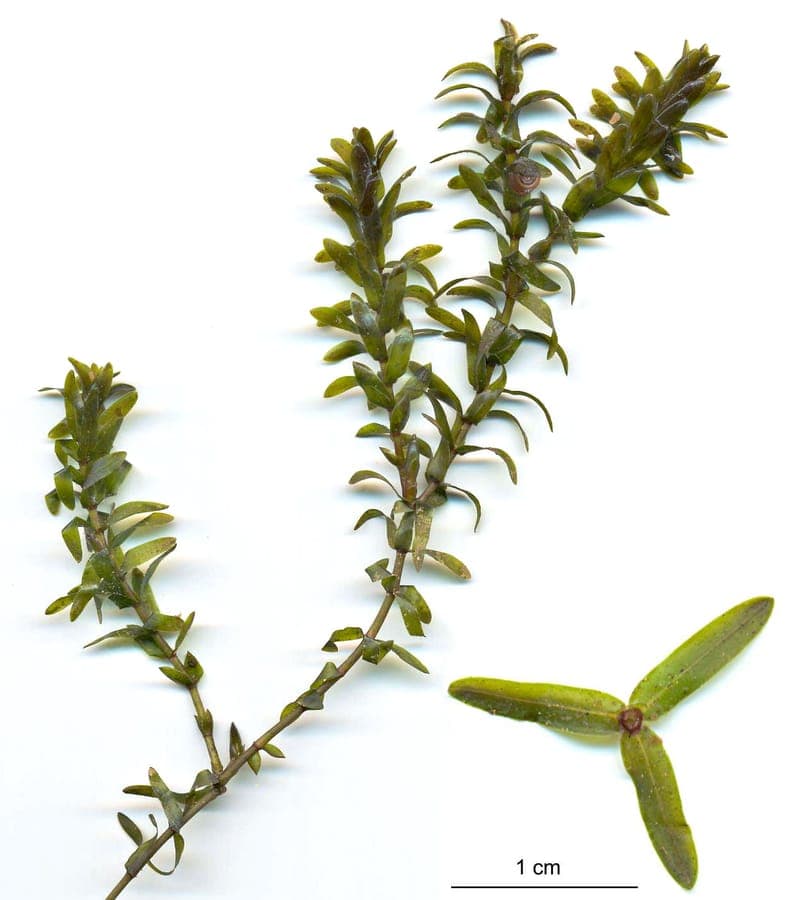
Christian Fischer / CC BY-SA 3.0, via Wikimedia Commons
Water-thyme: complete guide
Elodea canadensis
Want to see Water-thyme: complete guide in your garden?
1 minute, no credit card
Overview
Elodea canadensis, commonly known as Water-thyme, is a staple in both garden ponds and freshwater aquariums. Native to North America, it's now widely used across Europe and thrives in still or slow-moving water. As a member of the Hydrocharitaceae family, this submerged perennial herb is known for its rapid growth and oxygenating properties, making it invaluable for maintaining balanced aquatic ecosystems.
One of the biggest advantages of Water-thyme is its ability to oxygenate water during daylight hours, which helps suppress algae and supports fish and invertebrates. It also provides shelter for fry and aquatic insects. However, its vigorous growth means it needs regular management to prevent overcrowding.
On gardenworld.app, you can design a custom pond layout that integrates fast-growing oxygenators like Water-thyme without risking imbalance in your water feature.
Appearance & bloom cycle
Water-thyme features slender, branching stems that typically reach 30–60 cm in length, though they can stretch to 1 meter in ideal conditions. The leaves are arranged in whorls of three or four, bright green, and measure about 1–1.5 cm wide. They have a soft, almost translucent texture, giving the plant a delicate underwater look.
From May through August, small white flowers may appear at the water's surface. Each flower is roughly 5 mm across and floats briefly before wilting. Blooming is rare in indoor aquariums but more common in outdoor ponds with full sun exposure.
Growth peaks in late spring and summer, especially when water temperatures rise above 15°C. Growth slows in autumn and becomes nearly dormant in winter, though the plant stays green and doesn't die back completely.
Ideal location
Water-thyme performs best in clear water with a light intensity of around 7/10. It thrives in partial shade to full sun, but direct midday sun in shallow ponds can encourage algae growth on the leaves. The ideal planting depth is between 20 and 60 cm, where water temperatures remain stable.
In aquariums, use LED or T5 fluorescent lighting for 8–10 hours daily. Avoid strong water currents, as they can uproot young stems. Secure the base with small gravel or plant weights until roots establish.
You can find Elodea canadensis at most garden centres in the UK and North America. Look for nursery-bundled stems or potted specimens ready for immediate planting.
Soil requirements
While Water-thyme can grow without substrate by absorbing nutrients through its foliage, it roots best in nutrient-rich, clay-based pond soil. A mix of 3 parts clay loam and 1 part compost works well. Avoid sandy soils, as they don't hold nutrients effectively.
Do not use copper-based fertilizers-these are toxic to aquatic plants and invertebrates. Instead, dose liquid aquarium fertilizers in moderation during the growing season.
Free design
Want to see Water-thyme: complete guide in your garden? Make a free design now.
Watering
As a fully submerged aquatic plant, Water-thyme doesn't need traditional watering. Instead, focus on water quality. Maintain a pH between 4.8 and 7.8, with 6.5–7.2 being optimal. Low pH slows growth; high pH encourages algae.
In aquariums, change 20–30% of the water monthly to prevent nutrient buildup. In garden ponds, natural turnover is usually sufficient unless the pond is small or stagnant.
Pruning
Regular pruning is essential due to the plant's fast growth. Trim back stems when they begin to crowd the surface or block light to other plants. Use sharp, clean scissors to avoid damaging stems.
Cuttings as short as 5–10 cm can be replanted and will develop roots within days. Dispose of excess trimmings properly-don't compost near waterways, as they can regrow and become invasive.
Maintenance calendar
- January: Dormant phase. Check for rot or discoloration.
- February: Remove dead foliage. Inspect root health.
- March: Begin light trimming. Increase light exposure.
- April: Active growth starts. Introduce liquid fertiliser.
- May–August: Peak growth and flowering. Prune weekly if needed.
- September–October: Growth slows. Stop fertilising.
- November–December: Dormancy. Leave undisturbed.
Winter hardiness
Water-thyme is hardy to USDA zone 6 (-10°C). In deep ponds that don't freeze solid, the plant survives winter with minimal dieback. In shallow ponds or aquariums, keep water temperatures above 5°C to maintain slow growth.
No special protection is needed, but ensure the pond surface doesn't completely ice over. A pond heater or de-icer can help maintain gas exchange.
Companion plants
Pair Water-thyme with other oxygenators like Hornwort (Ceratophyllum demersum) or Water Starwort (Callitriche spp.). Floating plants such as Water Lilies (Nymphaea spp.) provide shade and help stabilise temperature.
Avoid aggressive spreaders like Water Hyacinth (Eichhornia crassipes), which can block light. Marginal plants like Marsh Marigold (Caltha palustris) work well at the pond's edge.
On gardenworld.app, use the companion planner to build a balanced aquatic garden that supports biodiversity and aesthetic harmony.
Closing
Water-thyme is a workhorse in any aquatic setup-low cost, high impact. It boosts oxygen levels, reduces algae, and supports wildlife. The only real challenge is keeping up with its growth. With consistent pruning and smart placement, it remains a top choice for pond keepers and aquarists alike. Remember: a little management goes a long way in preventing overgrowth.
Want to see Water-thyme: complete guide in your garden? Make a free design now.
Upload a photo, pick a style, and get a photorealistic design with plant list in under a minute.
No credit card required


Similar plants
Najas gracillima: complete guide
Najas gracillima
Discover Slender Waternymph, a delicate water plant for aquariums and ponds. Nutrition, growth, and aquascaping explored.
Ottelia alismoides: complete guide
Ottelia alismoides
Learn how to grow Duck-lettuce in aquariums and water gardens. Tips for growth, water conditions and care of this aquatic plant.
Hydrilla verticillata: complete guide
Hydrilla verticillata (L.f.) Royle
Discover Florida elodea, a fascinating submerged aquatic plant for ponds and aquariums. Complete growing and care guide.