
Stanislav Doronenko / CC BY 2.5, via Wikimedia Commons
Siberian ginseng: complete guide
Eleutherococcus senticosus
Want to see Siberian ginseng: complete guide in your garden?
1 minute, no credit card
Overview
Siberian ginseng, scientifically known as Eleutherococcus senticosus, is a striking deciduous shrub native to the Russian Far East, China, and Japan. This hardy plant is known by several names: Eleuthero, taiga root, and prickly aralia. With its characteristic thorny stems and vigorous growth habit, this is an excellent choice for gardeners seeking a low-maintenance plant with potential health benefits.
The plant grows primarily in mountain forests and steppes, where cold, dry climates form its natural habitat. This makes Siberian ginseng exceptionally suitable for gardens in temperate zones, even in the northernmost regions of Europe. The name "Eleuthero" comes from the Greek word "eleuthereia," meaning freedom - a reference to the plant's independence and resilience.
Appearance and Bloom
Eleutherococcus senticosus grows into a medium-sized shrub, typically between 1.5 to 3 meters tall. The most distinctive feature is the numerous sharp thorns that grow along the stems, providing excellent protection from browsing animals. The leaves are palmately compound, consisting of 5-7 leaflets with a soft, velvety texture.
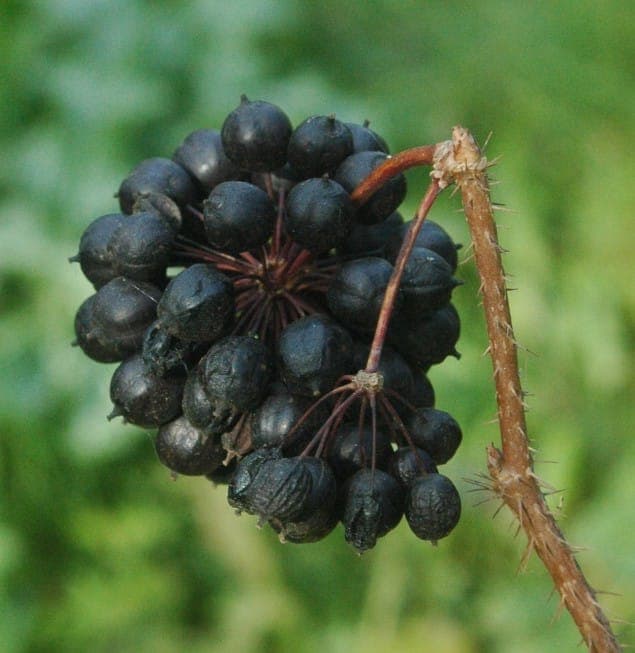
During summer months, typically from June through August, small flowers appear in shades of purple to pink. These blooms are nearly inconspicuous but attract various insects. Following flowering, small black berries develop and ripen in autumn, providing food for birds and wildlife.
The bark is grayish and becomes increasingly furrowed with age, giving the plant an appearance that conveys character and maturity.
Ideal Location
Siberian ginseng thrives best in full sun to partial shade. In southern Europe, partial shaded spots may even be preferable, protecting the plant from intense midday heat. Ensure the plant receives at least 4-6 hours of direct sunlight daily for optimal growth.
The plant is extremely tolerant of various wind conditions and can even flourish in windswept sites. This makes it a perfect choice for gardens at elevation or in open landscapes. Avoid very shadowed corners, where growth will be significantly reduced.
Soil
Eleutherococcus senticosus is far more tolerant of soil quality than many other shrubs. It grows best in well-draining soil but adapts readily to almost all soil types: sand, loam, and clay. Ideally, the soil has a pH of 4.5 to 7.5, thus slightly acidic to neutral.
The plant accepts even poor soils and requires minimal regular fertilizing. Light application of compost in spring is sufficient. Ensure good drainage; prolonged waterlogging can damage roots.
Free design
Want to see Siberian ginseng: complete guide in your garden? Make a free design now.
Watering
After the first year of establishment, Siberian ginseng requires very little water. Its deep root system allows it to tolerate prolonged dry periods. Once established, supplemental irrigation is usually unnecessary, even during dry summers.
For newly planted specimens, water weekly until strong growth becomes visible. During very dry spells in early summer, a single watering may be beneficial. Avoid waterlogging; it is better to err on the dry side than overwater.
Pruning
Siberian ginseng requires minimal maintenance pruning. In spring (March-April), dead or damaged branches can be removed. You can also replace old, weak wood by stimulating more vital shoots.
The natural form of the plant is attractive and open, so aggressive pruning is unnecessary and even undesirable. If the shrub becomes too large, pruning via hard cutback to the base of the shrub (to approximately 30 cm height) works excellently; new growth will follow in the next growing season.
Maintenance Calendar
Spring (March-May): Remove dead wood. Gently apply nutrition with compost. Begin watering young plants.
Summer (June-August): Monitor moisture, especially for young specimens. Enjoy the subtle blooms.
Autumn (September-October): Check seed opportunities. The plant may disperse shed seeds widely.
Winter (November-February): Virtually no maintenance required. The plant is completely dormant. Remove frozen branches if necessary.
Winter Hardiness
This is one of the hardiest shrubs you can plant. Eleutherococcus senticosus tolerates temperatures down to -40°C without damage, making it suitable for all European climate zones, from Mediterranean to Scandinavian. No winter protection is needed.
Companion Plantings
Siberian ginseng pairs beautifully with:
- Sedum species - Sedums offer textural contrast and colored foliage
- Berberis shrubs - Yellow or red tints complement the thorny plantings
- Rhododendron (hardy varieties) - Blooms contrast nicely with gray-green foliage
- Deschampsia grasses - Ornamental grasses add movement and lightness
- Taxus (Taxus baccata) - Dark green yew deepens the composition
Closing Thoughts
Siberian ginseng is an unusual and captivating shrub that lends personality to any garden. With its distinctive thorns, subtle blooms, and strong presence, this plant is an excellent choice for gardeners who value robustness and character. Whether you are interested in the potential health benefits of Eleuthero or simply seeking a hardy, low-maintenance shrub, Eleutherococcus senticosus is an investment that will flourish for decades.
Visitors to gardenworld.app discover specialized plant recommendations and designs that perfectly integrate this fascinating plant into your front yard. Learn how to add this piece of Russia to your own green sanctuary.
Visitors to gardenworld.app receive detailed designs that integrate this unique shrub with ideal companion plants, creating a front yard that is both beautiful and practical.
Want to see Siberian ginseng: complete guide in your garden? Make a free design now.
Upload a photo, pick a style, and get a photorealistic design with plant list in under a minute.
No credit card required


Similar plants
American marsh pennywort: complete guide
Hydrocotyle americana
Everything about Hydrocotyle americana: location, soil, moisture and winter care. A delicate groundcover for shaded pond edges and boggy garden borders.
Devil's club: complete guide
Oplopanax horridus
Full guide to growing Oplopanax horridus: ideal site, soil, watering, and care for this dramatic spiny woodland shrub.
Water pennywort: complete guide
Hydrocotyle umbellata
Everything about Hydrocotyle umbellata: ideal location, soil, watering, winter care and pond planting. A versatile aquatic plant for garden ponds and boggy spots.