
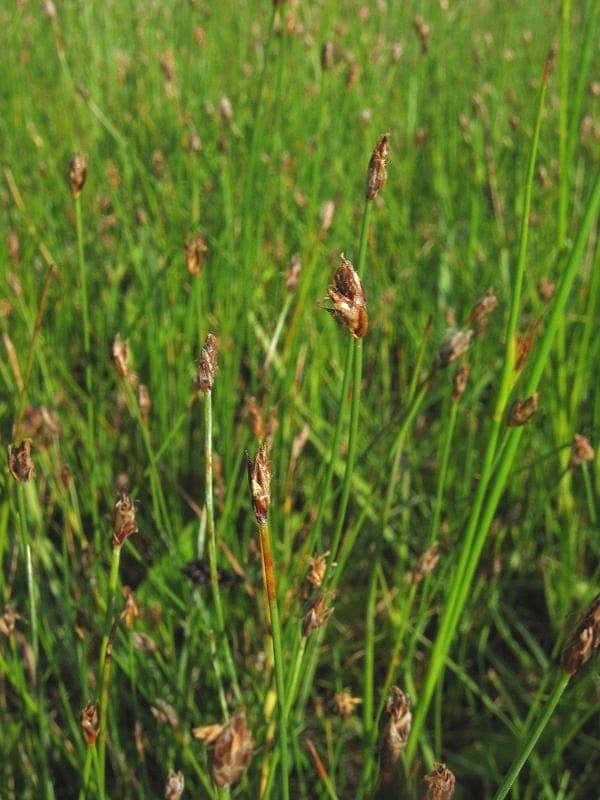
Kristian Peters -- Fabelfroh 08:01, 25 October 2006 (UTC) / CC BY-SA 3.0, via Wikimedia Commons
Few-flower spike-rush: complete guide
Eleocharis quinqueflora
Want to see Few-flower spike-rush: complete guide in your garden?
1 minute, no credit card
Overview
Few-flower spike-rush (Eleocharis quinqueflora) is a quiet achiever in the world of wetland plants. Native across a wide range from Alaska to the Baltic States, it thrives in marshes, damp meadows, and shallow pond margins. Standing 20–50 cm tall, this graminoid perennial forms tight tufts of slender, upright stems, making it ideal for softening water edges or adding texture to rain gardens. It's not flashy, but its resilience and ecological value make it a gardener's secret weapon for moist to wet sites.
On gardenworld.app, you can design a planting scheme that integrates few-flower spike-rush with other moisture-loving species, ensuring proper spacing and light exposure. It performs best in USDA hardiness zones 4–8, where it remains semi-evergreen in milder winters. Don't expect bold colour - this plant is about structure, movement, and creating habitat.
Appearance & bloom cycle
The plant's stems are cylindrical, bright green, and hair-like, growing in dense clusters. Each stem ends in a single, tiny spikelet - rarely more than five, hence the name quinqueflora. These appear from June to August and are a pale brown or olive-green, hardly showy but important for pollinators like small flies and beetles.
In autumn, the stems fade to a warm straw colour, standing well into winter and catching frost beautifully. It's not a plant for those seeking constant bloom, but one that offers subtle seasonal shifts. Young growth emerges in April, fresh and vibrant, slowly forming a fuller clump over several seasons.
Ideal location
Full sun is best - aim for a light level of 8 out of 10. It tolerates light shade, especially in hot summer climates, but growth will be looser and flowering reduced. Choose a spot where water doesn't drain away quickly: pond margins, swales, or low-lying garden areas that stay damp.
If you're planting in a container, sink it into the ground or place it in a shallow part of a pond, no deeper than 10 cm of standing water. Avoid placing it under large trees where leaf litter might smother the crowns. This is a plant that likes open skies and consistent moisture.
Soil requirements
It grows best in moist to saturated soils with a pH between 7.0 and 7.5. Ideal substrates include silty loam or sandy clay with plenty of organic matter. Avoid acidic or dry soils - this species won't survive long-term drought. If your soil drains too fast, mix in compost or pond planting soil to improve water retention.
When planting directly in the ground, loosen the soil to 15 cm deep and add a 5 cm layer of compost. For potted plants, use a heavy aquatic substrate to prevent floating.
Watering
Keep the soil consistently wet. During the growing season (April–September), maintain at least 2–5 cm of standing water or ensure the ground never dries out. In dry summers, hand-water weekly if no rainfall occurs. Established clumps are somewhat resilient, but young plants need constant moisture to develop strong roots.
If using in a rain garden, position it in the deepest zone where water pools for 24–48 hours after storms. Don't plant it in areas that dry within hours.
Free design
Want to see Few-flower spike-rush: complete guide in your garden? Make a free design now.
Pruning
Minimal pruning is needed. In late winter or early spring (February–March), cut back old stems to 5–10 cm above the crown. This clears space for new growth and reduces fungal risk. Leave the cuttings on site briefly to provide overwintering habitat for insects, then remove if they look diseased.
Use sharp shears and disinfect between cuts if mildew has been an issue. Never cut during active growth - late dormancy is the safest time.
Maintenance calendar
- Jan: Check for ice damage; leave old growth for wildlife
- Feb: Begin light pruning of dead material
- Mar: Finish cutting back; divide if clumps are congested
- Apr: Monitor water levels; top up with compost if needed
- May: Watch for slow expansion; transplant if overcrowded
- Jun–Aug: Blooming period; ensure consistent moisture
- Sep: Leave seed heads for birds and texture
- Oct: Observe autumn colour; no action required
- Nov: Let stems stand for winter interest
- Dec: Protect potted plants with hessian if severe frost is expected
On gardenworld.app, you can sync a custom care calendar to your phone, with reminders tailored to your region and planting setup.
Winter hardiness
Hardy in USDA zones 4–8. In the UK and northern US, it survives most winters without protection. Potted plants are more vulnerable - sink them deeper into water (30 cm minimum) to insulate roots. Mulch young or newly planted specimens with straw or reed mats if temperatures drop below -10°C for extended periods.
The plant dies back in harsh winters but resprouts from rhizomes in spring. Never remove all stems at once - stagger cutting to preserve habitat.
Companion plants
Pair few-flower spike-rush with other bog-tolerant species like Carex vulpinoidea, Eutrochium maculatum, or Iris versicolor. It works well as a middle layer between taller emergents and open water. Avoid invasive spreaders like Phalaris arundinacea, which can overwhelm it.
For visual contrast, plant alongside darker sedges or bright yellow-flowered marsh marigold (Caltha palustris). The fine texture of Eleocharis quinqueflora creates movement when planted in drifts.
Closing
Few-flower spike-rush may not grab attention, but it earns its place in any wet garden. It stabilizes soil, supports wildlife, and adds quiet beauty through the seasons. With little need for fuss, it's perfect for naturalistic designs or low-maintenance waterside planting.
You can find this plant at garden centres across the US and UK, often near marginal or bog plants. Look for healthy, green clumps without signs of drying or rot. With the right conditions - sun, wet soil, and space to breathe - this spike-rush will quietly thrive for years. Check gardenworld.app for planting layouts that maximize its ecological and aesthetic potential.
Want to see Few-flower spike-rush: complete guide in your garden? Make a free design now.
Upload a photo, pick a style, and get a photorealistic design with plant list in under a minute.
No credit card required


Similar plants
Flat-stemmed club-rush: complete guide
Bolboschoenus planiculmis
Everything about Bolboschoenus planiculmis: growing conditions, watering, care, and use as a pond margin or wetland plant in garden design.
Great Plains flatsedge: complete guide
Cyperus lupulinus
Everything about Great Plains flatsedge (Cyperus lupulinus): growing conditions, care, garden uses, and ecological value. Tips for pond margins and dry sandy soils.
Golden beak sedge: complete guide
Rhynchospora corymbosa
Everything about golden beak sedge (Rhynchospora corymbosa): a dramatic tropical marginal for pond edges, bog gardens, and wet habitats.