
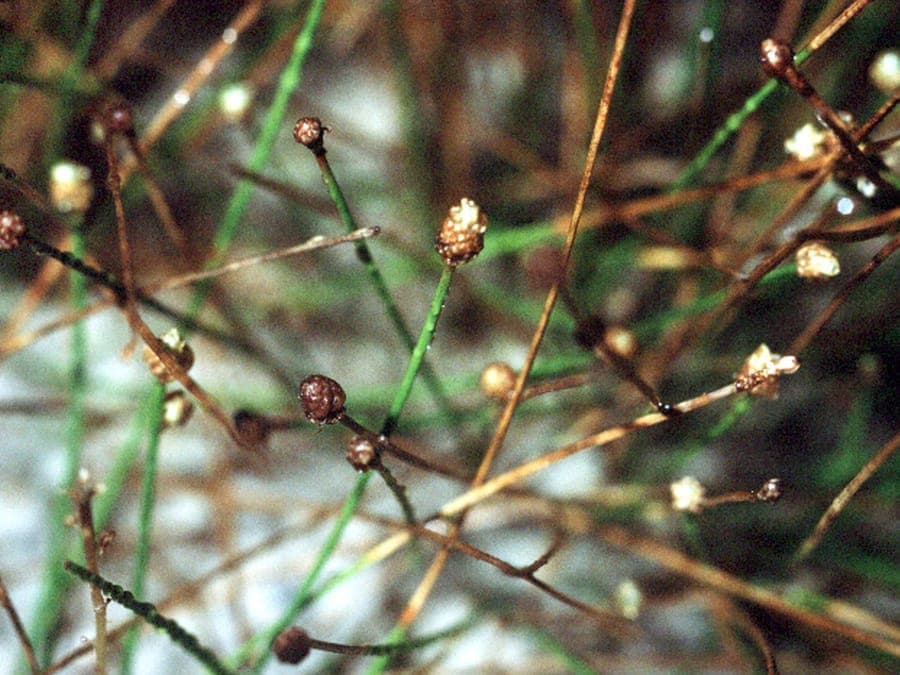
Robert H. Mohlenbrock / Public domain, via Wikimedia Commons
Dwarf spike-rush: complete guide
Eleocharis parvula
Want to see Dwarf spike-rush: complete guide in your garden?
1 minute, no credit card
Overview
Dwarf spike-rush (Eleocharis parvula) is a delicate, creeping perennial grass in the Cyperaceae family, native to wetlands across North America and parts of Europe. Reaching just 5 to 15 cm in height, it forms dense, carpet-like mats that thrive in consistently moist to wet soil. Hardy in USDA zones 6 through 10, it's an excellent choice for gardeners in temperate climates looking to enhance boggy corners or create naturalistic water-edge plantings.
The plant spreads slowly via rhizomes, filling in gaps with upright, fine-textured stems. It's particularly valued for its ability to stabilize soil along pond margins and in rain gardens. If you're designing a waterscape, check gardenworld.app for customizable garden plans that incorporate Dwarf spike-rush for year-round structure and ecological value.
Appearance & bloom cycle
Eleocharis parvula has thin, cylindrical, bright green stems that grow vertically and densely. From June through September, it produces small, inconspicuous green flowers at the stem tips-nothing flashy, but they attract pollinators and add subtle seasonal interest. The overall effect is one of soft texture, making it ideal for blending with bolder plants.
In autumn, the foliage may fade to a yellowish-green in colder zones, but in milder areas it often stays evergreen. The plant's grass-like habit and low profile make it a favorite for modern, minimalist garden designs. For a dynamic preview of how it changes with the seasons, visit gardenworld.app and simulate your layout across multiple months.
Ideal location
Plant in full sun to partial shade. A light intensity of 7 (equivalent to 5–6 hours of direct sun) is optimal. Too much shade leads to leggy growth and reduced density. Dwarf spike-rush performs best in damp or shallowly flooded areas-perfect for pond margins, bog gardens, or low-lying parts of the yard that hold water.
Avoid dry, sandy soils unless you can irrigate daily. It's a great candidate for rain gardens and bioswales. Plant in late spring, after the last frost. You'll often find young plugs at garden centres like B&Q, Wyevale, or local nurseries between May and July.
Soil requirements
This plant prefers moist, humus-rich soils with good organic content. It thrives in clay or loam but can tolerate silty conditions. The ideal pH range is 6 to 8. Sandy soils should be amended with compost to retain moisture. A mix of 2 parts garden soil to 1 part compost works well for establishing new plantings.
If your soil drains too quickly, consider creating a slight depression or lining the area with clay to hold water. For soil testing and amendment recommendations, gardenworld.app offers a free analysis tool to help you optimize conditions before planting.
Free design
Want to see Dwarf spike-rush: complete guide in your garden? Make a free design now.
Watering
Consistent moisture is essential. In the growing season (May to September), keep the soil wet or allow up to 2 cm of standing water. It can survive short dry spells, but prolonged drought causes stems to brown and thin out. Use rainwater when possible-tap water high in calcium can build up and affect long-term health.
For container-grown plants, ensure pots have standing water or sit in trays. Automated drip systems on a morning cycle work well in summer, especially in full-sun locations.
Pruning
Pruning is rarely needed. In late winter or early spring (February–March), remove dead or damaged stems to make room for new growth. Use clean, sterilized shears to prevent disease spread. Avoid heavy cutting-this plant recovers slowly if over-pruned.
If it starts to spread beyond desired areas, trim the rhizome edges with a spade. This keeps the plant contained and prevents competition with slower-growing neighbors.
Maintenance calendar
- Jan: Inspect for winter damage, leave debris for insulation
- Feb: Cut back old growth, tidy up beds
- Mar: Prepare soil, add compost
- Apr: Monitor for new shoots, start regular watering
- May: Plant or divide, increase water as temps rise
- Jun: First bloom phase, check for pests
- Jul: Maintain moisture, prevent drying
- Aug: Watch for algae in stagnant water
- Sep: Allow seed heads to mature for wildlife
- Oct: Reduce watering gradually
- Nov: Stop fertilizing, let plant go dormant
- Dec: Leave structure for winter interest
Winter hardiness
Dwarf spike-rush is hardy in USDA zones 6–10. In zone 8 and above, it remains semi-evergreen. In colder zones, top growth may die back, but roots survive under mulch or snow cover. Avoid cutting it back in fall-leave old stems for insulation and visual structure.
In containers, move pots to a sheltered spot or wrap with horticultural fleece during extended freezes.
Companion plants
Pair with moisture-loving plants like Carex vulgaris, Ligularia, Astilbe, or Iris versicolor. It also works well with Osmunda regalis or Lysimachia nummularia for layered texture. Avoid drought-tolerant species like Lavandula or Sedum.
For a natural pond edge, combine with Pontederia cordata or Butomus umbellatus for height contrast. Dwarf spike-rush also makes a subtle underplanting for taller marginal species.
Closing
Dwarf spike-rush is a quiet achiever in the garden. It doesn't shout for attention, but its resilience, texture, and ecological benefits make it indispensable in wet-area landscaping. Whether you're tackling a soggy patch or designing a wildlife-friendly pond, this grass delivers. Use gardenworld.app to design a planting scheme that highlights its strengths and fits your space perfectly.
Want to see Dwarf spike-rush: complete guide in your garden? Make a free design now.
Upload a photo, pick a style, and get a photorealistic design with plant list in under a minute.
No credit card required


Similar plants
Flat-stemmed club-rush: complete guide
Bolboschoenus planiculmis
Everything about Bolboschoenus planiculmis: growing conditions, watering, care, and use as a pond margin or wetland plant in garden design.
Great Plains flatsedge: complete guide
Cyperus lupulinus
Everything about Great Plains flatsedge (Cyperus lupulinus): growing conditions, care, garden uses, and ecological value. Tips for pond margins and dry sandy soils.
Golden beak sedge: complete guide
Rhynchospora corymbosa
Everything about golden beak sedge (Rhynchospora corymbosa): a dramatic tropical marginal for pond edges, bog gardens, and wet habitats.