
Christian Fischer / CC BY-SA 3.0, via Wikimedia Commons
Creeping spike-rush: complete guide
Eleocharis palustris
Want to see Creeping spike-rush: complete guide in your garden?
1 minute, no credit card
Overview
Creeping spike-rush (Eleocharis palustris) is a resilient, grass-like perennial that thrives in wetlands, pond margins, and soggy garden corners. If you're dealing with a persistently damp area and want a plant that adds texture without demanding attention, this Cyperaceae family member is a top contender. It's not flashy, but its quiet presence brings structure and ecological value to water gardens. On gardenworld.app, you can design a planting scheme that highlights its natural spreading habit and moisture needs.
This species is native across a wide range, from Alaska to Alabama and Albania to Assam, showing its adaptability to diverse climates. In gardens, it spreads slowly via rhizomes, forming dense tufts that stabilise muddy banks and provide cover for frogs, dragonflies, and aquatic insects. It's fully winter hardy in USDA zones 3–9, making it a reliable choice for temperate climates.
Appearance & bloom cycle
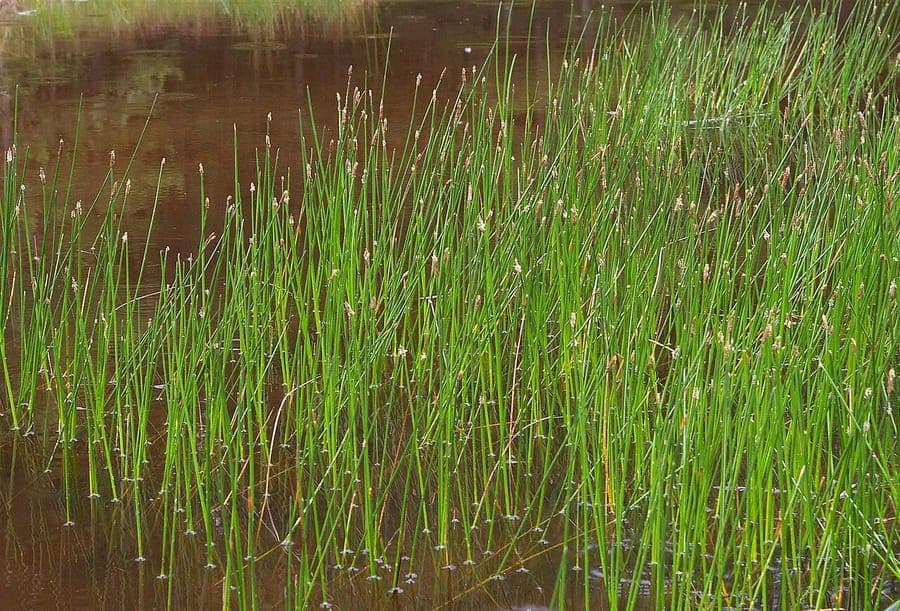
Creeping spike-rush has slender, bright green stems that grow upright to 20–60 cm in height. The leaves are reduced to small sheaths at the base, so the stems are the main visual element. From June to August, tiny brown spikelets appear at the stem tips-humble but vital for pollinators like small beetles and hoverflies.
The plant grows in a clumping, creeping form, gradually filling in gaps with fine vertical lines. In autumn, the foliage may turn a soft golden-brown but usually remains standing through winter, adding texture to the dormant garden. It's not grown for flowers, but for its neat, architectural form that works well in both formal and naturalistic designs.
Ideal location
This plant thrives in full sun to light shade, scoring an 8 out of 10 for light preference. It performs best in sunny pond margins or shallow water up to 10 cm deep. It can also grow in saturated soil along stream banks or in bog gardens. Avoid locations that dry out completely in summer.
For best results, plant it in a pond basket with heavy loam or aquatic soil, and place it on the pond shelf. In a bog garden, mix in plenty of composted leaf mould or peat-free substitute to retain moisture. Pair it with other moisture-loving plants for a cohesive look. You can use gardenworld.app to map out your pond edge and test different plant combinations before planting.
Soil requirements
Creeping spike-rush is not fussy about soil pH, tolerating anything from 4 to 8. It grows well in clay, loam, or peaty soils as long as they stay consistently wet. The key is organic richness and moisture retention. Avoid sandy or fast-draining soils unless you can irrigate regularly.
When planting in containers, use a low-nutrient aquatic compost. Do not add fertiliser-excess nutrients can trigger algae blooms. Top with a thin layer of gravel to prevent the soil from washing away and to deter snails from disturbing the roots.
Free design
Want to see Creeping spike-rush: complete guide in your garden? Make a free design now.
Watering
This is a true moisture lover. Keep the soil saturated at all times. In a pond, ensure water depth stays between 0–10 cm above the crown. In bog gardens, check weekly during dry spells and top up with rainwater or tap water if the surface starts to crack.
During prolonged droughts, the plant may go dormant or show browning tips, but it typically recovers once moisture returns. Never let it dry out completely-rhizomes can die if desiccated for too long.
Pruning
Little to no pruning is needed. In late winter or early spring, trim back any dead or damaged stems to about 5 cm above the soil. This encourages fresh growth and keeps the patch looking tidy. Use clean, sharp shears to avoid spreading disease.
If the plant spreads too vigorously, divide the clumps every 3–4 years in spring. Lift the root mass, cut into 10 cm sections, and replant or share with fellow gardeners. This also reinvigorates older, dense patches.
Maintenance calendar
- January: Check for frost damage. No action needed in mild winters.
- February: Monitor moisture if thawing occurs.
- March: Begin cutting back old growth.
- April: Divide and replant if needed. New shoots emerge.
- May: Ensure consistent moisture. No feeding required.
- June-August: Bloom period. Watch for water levels in hot weather.
- September: Growth slows. Reduce supplemental watering.
- October: Leave dead stems for winter interest and habitat.
- November-December: Fully dormant. No care needed. Hardy to -30°C.
Winter hardiness
Creeping spike-rush is extremely cold tolerant, surviving USDA zones 3–9 without protection. In most gardens, it dies back to the rhizomes and resprouts in spring. Even in frozen ponds, as long as the water doesn't freeze solid to the bottom, the plant will survive. No mulching or covering is necessary.
Companion plants
Pair Creeping spike-rush with other marginal plants like Carex vulpinoidea, Iris laevigata, or Lysimachia clethroides. For contrast, use broad-leaved plants such as Menyanthes trifoliata or Hydrocharis morsus-ranae. In bog gardens, it combines beautifully with Molinia caerulea or Eriophorum angustifolium.
Avoid invasive species like Phalaris arundinacea unless contained. Stick to native or non-invasive exotics to support local wildlife. A balanced planting mix boosts biodiversity and reduces maintenance.
Closing
Creeping spike-rush is a quiet achiever-unsung but essential in wet garden ecosystems. It's low maintenance, supports wildlife, and adapts to a range of conditions. You can find healthy plugs or potted plants at garden centres across the UK and North America. Look for reputable suppliers who grow sustainably. Avoid wild harvesting, as many wetland species are protected. Once established, Eleocharis palustris will form a lush, green carpet that evolves with the seasons. With thoughtful placement and minimal care, it becomes a lasting feature in any water-informed garden design.
Want to see Creeping spike-rush: complete guide in your garden? Make a free design now.
Upload a photo, pick a style, and get a photorealistic design with plant list in under a minute.
No credit card required


Similar plants
Flat-stemmed club-rush: complete guide
Bolboschoenus planiculmis
Everything about Bolboschoenus planiculmis: growing conditions, watering, care, and use as a pond margin or wetland plant in garden design.
Great Plains flatsedge: complete guide
Cyperus lupulinus
Everything about Great Plains flatsedge (Cyperus lupulinus): growing conditions, care, garden uses, and ecological value. Tips for pond margins and dry sandy soils.
Golden beak sedge: complete guide
Rhynchospora corymbosa
Everything about golden beak sedge (Rhynchospora corymbosa): a dramatic tropical marginal for pond edges, bog gardens, and wet habitats.