
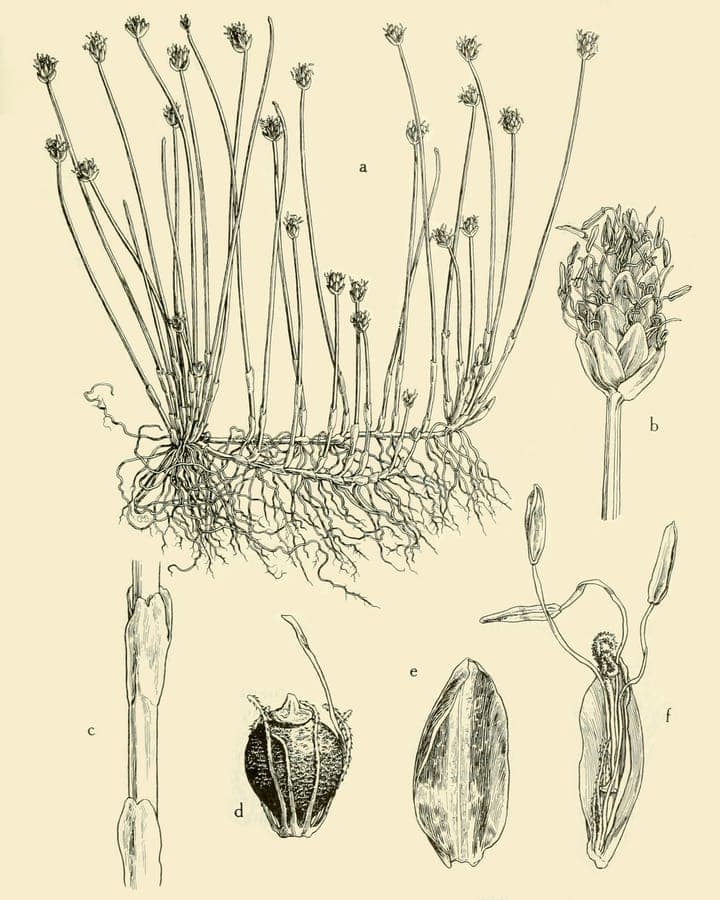
Donovan S. Correll and Helen B. Correll / Public domain, via Wikimedia Commons
Yellow spikerush: complete guide
Eleocharis flavescens
Want to see Yellow spikerush: complete guide in your garden?
1 minute, no credit card
Overview
Yellow spikerush (Eleocharis flavescens) is a beautiful, graceful wetland plant from the Americas. This plant grows especially in wet environments. It is a perfect choice for gardeners wanting to plant a wet area.
This plant is highly valuable for creating a natural water environment in the garden. It attracts birds and water creatures. Yellow spikerush is a low-growing plant that can be excellently used around ponds.
This plant is very nutritious in wet soils. This makes it a practical choice alongside a purely ornamental one.
Appearance and bloom
Yellow spikerush has fine, stiff leaves that grow upright. The leaves have a characteristic gray-green color. The plant grows to a low height of approximately 30-60 cm.
The flowers are small and inconspicuous. They appear as tiny, brown-yellow structures. The flowers are not very decorative.
The name 'flavescens' refers to the yellow color the plant can display. Especially in autumn, the leaves may take on a yellowish tint.
Ideal location
Yellow spikerush grows best in wet to very wet soils. It is a plant for moisture-loving gardens. The plant can grow both in water.
Sunlight is important for good growth. At least four to six hours of direct sunlight per day is ideal. The plant can also grow in partial shade.
This plant is very suitable for pond edges and water features.
Free design
Want to see Yellow spikerush: complete guide in your garden? Make a free design now.
Soil
Yellow spikerush grows best in wet, moist soils with abundant organic material. The soil can be very wet.
Sedges love heavy, clay soils with lots of organic material. Add plenty of compost to planting holes. A slightly acidic to neutral pH level is ideal.
Watering
Yellow spikerush requires constantly wet conditions. The plant wants to always stand in water or very wet ground.
If the plant grows in a container, ensure constantly moist soil. The water must never dry out completely. In moisture-rich gardens, hardly any extra water needs to be given.
Pruning
Yellow spikerush does not need much pruning. The plant grows naturally into a round, bushy shape.
Carefully remove dead stems in spring. This is better done before new growth begins.
Maintenance calendar
Spring: Remove dead stems. Check water conditions.
Summer: Ensure water level remains constant. Monitor for pests.
Autumn: The plant still performs well. May change color.
Winter: Dead parts can be removed for tidiness.
Winter hardiness
Yellow spikerush is very winter hardy. They can withstand temperatures to -20 degrees Celsius.
The plant can remain in the garden year-round. In very cold winters, parts of the plant may die, but the rhizome survives.
Companion plants
Water plantain, water lily and rush are good neighbors. Other low marsh plants can grow nearby.
Closing
Yellow spikerush is a practical and beautiful choice for wet terrain. With minimal care, they grow beautifully. Find them at garden centers. Visit gardenworld.app for more aquatic design tips. Explore gardenworld.app for water garden inspiration.
Want to see Yellow spikerush: complete guide in your garden? Make a free design now.
Upload a photo, pick a style, and get a photorealistic design with plant list in under a minute.
No credit card required


Similar plants
Flat-stemmed club-rush: complete guide
Bolboschoenus planiculmis
Everything about Bolboschoenus planiculmis: growing conditions, watering, care, and use as a pond margin or wetland plant in garden design.
Great Plains flatsedge: complete guide
Cyperus lupulinus
Everything about Great Plains flatsedge (Cyperus lupulinus): growing conditions, care, garden uses, and ecological value. Tips for pond margins and dry sandy soils.
Golden beak sedge: complete guide
Rhynchospora corymbosa
Everything about golden beak sedge (Rhynchospora corymbosa): a dramatic tropical marginal for pond edges, bog gardens, and wet habitats.