
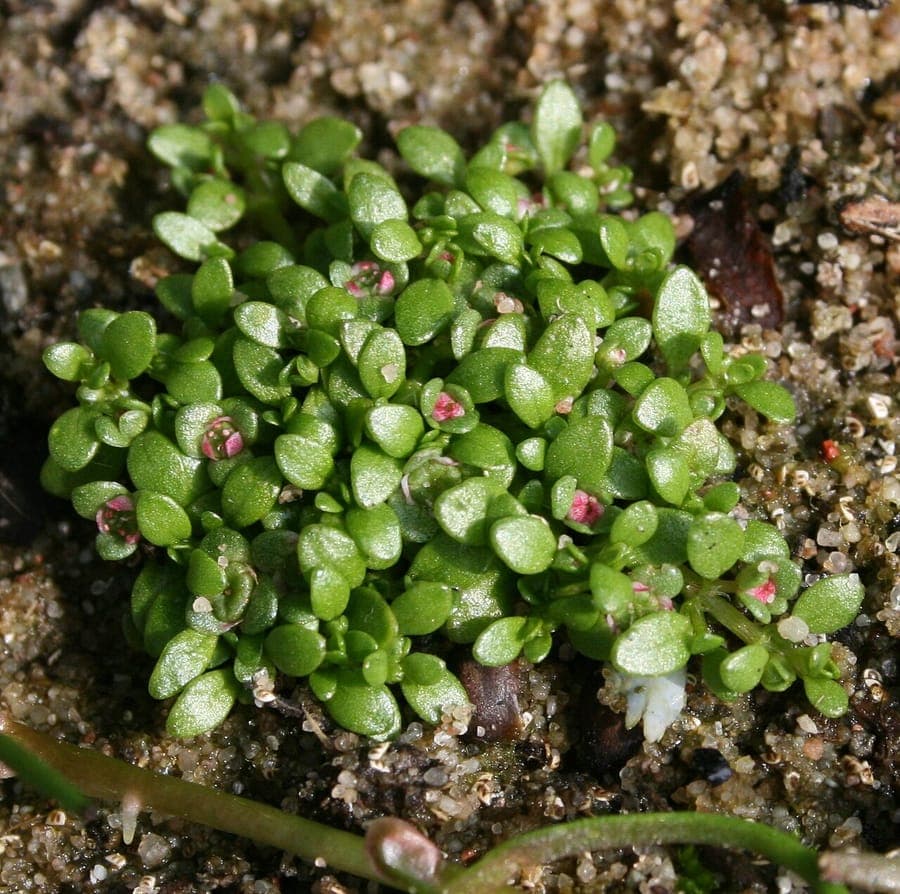
E Wusk / CC BY-SA 4.0, via Wikimedia Commons
Six-stamen waterwort: complete guide
Elatine hexandra
Want to see Six-stamen waterwort: complete guide in your garden?
1 minute, no credit card
Overview
Six-stamen waterwort (Elatine hexandra) is a modest but valuable aquatic plant native to shallow waters across parts of Europe, including the UK, Ireland, and northern France. It's a low-growing perennial that thrives in wet, acidic conditions and is ideal for pond margins, bog gardens, or shallow water shelves. While not flashy, it plays a vital role in stabilising muddy substrates and supporting small aquatic life. If you're planning a wildlife pond, this species deserves a spot. On gardenworld.app, you can design a pond layout that integrates six-stamen waterwort with complementary plants and proper water depth.
This plant is often overlooked in favour of more dramatic water lilies or reeds, but its ecological benefits and subtle beauty make it a smart choice for naturalistic water features. It spreads slowly and won't take over, making it suitable even for small garden ponds.
Appearance & bloom cycle
Six-stamen waterwort grows only 2–5 cm tall but spreads horizontally up to 15 cm per season. The stems are slender and branch frequently, forming a dense mat. Leaves are small (3–6 mm), lance-shaped, and bright green with a slight sheen. From June through September, tiny white flowers appear - just 2–3 mm wide - each with six prominent stamens, giving the plant its name. Flowers open in full sun and last only a day or two, but new ones appear regularly during the warm months.
The bloom is delicate, almost inconspicuous, but up close it adds texture and seasonal interest. It's not a plant for show, but one for gardeners who appreciate detail and natural balance. The seeds are dispersed in water, allowing gentle self-seeding in stable environments.
Ideal location
This plant needs bright light - a solid 8 out of 10. Full sun is best, though it tolerates light shade. It grows best in still or slow-moving water, 1–10 cm deep. Plant it along pond edges, in bog gardens, or on shallow shelves. Avoid areas with strong currents or fluctuating water levels. It's perfect for natural ponds without pumps or filters.
If growing in a container, sink it in water so the crown stays just below or level with the surface. On gardenworld.app, you can simulate different light exposures and water depths to see where it would thrive in your garden.
Soil requirements
It prefers acidic, low-nutrient soil with a pH between 5.0 and 5.5. Use a mix of peat, sand, and a little clay for good drainage and moisture retention. Avoid rich compost or fertiliser-heavy substrates - these encourage algae and more aggressive plants that can outcompete waterwort. A lean, mineral-based pond soil works best.
Plant in a fine mesh basket with coarse sand or aquatic compost to anchor the roots. Don't bury too deep - the growing tips should stay near the surface.
Free design
Want to see Six-stamen waterwort: complete guide in your garden? Make a free design now.
Watering
As an aquatic species, it must stay constantly moist. Submerge it in shallow water or grow it on permanently wet soil. In dry summers, top up water levels or mist the area if growing in a bog garden. Use rainwater or dechlorinated tap water - hard, alkaline water can raise pH and harm growth.
Avoid splashing from pumps or waterfalls. Still water is ideal. If you have a filter, direct the outflow away from the plant to prevent dislodging.
Pruning
No regular pruning is needed. The plant stays compact and doesn't become invasive. If it spreads too far or starts to look scraggly, trim lightly with sharp scissors. Remove excess growth and share it with fellow gardeners or use it to fill other pond areas.
Don't cut back in winter - leave dead stems in place to protect overwintering invertebrates. Clear only if the debris looks unsightly in spring.
Maintenance calendar
- January: Dormant - no action
- February: Check root anchoring
- March: Remove old foliage if necessary
- April: Plant new cuttings in 5–10 cm of water
- May: Ensure consistent moisture as temperatures rise
- June–September: Peak bloom - monitor weekly
- October: Leave dead material for winter cover
- November–December: Dormancy - minimal care
Winter hardiness
Six-stamen waterwort is hardy in USDA zones 7b and above. It survives frost as long as the roots remain submerged or in damp soil. In shallow ponds, prevent complete freezing with a pond heater or ice-free device. Top growth may die back, but the plant regrows from roots in spring.
Companion plants
Pair with other low-growing marginal species like dwarf sedge (Carex demissa), water pepper (Persicaria amphibia), or common brooklime (Veronica beccabunga). Avoid tall, fast-spreading plants like reeds or water lilies that block light. Good options include creeping spike-rush (Eleocharis palustris) and water starwort (Callitriche spp.).
This plant works well as ground cover beneath taller marginal plants. Just ensure companions don't shade it out completely.
Closing
Six-stamen waterwort isn't a headline act, but it's a reliable, low-maintenance plant that enhances pond biodiversity. It's perfect for gardeners who value function and subtlety over flash. Look for it at local garden centres or order through aquatic plant specialists. With the right conditions - sun, shallow water, and acidic soil - it will persist for years. For help designing a balanced pond, try gardenworld.app's planning tools to map out zones and plant placement.
Want to see Six-stamen waterwort: complete guide in your garden? Make a free design now.
Upload a photo, pick a style, and get a photorealistic design with plant list in under a minute.
No credit card required


Similar plants
Elatine alsinastrum: complete guide
Elatine alsinastrum
The Waterpurslane is an elegant aquatic plant with white flowers that thrives in wetland habitats. Perfect for ponds and wet gardens.
Eight-stamened waterwort: complete guide
Elatine hydropiper
Eight-stamened waterwort is a delicate, water-loving plant native to Europe. Learn how to grow and maintain this unique aquatic species.
Threestamen waterwort: complete guide
Elatine triandra
Grow and care for threestamen waterwort: ideal light, pH, bloom season, and maintenance tips for garden ponds and shallow water zones.