
Alvesgaspar / CC BY-SA 3.0, via Wikimedia Commons
Blue echium: complete guide
Echium plantagineum
Want to see Blue echium: complete guide in your garden?
1 minute, no credit card
Overview
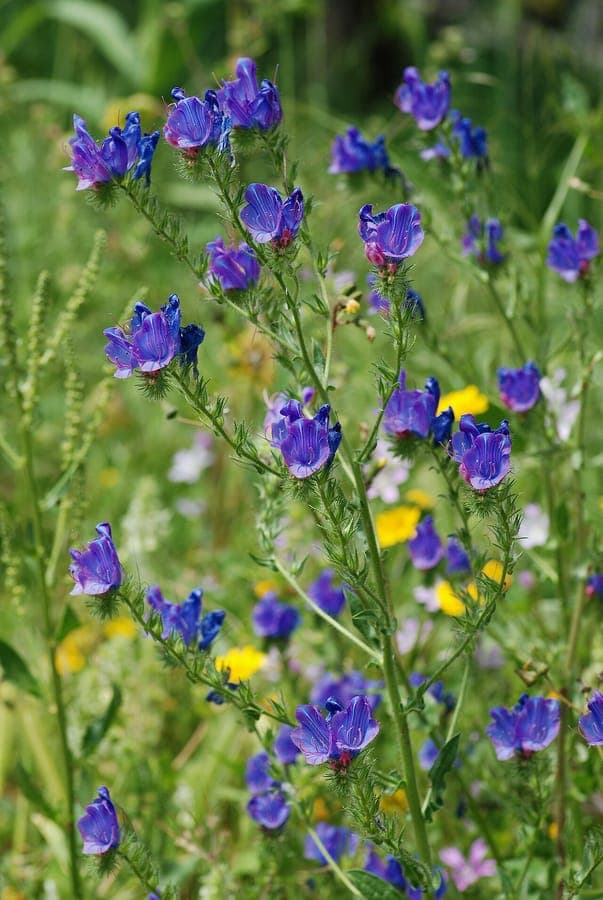
Blue echium, or Echium plantagineum, is a bold annual forb from the Boraginaceae family that brings drama and life to any sun-drenched garden. Native to southern Europe and North Africa, it's increasingly popular in UK and Irish gardens for its vibrant purple-blue spires and resilience in dry conditions. Growing up to 60 cm tall, it completes its life cycle in one season, but with the right conditions, it can self-seed and return year after year with minimal effort.
On gardenworld.app you can design a planting scheme that highlights blue echium's vertical form and pollinator appeal, making it a standout in wildflower meadows or gravel gardens.
Appearance & bloom cycle
The plant starts as a low rosette of lance-shaped, pale green leaves resembling plantain - hence one of its common names, 'plantain-leaved viper's bugloss'. From late spring (May) through summer (up to August), flowering stems rise, each tipped with dense clusters of tubular flowers. The blooms open from the bottom up, shifting from pink buds to vivid blue-purple, creating a gradient effect.
Each flower is rich in nectar, making blue echium a magnet for bees, hoverflies, and even hummingbird moths. A single plant can support dozens of pollinator visits daily. The flowering period lasts 6–8 weeks, depending on climate and moisture.
Ideal location
Blue echium thrives in full sun - think USDA zones 7–10, though it grows well as an annual in zones 5–6. Aim for a spot with at least 8 hours of direct sunlight. South- or west-facing borders, rock gardens, or dry slopes are ideal. Avoid shaded areas under trees or near tall shrubs; insufficient light leads to weak stems and sparse flowering.
It's perfect for coastal gardens, where salty winds and sandy soil would challenge many plants. Its upright habit adds height to the front or middle of a border, especially when massed in groups of 5–7.
Soil requirements
Well-drained soil is non-negotiable. Blue echium prefers neutral to slightly alkaline conditions, with a pH of 7.0–7.5. It tolerates poor soils, including sandy or gravelly types, but struggles in heavy clay or waterlogged ground.
If your soil retains moisture, amend it with horticultural grit or sharp sand. A light mulch of crushed stone helps reduce competition from weeds and keeps roots dry. Avoid rich composts or manures - they encourage leafy growth at the expense of flowers.
Free design
Want to see Blue echium: complete guide in your garden? Make a free design now.
Watering
Once established, blue echium is highly drought-tolerant. Water young plants weekly during dry spells in their first month. After that, rely on rainfall. Overwatering is a common mistake - soggy soil invites root rot and fungal issues.
Water at the base, not overhead, to keep foliage dry. In containers, ensure pots have drainage holes and don't sit in saucers of water. During prolonged droughts, a deep soak every 10–14 days is sufficient.
Pruning
Pruning isn't essential, but deadheading spent flower spikes encourages longer blooming and prevents excessive self-seeding. Cut back flowering stems to the base when most flowers have faded. If you want the plant to reappear next year, leave a few mature spikes to set seed.
Be aware that self-seeding can be vigorous in warm microclimates. In formal beds, this might require thinning in spring. On gardenworld.app, you can map self-sown seedlings and plan where to keep or remove them for balanced growth.
Maintenance calendar
- March–April: Sow seeds indoors at 15–18°C or directly in the ground after frost risk passes.
- May: Transplant seedlings outdoors, spacing 25–30 cm apart. Water lightly.
- June–July: Peak bloom. No feeding needed. Deadhead if desired.
- August: Seed heads mature. Collect seeds or allow natural dispersal.
- September–October: Plants die back. Clear debris or leave for winter texture.
Winter hardiness
As an annual, blue echium doesn't survive winter. It dies after setting seed. However, seeds can overwinter in the soil and germinate when temperatures rise in spring. In milder areas (zones 8+), some autumn-sown plants may overwinter as rosettes.
For reliable return, collect and store seeds in a cool, dry place. Sow fresh seed each year for guaranteed results, especially in colder zones.
Companion plants
Pair blue echium with other sun-loving, drought-tolerant species: lavender (Lavandula angustifolia), red valerian (Centranthus ruber), sedum (Sedum spectabile), or yarrow (Achillea millefolium). The blue spikes contrast beautifully with silver foliage or yellow blooms.
Avoid moisture-loving plants like astilbe or hostas - they demand different care and will clash in both water and soil needs.
Closing
Blue echium is a low-fuss, high-impact plant that rewards gardeners with colour, texture, and bustling insect life. It's ideal for beginners or those seeking a wilder, more sustainable garden style.
You can find seeds and young plants at garden centres across the UK, including local independents and chains. Look for untreated, organic seed stock for best ecological results.
With minimal care and smart placement, Echium plantagineum adds seasonal drama year after year. And with gardenworld.app, you can track its performance and refine your design over time.
Want to see Blue echium: complete guide in your garden? Make a free design now.
Upload a photo, pick a style, and get a photorealistic design with plant list in under a minute.
No credit card required


Similar plants
Western waterleaf: complete guide
Hydrophyllum occidentale
Full growing guide for western waterleaf (Hydrophyllum occidentale): shade tolerance, soil needs, watering, winter hardiness and naturalistic garden use.
Limestone phacelia (Phacelia affinis): complete guide
Phacelia affinis
Full guide to Phacelia affinis, the limestone phacelia: sowing tips, purple-blue bee flowers, drought tolerance and uses in dry or wildlife gardens.
Pyrenean viper's bugloss: complete guide
Echium asperrimum
Echium asperrimum is a striking biennial from the western Mediterranean with rough bristly stems and vivid blue flowers. A magnet for bees and a bold border plant.