
Aung / Public domain, via Wikimedia Commons
Wild cucumber: complete guide
Echinocystis lobata
Want to see Wild cucumber: complete guide in your garden?
1 minute, no credit card
Overview
Wild cucumber, or Echinocystis lobata, is a fast-growing annual vine native to much of North America, from Alberta down to Arizona and east to Connecticut. Part of the Cucurbitaceae family, it's closely related to gourds and cucumbers but isn't edible. Instead, it's valued for its lush, sprawling growth and ability to cover fences, arbors, and unsightly structures in a single season. Reaching up to 6 meters tall, it's ideal for gardeners wanting quick vertical interest without permanent commitment.
On gardenworld.app you can design a garden layout that integrates Wild cucumber into naturalistic or wildlife-friendly spaces. It's not typically sold in garden centres, but seeds are available from native plant nurseries or specialty online seed suppliers. It's a great choice if you're restoring a wild edge or boosting biodiversity.
Appearance & bloom cycle
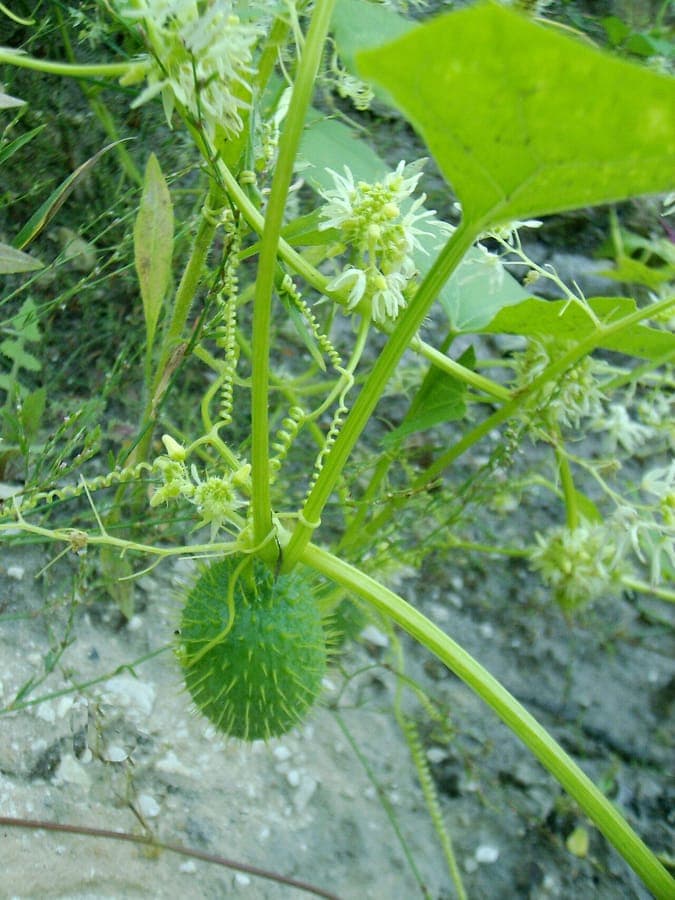
This vine has attractive, palmately lobed leaves about 5–10 cm across, with a bright green hue. Tendrils emerge in early summer, helping the plant climb via tight coils. From July to August, small, greenish-white flowers appear in drooping clusters. Male and female flowers grow on the same plant but in separate clusters-male ones at the top, female below. Bees and hoverflies do the pollinating.
By late August, the distinctive spiky fruits develop-3 to 5 cm long, green, and covered in soft spines. They resemble tiny hedgehogs, hence the name. When ripe in September, they explode with a noticeable pop, flinging seeds up to 6 meters away. After seed dispersal, the plant dies back completely, as it's an annual.
Ideal location
Choose a sunny to partly shaded spot with at least 6 hours of direct sun daily. Wild cucumber thrives with sturdy support-wooden trellises, chain-link fences, or pergolas work well. It's excellent for hiding compost bins or covering old sheds. Because it self-seeds readily, plant it where you don't mind some spread. In smaller gardens, grow it in a large container to limit expansion.
Avoid planting near crops like squash or melons, as it may attract pests or diseases common to cucurbits. On gardenworld.app, you can preview how this vine will look draped over structures and whether it complements your existing planting scheme.
Soil requirements
Wild cucumber isn't fussy. It grows in clay, loam, or sandy soils as long as they're moderately moist and well-drained. Ideal pH ranges from 6.0 to 7.5. If your soil is sandy and dries out fast, mix in compost to improve water retention. Avoid heavy fertilization-too much nitrogen leads to leafy growth but few flowers.
It often colonizes disturbed soils, including roadsides and abandoned lots, so don't worry about perfect conditions. Just ensure the spot doesn't stay waterlogged, which can cause root rot.
Free design
Want to see Wild cucumber: complete guide in your garden? Make a free design now.
Watering
Keep soil evenly moist during germination and early growth-about 1 inch of water per week. Once established, the vine is fairly drought-tolerant, especially in partial shade. During dry spells in July and August, water deeply every 10–14 days. Always water at the base to prevent powdery mildew on leaves.
Avoid overhead watering. Drip irrigation or soaker hoses work best, especially in humid climates where fungal diseases are more common.
Pruning
No regular pruning is needed. However, trim back aggressive shoots that shade out nearby plants or grow where they're not wanted. Use clean snips and cut just above a leaf node. Remove any dead or yellowing leaves to improve airflow.
If you don't want self-seeding, cut off fruits before they burst. You can save the seeds for next year or dispose of them to prevent volunteer seedlings.
Maintenance calendar
- Jan–Feb: Dormant. No care needed.
- Mar: Start seeds indoors at 20–22°C if starting early.
- Apr: Sow directly outdoors after last frost, 1 cm deep.
- May: Thin seedlings to 30 cm apart. Protect from slugs.
- Jun: Install supports. Monitor for aphids or mildew.
- Jul–Aug: Flowers appear. Water during dry periods.
- Sep: Fruits ripen and explode. Seeds scatter.
- Oct: Plant dies. Cut back or leave for winter structure.
- Nov–Dec: Clear debris or leave for insects. Seeds overwinter in soil.
Winter hardiness
As an annual, Wild cucumber doesn't survive winter above ground. It reappears from seed the following spring. It's adapted to USDA zones 4–9, meaning it grows reliably across most of the US and southern Canada. Seeds remain viable in soil for several years, so expect occasional volunteers even if you don't replant.
Leaving some dead stems through winter provides shelter for beneficial insects. Avoid deep tilling, which can damage dormant seeds.
Companion plants
Pair Wild cucumber with tall, airy perennials like Echinacea, Monarda, or Verbena bonariensis. These attract pollinators and won't compete heavily for light. Native grasses like Panicum or Sorghastrum add movement and contrast.
Avoid planting near slow-growing vines or low-growing edibles that could be smothered. Also, keep distance from garden cucumbers or pumpkins to reduce pest and disease risks.
Closing
Wild cucumber isn't a traditional garden plant, but it brings wild charm and rapid coverage to vertical spaces. It's perfect for beginners or naturalistic gardens. While you won't find it at every garden centre, seeds are available from native plant suppliers. Treat it as a seasonal guest-vigorous, green, and full of surprises. Whether you're screening a fence or supporting pollinators, this vine earns its place with minimal fuss. And with gardenworld.app, you can visualize exactly where it fits best in your evolving garden.
Want to see Wild cucumber: complete guide in your garden? Make a free design now.
Upload a photo, pick a style, and get a photorealistic design with plant list in under a minute.
No credit card required


Similar plants
Kiwano: complete guide
Cucumis metuliferus
Everything about growing kiwano: location, soil, watering, and harvesting this striking African horned cucumber with spiny orange fruits.
Sponge gourd: complete guide
Luffa aegyptiaca
Full guide to growing sponge gourd (Luffa aegyptiaca): sowing, care, harvesting edible fruits and drying natural loofah sponges in your garden.
Cucumis prophetarum: complete guide
Cucumis prophetarum
Wild cucumber is a fascinating climbing plant with remarkable spiky fruits. Learn how to grow this exotic annual from seed to harvest for decorative interest.