
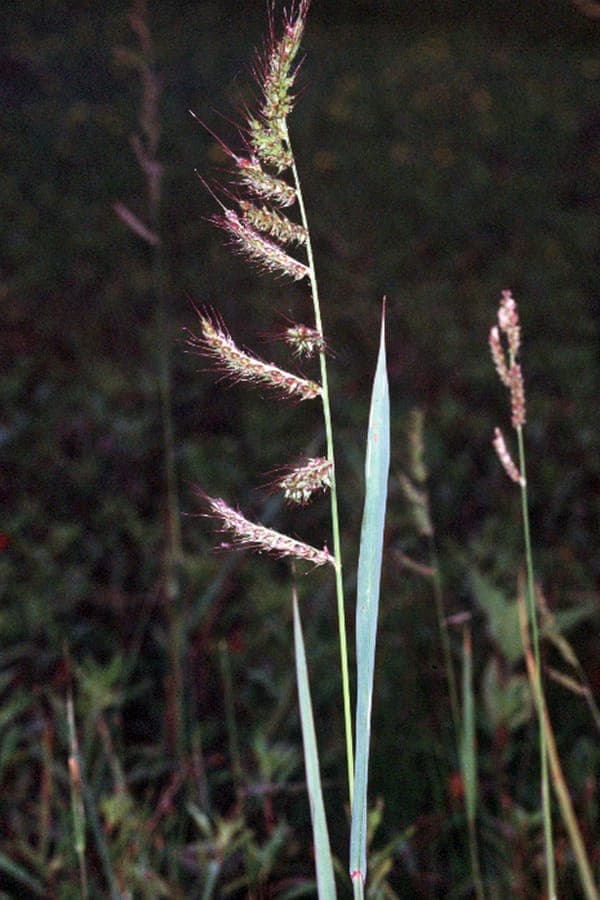
Robert H. Mohlenbrock. USDA SCS. 1989. Midwest wetland flora: Field office illustrated guide to plant species. Midwest National Technical Center, Lincoln. Courtesy of USDA NRCS Wetland Science Institute. / Public domain, via Wikimedia Commons
Barnyardgrass: complete guide
Echinochloa crus-galli
Want to see Barnyardgrass: complete guide in your garden?
1 minute, no credit card
Overview
Barnyardgrass, or Echinochloa crus-galli, is a robust annual grass commonly found in damp, disturbed soils across temperate regions. While often dismissed as a weed in agricultural fields, it holds surprising value in informal and naturalistic garden designs. Native to parts of Asia and Eastern Europe, it has naturalised widely, including across the UK and North America. It thrives in wet soils, ditches, pond margins, and poorly drained areas where other plants struggle.
On gardenworld.app, you can design a planting scheme that works with barnyardgrass rather than against it, using its self-seeding habit to fill in wet spots without constant replanting. It's a practical solution for boggy corners that need texture and movement.
Appearance & bloom cycle
Barnyardgrass grows 60–120 cm tall with an upright, slightly arching habit. The leaves are broad for a grass-1–2 cm wide-and have a smooth, glossy green surface. They emerge rapidly in late spring and form dense clumps by early summer. The plant produces thick, cylindrical seed heads from July to September. These start out green, then mature into soft, drooping plumes of bronze or golden-brown.
Each flower spike can carry hundreds of tiny seeds, which are a food source for finches and other small birds. The blooming season lasts up to ten weeks, depending on moisture and temperature. Once the seeds ripen in late summer, they disperse easily by wind, water, or wildlife, ensuring the plant returns the following year.
Ideal location
This grass thrives in full sun-rate 8 out of 10 for light-and prefers warm, open areas. It's ideal for pond edges, rain gardens, or low-lying areas that collect water after heavy rain. Avoid dry, sandy, or heavily shaded spots; barnyardgrass won't survive long there.
It works well in wildflower meadows or naturalistic plantings alongside species like reedmace (Typha), yellow flag iris (Iris pseudacorus), or soft rush (Juncus effusus). In formal gardens, it can look out of place, but in a relaxed, ecological design, its informal texture adds depth. Garden centres across the UK stock seeds or young plants in spring, but many gardeners find it shows up naturally after rain.
Soil requirements
Barnyardgrass isn't fussy about soil type, as long as moisture is consistent. It grows well in clay, silt, and even compacted urban soils. The ideal pH range is 7.5 to 8.0-slightly alkaline. It struggles in highly acidic soils below pH 6.0.
It prefers nutrient-rich ground, often colonising fertilised fields or compost-rich patches. However, it can persist in moderately poor soils if water is available. Avoid planting it in pots with fast-draining compost; it needs moisture retention. Use a loam-based mix if growing in containers, and ensure the pot doesn't dry out completely.
Free design
Want to see Barnyardgrass: complete guide in your garden? Make a free design now.
Watering
Keep the soil consistently moist. During its active growth from May to September, never let the root zone dry out. In extended dry spells, water deeply once or twice a week, especially if grown in containers or raised beds.
In the ground, it often survives on rainfall alone in wetter regions. But in drier summers, supplemental watering helps maintain vigour. If planted near a pond or in a bog garden, occasional flooding is no problem-even beneficial. Just avoid stagnant water for long periods, as this can promote fungal issues.
Pruning
Pruning isn't necessary, as barnyardgrass is an annual. However, you can cut back the flower heads in late autumn or early winter to tidy the garden or reduce self-seeding. Use shears or hedge trimmers for dense stands.
Leave some seed heads standing over winter to support birds. If you want to limit spread, remove plumes before seeds mature-usually by late August. Cut stems to about 10 cm above ground level to avoid damaging soil structure.
Maintenance calendar
-
January: Clear old stems if desired. No active care needed.
-
February: Prepare for spring sowing. Check soil moisture in planting areas.
-
March: Sow seeds indoors at 18–22°C in moist seed compost.
-
April: Harden off and plant out after last frost (USDA zones 7b+).
-
May: Water regularly. Watch for competition from other weeds.
-
June: Rapid growth phase. Monitor soil moisture.
-
July: Flowering begins. Watch for seed development.
-
August: Peak bloom. Consider deadheading to control spread.
-
September: Flowers fade. Begin cleanup if desired.
-
October: Cut back or leave for winter interest.
-
November: Final tidy-up. Prevent seed dispersal.
-
December: Dormant. No action required.
Winter hardiness
As an annual, barnyardgrass dies completely after the first hard frost. It doesn't overwinter as a plant, but its seeds survive in the soil seed bank. These germinate when soil temperatures exceed 15°C in spring. In USDA zones 6–9, it reliably reappears each year without help.
No winter protection is needed. If you want to reduce next year's growth, cover the soil with mulch or landscape fabric in November to block light and suppress germination.
Companion plants
Pair barnyardgrass with moisture-loving perennials like marsh marigold (Caltha palustris), Joe-Pye weed (Eutrochium), or cardinal flower (Lobelia cardinalis). It also complements taller grasses like reed canary grass (Phalaris arundinacea).
Avoid combining with drought-tolerant species like lavender or sedum-moisture needs are too different. Plant in groups of 3–5 for a natural drift effect. Keep it away from delicate alpines or slow-growing perennials that could be smothered.
Closing
Barnyardgrass isn't a showpiece for formal borders, but it's a resilient, low-effort plant for wet, sunny corners. Its ability to thrive in poor conditions makes it a smart choice for eco-conscious gardeners. Just keep an eye on its spread-left unchecked, it can dominate.
You can source seeds from garden centres or online suppliers. Design your layout on gardenworld.app to balance its wild nature with structured planting, ensuring harmony in your garden's ecosystem.
Want to see Barnyardgrass: complete guide in your garden? Make a free design now.
Upload a photo, pick a style, and get a photorealistic design with plant list in under a minute.
No credit card required


Similar plants
Sporobolus pungens: complete guide
Sporobolus pungens
Sporobolus pungens is a stoloniferous Mediterranean coastal grass with outstanding salt and drought tolerance, perfect for seaside and dry gardens.
Mediterranean aegilops: complete guide
Aegilops biuncialis
Everything about Aegilops biuncialis, a Mediterranean annual grass with ornamental spikes and outstanding drought tolerance for dry gardens.
Silver bluestem: complete guide
Bothriochloa saccharoides
Full guide to Bothriochloa saccharoides (silver bluestem): site, soil, watering, winter hardiness, pruning, and garden companions.