
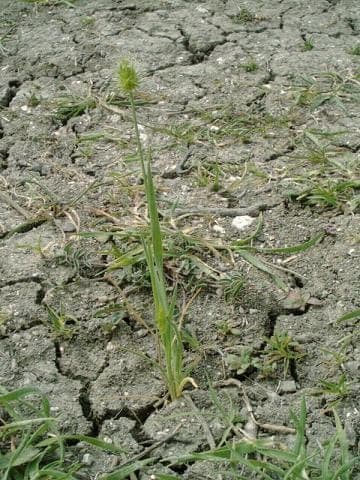
Wikimedia Commons / CC BY-SA 3.0, via Wikimedia Commons
Echinaria capitata: complete guide
Echinaria capitata
Want to see Echinaria capitata: complete guide in your garden?
1 minute, no credit card
Overview
Echinaria capitata, commonly known as headed pricklegrass or in French Echinaire a tetes, is a special drought-tolerant grass species from the family Poaceae. This species occurs naturally in the Mediterranean region and extends to Central Asia, from Hungary to the Balkans, North Africa, and the Near East. The plant is a true conqueror of dry, lime-rich soils.
In botanical gardens and dry grasslands, this plant is highly valued for its drought tolerance and aesthetic value.
Appearance and bloom
Echinaria capitata grows into a compact grass species with upright grass spikes. The plant reaches a height of 30 to 50 centimeters. The characteristic feature of this species is the head-shaped inflorescence, hence the name "headed pricklegrass". This flower forms a compact, spherical head at the end of the stem, entirely covered with prickly bracts and stylized protrusions.
The flower has a remarkable three-dimensional structure with radial arrangements of scales. The color is greenish with sometimes purplish tints. The grass spikes are fine and have a blue-green color that is very decorative.
The blooming period runs from May to July, after which the flower ripens in August-September. The ripe flowers are even more decorative than the blooming forms.
Ideal location
Echinaria capitata grows best in full sunlight. The plant tolerates no shade and grows best on very sunny locations where temperatures can run high. In its natural habitat, the plant grows on open, dry mountain slopes and steppes.
The plant is very tolerant of warm, dry conditions. In temperate climates, however, the plant can also grow, especially when the plant is kept in very dry conditions.
Protection from cold wind can be useful in very cold climates.
Soil
Echinaria capitata is extremely drought-tolerant and grows best in poor, well-drained soils. The plant tolerates calcareous soils very well and grows on stones, gravel, and sandy soils. In very nutrient-rich soils, the plant grows slowly and becomes lush regardless.
It is recommended to enrich the soil minimally with organic material. The plant thrives even in very poor soils. pH 6.5 to 8.5 is ideal.
For potting, a mixture of universal potting soil, sand, and gravel is best used for excellent drainage.
Free design
Want to see Echinaria capitata: complete guide in your garden? Make a free design now.
Watering
Echinaria capitata is very drought-tolerant and rarely needs water. Once established, the plant can grow almost without water supply. In pot culture, care must be taken with watering, as waterlogging can lead to root rot.
Watering can be limited to very dry periods or when the plant is very young. In growing seasons, water can be sparingly given if the soil becomes completely dry.
Normally, rain will be sufficient for outdoor cultivation.
Pruning
Echinaria capitata requires practically no pruning. The plant grows compactly and needs no shaping. Remove only dead plant material. The ripe flowers can be left on the plant until fall or winter, as they are very decorative.
Avoid pruning the flowering stems as they are most beautiful when left intact.
Maintenance calendar
March to May: Beginning of growing season, minimal watering only in extremely dry conditions.
June to August: Blooming period, no watering needed in most conditions, flower formation.
September to October: Seed ripening, no watering or feeding.
November to February: Dormancy, no watering, no feeding.
Winter hardiness
Echinaria capitata can tolerate temperatures down to about minus 10 degrees Celsius. In many temperate climates, the plant will overwinter outdoors, although in very severe winters damage can occur.
In very cold regions, it is better to protect the plant in winter from strong winds and possibly wet conditions.
The plant is less winter hardy than many other drought grasses, so prevention of winter rot is essential.
Plant companions
Echinaria capitata grows in its natural habitat on steppes and dry mountain slopes with other drought-loving vegetation. In gardens, the plant can be well combined with other drought grasses such as Stipa, Festuca, and other low-maintenance green vegetation.
The plant can also be well combined with stony alpine plants, xerophile flowers, and other subtropical/Mediterranean green vegetation.
The plant is very suitable for dry gravel gardens and desert gardens.
Conclusion
Echinaria capitata is a decorative and versatile grass species that encourages sustainable, low-maintenance gardens. The characteristic head-shaped flowers are unique among grasses and offer an interesting textural accent in any garden. With minimal water and feeding, this grass grows into a beautiful, independent garden resident.
Want to learn more about drought-tolerant grasses? Visit gardenworld.app for inspiration and professional garden design services!
Want to see Echinaria capitata: complete guide in your garden? Make a free design now.
Upload a photo, pick a style, and get a photorealistic design with plant list in under a minute.
No credit card required


Similar plants
Sporobolus pungens: complete guide
Sporobolus pungens
Sporobolus pungens is a stoloniferous Mediterranean coastal grass with outstanding salt and drought tolerance, perfect for seaside and dry gardens.
Mediterranean aegilops: complete guide
Aegilops biuncialis
Everything about Aegilops biuncialis, a Mediterranean annual grass with ornamental spikes and outstanding drought tolerance for dry gardens.
Silver bluestem: complete guide
Bothriochloa saccharoides
Full guide to Bothriochloa saccharoides (silver bluestem): site, soil, watering, winter hardiness, pruning, and garden companions.