
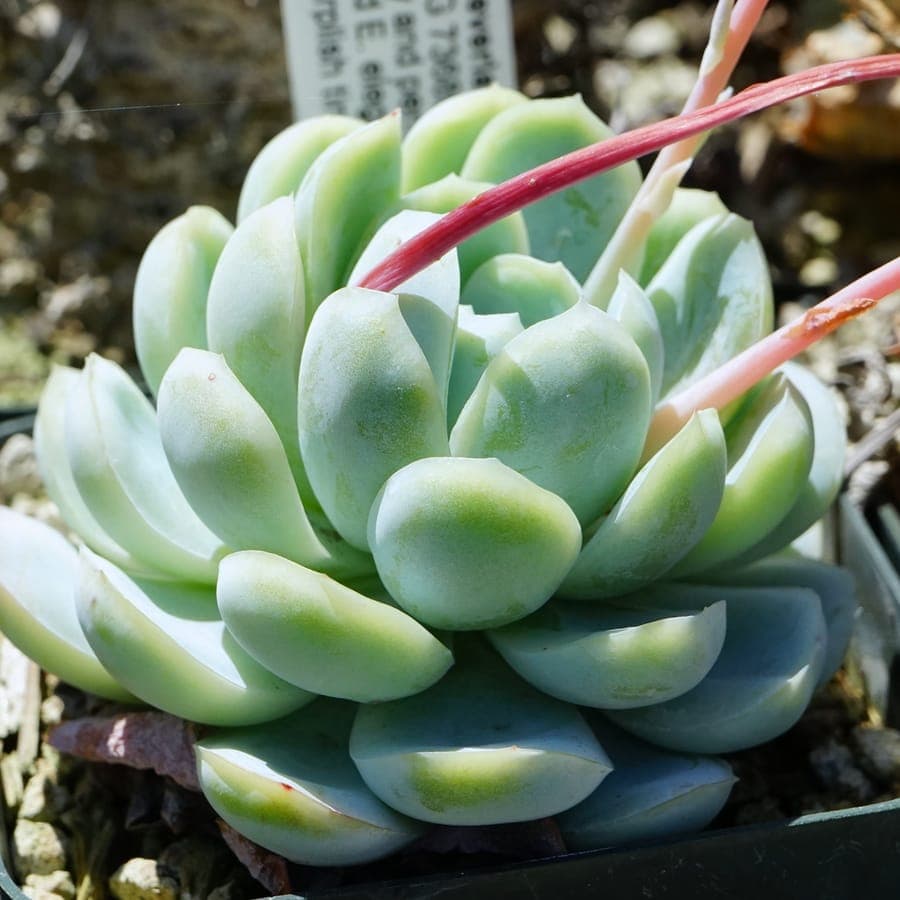
EriaWei / CC BY-SA 4.0, via Wikimedia Commons
Echeveria elegans: complete guide
Echeveria elegans
Want to see Echeveria elegans: complete guide in your garden?
1 minute, no credit card
Overview
Echeveria elegans, commonly called Pearl Echeveria or Mexican Gem, is a compact succulent from the Crassulaceae family native to Mexico. This elegant plant is beloved by gardeners and collectors for its beautifully formed rosettes and low-maintenance nature. It thrives equally well in containers and dry garden beds.
Appearance and Bloom
Echeveria elegans forms tight rosettes of soft blue-green leaves with subtle pink tints at the edges. The rosettes remain compact, typically 5-7 cm in diameter. In spring and summer, the plant produces elegant flower spikes with yellow-red blooms that rise above the leaf canopy. These flowers attract pollinators and provide beautiful contrast.
Ideal Location
Place your Echeveria elegans in a sunny, warm spot receiving at least 4-6 hours of direct sunlight daily. The plant thrives on terraces, balconies and in open garden beds. In warm climates, afternoon shade can prevent leaf sunburn. Ensure good air circulation to prevent fungal issues.
Soil
Succulents like Echeveria elegans need well-draining soil. Use a specialized succulent soil mix or sand-loam combination (1:1). In garden beds, mix sand into regular garden soil. A 5 cm drainage layer in pots prevents waterlogging and root rot.
Free design
Want to see Echeveria elegans: complete guide in your garden? Make a free design now.
Watering
Echeveria elegans requires minimal water. Summer: water carefully once weekly, ensuring soil dries between waterings. Winter: reduce watering to once every 2-3 weeks. Always check soil dryness before watering again. Avoid wetting leaves.
Pruning
Pruning is rarely needed. Remove withered leaves from below and dead flower spikes after blooming. If the plant becomes too dense, gently separate some rosettes and repot separately. This also encourages branching.
Maintenance Calendar
Spring: Check soil and pot, repot into larger container if needed. Summer: Regular monitoring for shade requirements, careful watering. Autumn: Gradually reduce watering. Winter: Minimal watering, protect from frost.
Winter Hardiness
Echeveria elegans is not frost hardy in temperate climates. In frost-prone regions, bring plants indoors in autumn. In warm regions, plants can stay outside with shelter. Minimum temperature: 5-10 degrees Celsius.
Companion Plants
Combine Echeveria elegans with other compact succulents like Sedum and Sempervivum. Aeonium, Crassula, and other Echeveria species create beautiful compositions. In containers, it grows well with Kalanchoe and Lithops.
Closing
Echeveria elegans is ideal for beginning plant collectors and experienced gardeners. With minimal care, you'll enjoy beautiful blooming rosettes all season. For more plant tips, visit gardenworld.app/en.
Find Echeveria elegans at quality plant retailers for the best selection and expert advice.
Want to see Echeveria elegans: complete guide in your garden? Make a free design now.
Upload a photo, pick a style, and get a photorealistic design with plant list in under a minute.
No credit card required


Similar plants
Sedum nevadense: complete guide
Sedum nevadense
Discover Sedum nevadense, the stunning alpine stonecrop from the Pyrenees. Expert care tips, growing requirements, and design ideas for rock gardens.
Aizoon stonecrop: complete guide
Phedimus aizoon
Everything about Phedimus aizoon - the frost-tolerant aizoon stonecrop from Siberia with bright yellow flowers. Planting, care and garden use.
Roseroot: complete guide
Rhodiola rosea
Everything about roseroot (Rhodiola rosea): a tough hardy succulent ideal for rock gardens, green roofs, and dry sunny positions.