
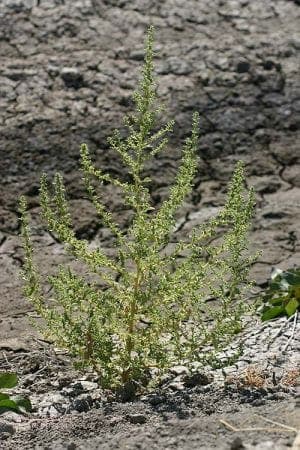
Stephen Laymon, Bureau of Land Management / Public domain, via Wikimedia Commons
Jerusalem-oak: complete guide
Dysphania botrys
Want to see Jerusalem-oak: complete guide in your garden?
1 minute, no credit card
Overview
Dysphania botrys, commonly known as Jerusalem-oak, is a striking annual that's gaining traction in UK and North American gardens. Native to southern Europe and parts of Asia - including Greece, Bulgaria, and Afghanistan - it thrives in hot, dry conditions and suits modern, low-water landscapes. Don't be misled by the name; it's not an oak, nor is it from Jerusalem. The common name likely stems from a historical misinterpretation. This plant belongs to the Amaranthaceae family and is closely related to Chenopodium, but stands out with its aromatic foliage and grape-like flower clusters.
It grows up to 80 cm tall with upright, slender stems and deeply lobed, grey-green leaves covered in sticky glandular hairs. Crush a leaf, and you'll release a spicy, peppery scent with faint citrus notes. From August to September, dense, oval-shaped flower spikes form at the tips of the stems. They're pale green to creamy, resembling tiny bunches of grapes - hence the visual appeal.
On gardenworld.app, you can design a drought-resistant garden layout where Jerusalem-oak plays a key structural role in late summer borders.
Appearance & bloom cycle
Jerusalem-oak germinates quickly from seed, typically sown indoors in March or April. Seedlings emerge within 10–14 days at 18–22°C. Once transplanted outdoors after the last frost (late May in the UK), growth accelerates. The plant develops a bushy form by mid-June, with branching stems and aromatic foliage.
Flowering begins in early August and peaks through September. The inflorescences are terminal, dense, and spike-like, lasting 6–8 weeks. They're not flashy in colour, but their texture and scent attract hoverflies, bees, and small butterflies. After flowering, seed capsules form and split open in October, releasing tiny black seeds. The plant dies back completely by late October.
Self-seeding occurs if spent flower heads aren't removed, so deadhead if you want to control spread.
Ideal location
Full sun is essential. Jerusalem-oak needs at least 6–8 hours of direct sunlight daily. In partial shade, it becomes leggy and produces fewer flowers. It excels in south- or southwest-facing beds, gravel gardens, or between paving stones where moisture is limited. It's also effective in containers on patios or balconies, provided there's good airflow.
It's well-suited to urban gardens and modern planting schemes. Pair it with ornamental grasses or succulents for contrast in texture.
Soil requirements
This plant is highly adaptable to soil types - sandy, loamy, or even clay - as long as drainage is good. It hates waterlogged soil, which leads to root rot. Ideal pH range: 6.0–7.5. Avoid rich, heavily amended soils; too much fertility promotes leafy growth at the expense of flowering. No fertiliser needed.
In pots, use a free-draining mix with added perlite or grit. A 50:50 blend of multipurpose compost and horticultural sand works well.
Free design
Want to see Jerusalem-oak: complete guide in your garden? Make a free design now.
Watering
Once established, Jerusalem-oak is extremely drought-tolerant. Young plants need consistent moisture for the first 3–4 weeks after transplanting - water once a week unless it rains. After that, rely on natural rainfall. During prolonged dry spells, give a deep soak every 10–14 days. Water at the base in the morning to minimise fungal risk.
Overwatering is a common mistake. Let the soil dry out between waterings.
Pruning
No hard pruning needed. You can pinch out the growing tips in early June to encourage bushiness. Remove any yellow or damaged leaves during the season, but leave the flower spikes intact unless collecting seed. Deadhead before seeds mature if you don't want self-seeding.
Maintenance calendar
- March–April: Sow seeds indoors at 18–22°C.
- May: Harden off seedlings. Plant out after last frost, spacing 30 cm apart.
- June: Pinch tips for bushier growth. Water young plants weekly.
- July: Monitor during heatwaves. No feeding required.
- August–September: Peak bloom. Watch for aphids or powdery mildew in humid conditions.
- October: Plants die back. Remove or leave for self-seeding.
gardenworld.app offers a custom maintenance calendar that sends timely reminders for sowing, planting, and care tasks specific to Jerusalem-oak.
Winter hardiness
Jerusalem-oak is a true annual and not winter-hardy. It dies with the first frosts and won't survive USDA zones below 8. However, it can self-seed in milder climates (zones 7–8) if seed heads are left intact. Seeds overwinter in the soil and germinate in spring when temperatures rise.
In colder zones, collect seeds in autumn for indoor sowing the following year.
Companion plants
Complement Jerusalem-oak with:
- Echinacea purpurea – for bold pink flowers and pollinator appeal
- Nepeta racemosa – for soft blue spikes and ground cover
- Foeniculum vulgare – for feathery foliage and vertical interest
- Sedum 'Matrona' – for late-season colour and structure
- Verbena bonariensis – for airy height and see-through effect
Ensure good spacing - at least 30 cm - to promote airflow and reduce disease risk.
Closing
Jerusalem-oak is a smart, low-effort choice for gardeners seeking texture, scent, and resilience. It's ideal for beginners experimenting with drought-tolerant plants or seasoned growers wanting an exotic touch in late summer schemes.
You can find seeds or young plants at garden centres across the UK, including major chains. Check labels carefully - some still list it under the old name Chenopodium botrys.
With gardenworld.app, you can visualise how Jerusalem-oak fits into your garden's seasonal rhythm, from sowing to bloom, and explore companion planting ideas with a few clicks.
Want to see Jerusalem-oak: complete guide in your garden? Make a free design now.
Upload a photo, pick a style, and get a photorealistic design with plant list in under a minute.
No credit card required


Similar plants
Bassia laniflora (woolly summer-cypress): complete guide
Bassia laniflora
Full guide to Bassia laniflora: origin, appearance, ideal location, soil, watering and care for this drought-tolerant annual.
Suaeda spicata: complete guide
Suaeda spicata
Everything about Suaeda spicata (spiked seablite): a rare salt-tolerant coastal succulent from the western Mediterranean and Macaronesia.
California amaranth: complete guide
Amaranthus californicus
Full guide to California amaranth (Amaranthus californicus): growing tips, ideal location, soil needs, watering, and garden design ideas.