
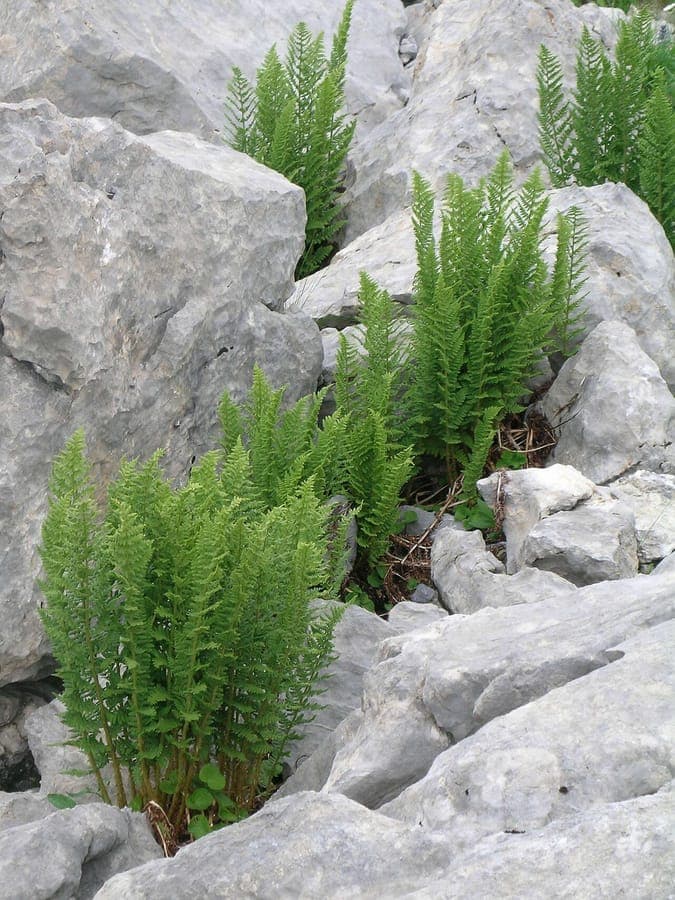
Thomas Mathis / CC BY-SA 3.0, via Wikimedia Commons
Dryopteris villarii: complete guide
Dryopteris villarii
Want to see Dryopteris villarii: complete guide in your garden?
1 minute, no credit card
Overview
Dryopteris villarii, commonly known as rigid buckler fern (in German Starrer Wurmfarn), is an elegant and shade-tolerant fern from the family Polypodiaceae. This fern occurs naturally in the mountains of Central and Southeast Europe, particularly in the Alps, and also grows in parts of the Caucasus. The plant is a mountain dweller that grows in its natural habitat in rocky mountain areas, often on limestone.
Although relatively unknown in gardens, this fern is an ornamental treasure for shade-loving alpine gardens.
Appearance and characteristics
Dryopteris villarii grows into an elegant fern frond with upright standing fronds. The plant reaches a height of 30 to 60 centimeters and forms attractive dark green fronds with fine structure. The fronds are twice divided, creating an airy, elegant appearance.
The fronds show a typical fern anatomy with spores on the underside of the fronds. This allows for reproduction and dispersal of the plant. Spores form from June to September, indicating preference for moderate growth during these months.
The plant does not form a clear rhizome but grows from loose fronds that are renewed each year from a hardy root crown.
Ideal location
Dryopteris villarii grows best in shade to half shade. The plant cannot grow in full sunlight and withers quickly with excessive direct sunshine. In its natural mountain habitat, the plant usually grows in the shade of rock boulders and other large stones.
The plant makes high demands on air humidity and grows best in moist locations, especially at the base of rocky slopes where constant moisture from mountain water is present.
A location with stable, cool temperatures is ideal for this plant.
Soil
Dryopteris villarii grows best in well-drained, lime-rich soils with plenty of organic material. In its natural habitat, the plant grows on rocks and stones where moisture retention comes from organic breakdown.
It is recommended to enrich the growing area with leaf mold, moss, or compost. A pH of 6.5 to 8.0 is ideal. The plant tolerates slightly more acidic soils.
Moisture retention is essential, so drainage should not be too aggressive.
Free design
Want to see Dryopteris villarii: complete guide in your garden? Make a free design now.
Watering
Dryopteris villarii makes high demands on moisture. The plant must always grow in moist conditions, especially during the growing season (May to October). Watering should be regular and careful, so the fern remains moist but not waterlogged.
In dry periods, daily watering may be necessary. In pot culture, ensure the potting soil remains constantly moist. Misting the fronds can also be useful to increase air humidity.
Pruning
Dryopteris villarii requires minimal pruning. Remove only dead or damaged fronds. The plant grows gracefully naturally and pruning can disrupt the natural form.
At the end of winter, just before new growth begins, old dead fronds can be completely removed. This stimulates new, fresh growth.
Maintenance calendar
March to May: Beginning of growing season, increase water intake, feed with organic fertilizer.
June to August: Peak growing period, maintain regular water and high air humidity, spore formation on underside of fronds.
September to October: Growing season begins to decline, gradually reduce watering frequency.
November to February: Dormancy, minimal watering, no feeding.
Winter hardiness
Dryopteris villarii is winter hardy and can withstand temperatures down to minus 20 degrees Celsius. In temperate climates, the plant can remain outdoors over winter, though protection from wet winter rot can be useful.
The plant is, however, sensitive to dryness in winter, so protection from strong wind exposure is recommended.
Plant companions
Dryopteris villarii grows in its mountain habitat together with other alpine plants and ferns. In gardens, the plant can be well combined with other shade-tolerant alpine plants such as Saxifraga, small alpine flowers, and other ferns.
The plant is excellent for rock gardens, alpine troughs, and shaded alpine borders. In shadier corners of gardens, the plant can add an elegant green appearance.
Conclusion
Dryopteris villarii is a subtle mountain beauty that adds elegance to shaded gardens. This fern proves that not all interesting greenery grows in full sun, but can also flourish in the shelter of rocks and shade. With good moisture retention and shade, this plant grows into a perfect alpine accent in your garden.
Want to learn more about alpine ferns? Visit gardenworld.app for inspiration and professional garden design services!
Want to see Dryopteris villarii: complete guide in your garden? Make a free design now.
Upload a photo, pick a style, and get a photorealistic design with plant list in under a minute.
No credit card required


Similar plants
Dryopteris sieboldii: complete guide
Dryopteris sieboldii
Discover Dryopteris sieboldii (Siebold's Buckler Fern), an elegant evergreen fern from Asia. Growing tips, care, and uses in shade gardens.
Dryopteris tyrrhena: complete guide
Dryopteris tyrrhena
Discover Dryopteris tyrrhena (Mediterranean Buckler-fern), a rare and exquisite fern species. Growing tips, care, and shade garden design.
Polystichum dudleyi: complete guide
Polystichum dudleyi
Dudley's swordfern: a California native fern for shady gardens. Cultivation, moisture management, and natural garden design tips.