
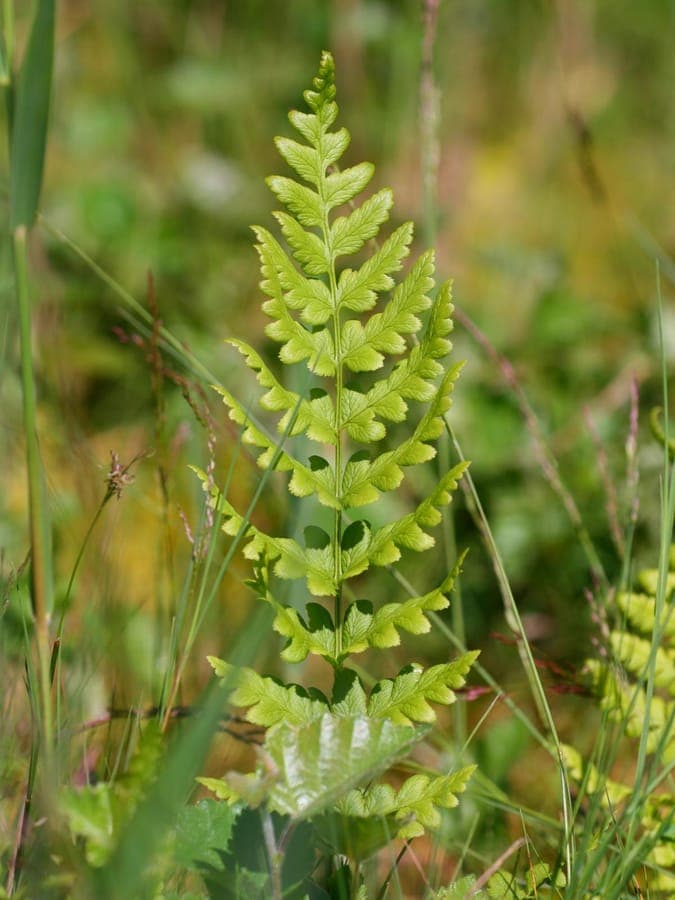
Kristian Peters -- Fabelfroh 07:58, 29 June 2007 (UTC) / CC BY-SA 3.0, via Wikimedia Commons
Crested buckler fern: complete guide
Dryopteris cristata
Want to see Crested buckler fern: complete guide in your garden?
1 minute, no credit card
Overview
The crested buckler fern (Dryopteris cristata) is a graceful, evergreen fern that thrives in shady, moist areas of the garden. Unlike flashier perennials, this plant brings quiet elegance through its finely textured fronds and upright growth habit. Native to woodlands, damp meadows, and stream banks across central and northern Europe as well as parts of North America - including regions like Connecticut and British Columbia - it's a reliable choice for gardeners dealing with difficult shady spots. It typically reaches 60–90 cm in height, with a spread of about 45–60 cm, making it ideal for mid-border placement.
On gardenworld.app, you can design a shade garden layout that integrates Dryopteris cristata with other moisture-loving plants, ensuring visual harmony and proper spacing. The platform's drag-and-drop planner helps avoid overcrowding and highlights sun exposure zones.
Appearance & bloom cycle
True to fern biology, this species doesn't flower. Instead, its ornamental value lies in its growth pattern and foliage. From May onward, tightly coiled fiddleheads emerge, slowly unfurling into long, lance-shaped fronds. These mature fronds are 60–90 cm long, deeply pinnatifid, and feature a distinctive, densely packed cluster of pinnae at the apex - resembling a comb or crest, hence the common name.
Between June and September, fertile fronds develop sori - clusters of spore-producing structures - arranged in neat rows on the underside. These appear as dark, linear markings and add subtle texture. The fronds remain a fresh green through most of the year, only browning in harsh winters or prolonged droughts. In milder climates (USDA zones 6–8), they often stay green all winter.
Ideal location
This fern prefers light to full shade, scoring a 4 on the light scale (1 = full sun, 10 = full shade). It performs best under deciduous trees, along north-facing walls, or in woodland gardens where sunlight is dappled. Avoid hot afternoon sun, which scorches the delicate fronds. It's not suited for exposed, windy sites or urban heat islands.
In smaller gardens, use it as a vertical accent in shaded corners. Pair it with taller hostas or variegated sedge for contrast. If you're unsure about placement, gardenworld.app offers visual simulation tools to test different configurations before planting.
Soil requirements
Dryopteris cristata needs moist, humus-rich soil with a pH between 3.5 and 6.5. It tolerates clay if well-drained but struggles in chalky or sandy soils unless amended. Incorporate leaf mold or composted bark to improve water retention and nutrient content. Avoid lime and alkaline fertilizers - this fern dislikes high pH.
If your soil is too alkaline, consider growing it in a raised bed with ericaceous compost. A thick mulch of pine needles or shredded bark helps maintain acidity and moisture levels.
Free design
Want to see Crested buckler fern: complete guide in your garden? Make a free design now.
Watering
Keep the soil consistently moist but never waterlogged. This fern has high water needs, especially during dry spells in summer. Water deeply once or twice a week, depending on rainfall. Container-grown specimens require more frequent watering - check the top 2–3 cm of soil; if dry, it's time to water.
Use rainwater when possible, as tap water can raise pH over time. Mulching reduces evaporation and protects shallow roots from temperature swings.
Pruning
This fern requires minimal pruning. In early spring (March–April), remove any tattered, brown, or diseased fronds at the base. Use clean, sharp shears to prevent infection. Avoid cutting into the crown, as this can damage developing fiddleheads.
Leave healthy fronds through winter for insulation and visual interest. Heavy pruning isn't necessary - the plant naturally sheds older growth as new fronds emerge.
Maintenance calendar
- January–February: Monitor for frost damage; no action needed unless fronds are rotting.
- March–April: Clear dead foliage, apply a thin layer of compost or leaf mold.
- May: Fiddleheads appear; ensure consistent moisture.
- June–September: Peak growth; check weekly for dryness.
- October–December: Leave fronds intact; mulch lightly if desired.
Winter hardiness
Hardy in USDA zones 4 to 8, the crested buckler fern withstands winter temperatures down to -30°C. In zone 4, a protective mulch of leaves or straw helps insulate the crown. Fronds may turn brown but often persist, offering structure in winter gardens.
In zones 6–8, the plant typically remains evergreen. Avoid disturbing the crown during winter - new growth emerges from the same central point each spring.
Companion plants
Combine with other shade-tolerant, moisture-loving perennials: Hosta, Astilbe, Heuchera, Pulmonaria, and other ferns like Athyrium filix-femina. Use Carex species for contrasting texture. Avoid aggressive spreaders like mint or ground ivy, which can overwhelm the fern.
Plant under oaks, beeches, or birches, where leaf litter creates ideal humus-rich conditions.
Closing
The crested buckler fern is a quiet achiever in the shade garden - low-maintenance, long-lived, and highly adaptable to moist, acidic soils. It adds structure without dominating, making it perfect for naturalistic planting schemes. Give it consistent moisture, acidic soil, and protection from harsh sun, and it will thrive for years.
You can find Dryopteris cristata at garden centres across the UK and North America. On gardenworld.app, plan your fern-friendly garden with precision, using smart spacing and light analysis tools to ensure long-term success.
Want to see Crested buckler fern: complete guide in your garden? Make a free design now.
Upload a photo, pick a style, and get a photorealistic design with plant list in under a minute.
No credit card required


Similar plants
Dryopteris sieboldii: complete guide
Dryopteris sieboldii
Discover Dryopteris sieboldii (Siebold's Buckler Fern), an elegant evergreen fern from Asia. Growing tips, care, and uses in shade gardens.
Dryopteris tyrrhena: complete guide
Dryopteris tyrrhena
Discover Dryopteris tyrrhena (Mediterranean Buckler-fern), a rare and exquisite fern species. Growing tips, care, and shade garden design.
Dryopteris villarii: complete guide
Dryopteris villarii
Dryopteris villarii, known as rigid buckler fern, is a shade-loving fern form from the Alps. Discover how to grow and maintain this elegant alpine fern in your garden.