
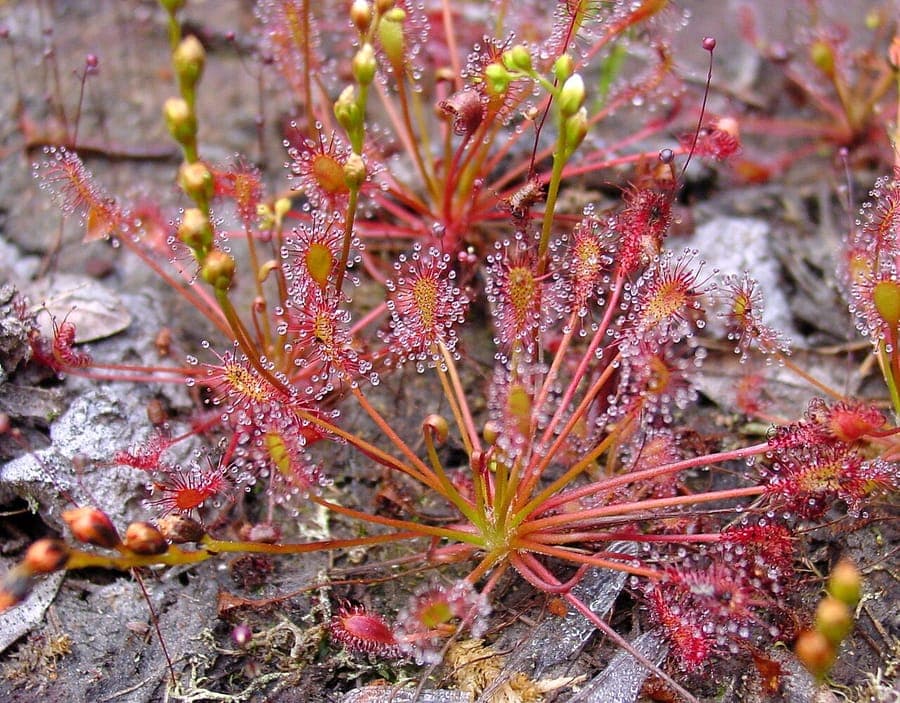
No machine-readable author provided. NoahElhardt assumed (based on copyright claims). / CC BY-SA 2.5, via Wikimedia Commons
Oblong-leaf sundew: complete guide
Drosera intermedia
Want to see Oblong-leaf sundew: complete guide in your garden?
1 minute, no credit card
Overview
Drosera intermedia, commonly known as the oblong-leaf sundew, is a captivating carnivorous plant that thrives in damp, acidic conditions. Native to bogs, fens and wet sandy soils across North America, Europe and parts of South America, this species has adapted to nutrient-poor environments by trapping and digesting small insects. While not native to the UK or most of North America outside its hardiness zones, it can be successfully grown in garden ponds, bog gardens or carnivorous plant containers with proper care. If you're designing a moisture-rich space, gardenworld.app offers custom garden plans that integrate Drosera intermedia seamlessly with other bog-loving species.
The plant's leaves are covered in sticky, dew-like droplets that glisten in sunlight, luring in tiny insects. Once trapped, the leaf slowly curls around its prey, releasing enzymes to break it down. It's a mesmerising process to watch, and it helps keep fungus gnats and other pests at bay. The plant is small but striking, with a delicate bloom and seasonal changes that keep your garden interesting year-round.
Appearance & bloom cycle
Drosera intermedia forms a rosette of oblong, spoon-shaped leaves on slender red stems. Each leaf is lined with tentacle-like glands that secrete a sticky mucilage. These glands shimmer in the sun, mimicking dew or nectar to attract prey. The leaves can reach 3–6 cm in length during the growing season.
In summer, from late June through August, a thin, wiry flower stalk emerges, growing up to 20 cm tall. The flowers are small, with five pale pink to white petals, and typically open only in full sun-one flower per day per stalk. They last just a few hours but bloom successively over several weeks. After flowering, the plant may produce tiny black seeds, though propagation by division or leaf pullings is more reliable.
As autumn approaches, Drosera intermedia forms a hibernaculum-a tight, bud-like cluster of reduced leaves that protects the plant during winter dormancy. This is a natural and essential phase, not a sign of decline.
Ideal location
Full sun is best-aim for at least 6 hours of direct sunlight daily. A south or west-facing bog garden, pond margin or container on a sunny patio works well. Avoid shaded areas under trees or eaves; insufficient light leads to weak growth and fewer traps.
The plant thrives in open, humid environments but needs good air circulation to prevent fungal issues. Don't place it in stagnant, enclosed spaces. If growing in a terrarium, ensure ventilation. Outdoors, protect from strong winds that could dry out the soil too quickly. When planning your layout, use gardenworld.app to simulate sunlight patterns and ensure your sundew gets optimal exposure.
Soil requirements
Never use regular potting mix, compost or garden soil. These are too rich and alkaline, and will kill the plant. Instead, use a mix of sphagnum peat moss and horticultural sand or perlite in a 1:1 ratio. Washed quartz sand is ideal-avoid builders' sand, which contains lime.
The soil pH should be between 3.5 and 5.0. Drosera intermedia gets its nutrients from insects, not soil, so fertile mediums cause root burn. Plant in a container with drainage holes, but sit it in a tray of water to maintain constant moisture. Use only pure water-never tap water.
Free design
Want to see Oblong-leaf sundew: complete guide in your garden? Make a free design now.
Watering
Water exclusively with rainwater, distilled water or reverse osmosis water. Tap water contains minerals and chlorine that build up in the soil and damage sensitive roots. Keep the soil saturated at all times during the growing season (March to October), with 1–2 cm of standing water in the tray.
In winter, reduce watering slightly but never let the soil dry out completely. Check moisture levels every few days, especially in hot weather. If the leaves lose their stickiness or droop, it's a sign of underwatering.
Pruning
Pruning is rarely needed. Remove only dead or rotting leaves with clean scissors to prevent disease spread. Do not compost carnivorous plant waste-dispose of it in general waste to avoid contaminating other plants.
Leave flower stalks intact unless they turn completely brown. If you want to collect seeds, let the flowers go to seed, but sow them quickly-viability drops after a few weeks. For most gardeners, leaf cuttings or division during repotting are easier and more effective propagation methods.
Maintenance calendar
- January: Dormant. Keep cool (2–8°C) and slightly moist.
- February: No action. Monitor hibernaculum.
- March: Move outdoors or to a sunny spot. Resume regular watering.
- April: New leaves emerge. Keep soil wet.
- May: Growth accelerates. Watch for pests.
- June–August: Bloom season. Maintain water levels. No feeding needed.
- September: Flowering ends. Begin preparing for dormancy.
- October: Hibernaculum forms. Reduce water gradually.
- November–December: Full dormancy. Protect from hard frost.
Winter hardiness
Drosera intermedia is hardy in USDA zones 6–9. In the UK (zone 8), it can survive mild winters outdoors if protected. Sink the pot into a bog garden or cover with a layer of straw or pine needles. The hibernaculum must stay moist but not frozen.
In colder areas, bring containers indoors to an unheated greenhouse, shed or garage where temperatures stay between 0–8°C. Avoid warm indoor rooms-this disrupts dormancy. If left outside, wrap pots in bubble wrap and mulch heavily.
Companion plants
Pair Drosera intermedia with other bog plants like Sarracenia species, Pinguicula, Utricularia, or Eriophorum. These share similar needs for acidic, wet soil and full sun. Avoid aggressive spreaders or heavy feeders like mint or irises, which can outcompete the sundew.
In a bog container, leave at least 15 cm between plants for airflow and light. Good companions include dwarf rushes, cotton grass, and small sedges. Avoid floating plants that might shade the rosette.
Closing
Growing Drosera intermedia is a rewarding challenge for gardeners who enjoy observing natural processes up close. It's not a low-maintenance plant, but its beauty and functionality make it worth the effort. Buy from reputable garden centres or specialist nurseries-look for healthy rosettes with no browning or mushy leaves. In the UK and US, check local garden centres in spring for seasonal carnivorous plant stock. With the right conditions, this sundew becomes a living highlight in any wetland-inspired garden.
Want to see Oblong-leaf sundew: complete guide in your garden? Make a free design now.
Upload a photo, pick a style, and get a photorealistic design with plant list in under a minute.
No credit card required


Similar plants
Threadleaf sundew: complete guide
Drosera filiformis
Everything about Drosera filiformis, the threadleaf sundew from North America: cultivation, substrate, watering, and overwintering of this carnivorous bog plant.
Cape Sundew: complete guide
Drosera capensis
The fascinating Cape Sundew is a carnivorous plant with sticky leaves. Learn how to grow this unique plant successfully and watch it thrive.
Waterwheel plant: complete guide
Aldrovanda vesiculosa
A detailed guide to growing Aldrovanda vesiculosa: light, water, pH and dormancy. Perfect for ponds and aquatic setups.