
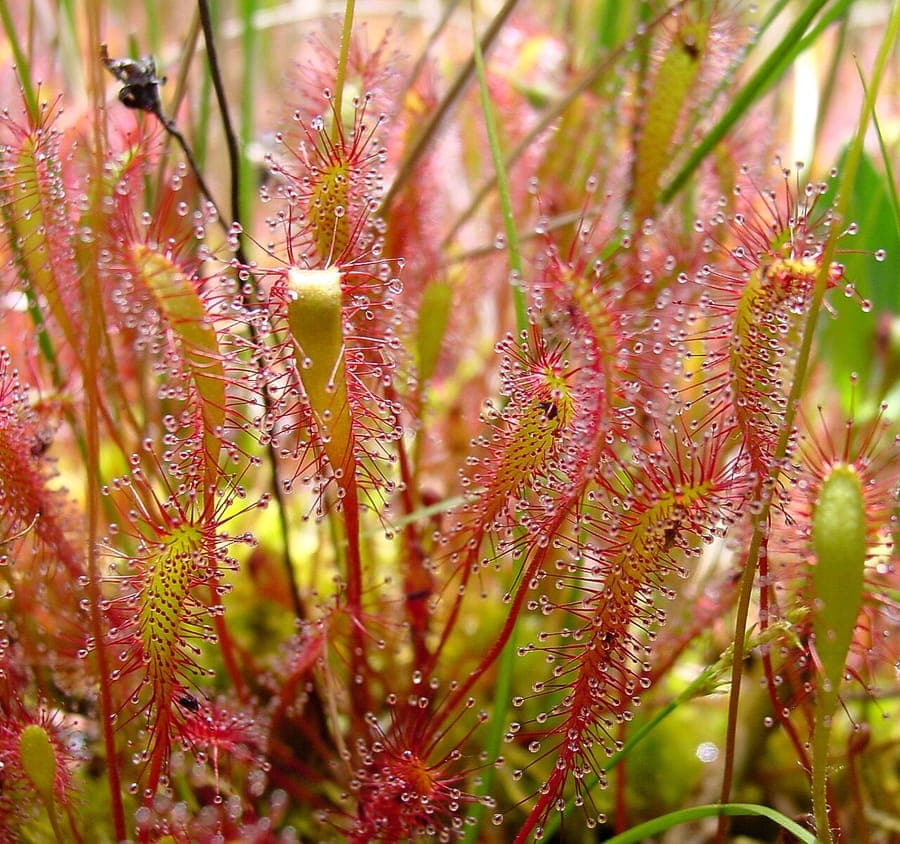
No machine-readable author provided. NoahElhardt assumed (based on copyright claims). / CC BY-SA 3.0, via Wikimedia Commons
Great sundew: complete guide
Drosera anglica
Want to see Great sundew: complete guide in your garden?
1 minute, no credit card
Overview
Drosera anglica, commonly known as great sundew, is a striking carnivorous perennial native to wetlands across North America and northern Europe. This herbaceous forb thrives in nutrient-poor, acidic environments where it captures small insects using its sticky, glandular leaf tentacles. In the UK, Ireland, and parts of Canada and the northern US, it's found naturally in fens, bogs, and slow-draining wetlands. For gardeners looking to add ecological interest, great sundew is a low-maintenance yet fascinating plant that brings movement and function to a damp garden corner. On gardenworld.app, you can design a custom bog layout where Drosera anglica fits seamlessly with other moisture-loving species.
Appearance & bloom cycle
Great sundew forms a basal rosette of linear, bright green leaves that can reach 20–30 cm in length. Each leaf is lined with red-tipped tentacles secreting a sticky mucilage that glistens like dew - hence the name. These droplets attract, trap, and digest small flying insects. In July and August, a slender, upright flower stalk rises to 40 cm, bearing a raceme of small, white, five-petaled flowers. The blooms open sequentially over several weeks, ensuring a long display. After pollination, seed capsules form and disperse in moist conditions, allowing natural propagation if space permits.
Ideal location
Aim for a spot with a light rating of 8 - that's full sun to light shade. At least 6 hours of direct sunlight is ideal for strong growth and active trapping. Great sundew performs best in open, unshaded areas such as the margins of a pond, a rain garden, or a dedicated bog bed. Avoid placing it under dense tree canopies or near reflective walls that overheat the soil. In cooler zones (USDA 4–8), full sun exposure maximizes photosynthesis and flowering. Use gardenworld.app to assess your garden's sun exposure and determine the best microclimate for your sundew.
Soil requirements
Use a soil mix low in nutrients and high in acidity, with a pH between 5.5 and 6.5. A blend of 70% sphagnum peat moss and 30% horticultural sand or perlite works well. Never use compost, garden soil, or fertiliser - these will burn the roots and kill the plant. The medium must stay moist but not waterlogged. Avoid calcareous sand or any material containing lime. The soil should mimic natural bog conditions, staying acidic and open-textured to allow root respiration.
Watering
Water exclusively with rainwater, distilled water, or reverse osmosis water. Tap water contains dissolved minerals and chlorine that accumulate in the soil and damage the sensitive roots. Keep the soil consistently wet - ideally, the pot or planting area should sit in 2–5 cm of standing water throughout the growing season. In summer, check daily during dry spells. For in-ground plantings, consider installing a liner to retain water. Avoid overhead watering with hard water sources.
Free design
Want to see Great sundew: complete guide in your garden? Make a free design now.
Pruning
Pruning is minimal with Drosera anglica. Only remove dead or blackened leaves with sterilised scissors if they become unsightly. After flowering, you can trim the spent flower stalk at the base to redirect energy. Do not cut healthy leaves - they're essential for photosynthesis and trapping. Avoid touching the sticky glands; repeated handling reduces their effectiveness and stresses the plant.
Maintenance calendar
- Jan: Dormant; keep moist, protect from drying winds
- Feb: Still dormant; no action needed
- Mar: Watch for new leaf shoots; remove old foliage gently
- Apr: Move outdoors after last frost; maintain moisture
- May: Growth accelerates; ensure full sun exposure
- Jun: Prepare for bloom; avoid fertilisers
- Jul: Peak bloom; monitor for pests and drying
- Aug: Flowers fade; seed heads develop
- Sep: Reduce watering slightly; allow natural dieback
- Oct: Dormancy begins; leave old leaves for insulation
- Nov: Protect outdoor pots with mulch
- Dec: Fully dormant; keep substrate damp
Winter hardiness
Drosera anglica is hardy in USDA zones 4–8. It survives winter by forming a hibernaculum - a tight bud of condensed leaves at the crown. In zone 4, mulch with pine needles or straw to prevent freeze-thaw cycles. In milder zones (7–8), it often stays semi-evergreen. For potted plants, sink the container into the ground or place it in a cold frame. Avoid bringing it indoors - it needs winter chilling to thrive the next season.
Companion plants
Pair great sundew with other bog-loving perennials such as Sarracenia flava, Pinguicula lusitanica, and Eriophorum vaginatum. Grasses like Scirpus cyperinus or Carex vulpinoidea add texture. Avoid invasive species or heavy feeders that compete for space and moisture. In a balanced bog garden, these plants coexist naturally, creating a self-sustaining habitat. You'll find suitable companions at garden centres like those in the UK, especially during spring planting season.
Closing
Drosera anglica isn't your average garden plant, but for those drawn to unusual, functional greenery, it's a rewarding choice. Its insect-trapping leaves, delicate flowers, and resilience in wet soil make it ideal for eco-friendly gardens. With the right conditions - full sun, acidic mix, and rainwater - it returns reliably each year. Use gardenworld.app to plan a wetland garden where great sundew plays a starring role alongside complementary species.
Want to see Great sundew: complete guide in your garden? Make a free design now.
Upload a photo, pick a style, and get a photorealistic design with plant list in under a minute.
No credit card required


Similar plants
Threadleaf sundew: complete guide
Drosera filiformis
Everything about Drosera filiformis, the threadleaf sundew from North America: cultivation, substrate, watering, and overwintering of this carnivorous bog plant.
Cape Sundew: complete guide
Drosera capensis
The fascinating Cape Sundew is a carnivorous plant with sticky leaves. Learn how to grow this unique plant successfully and watch it thrive.
Waterwheel plant: complete guide
Aldrovanda vesiculosa
A detailed guide to growing Aldrovanda vesiculosa: light, water, pH and dormancy. Perfect for ponds and aquatic setups.