
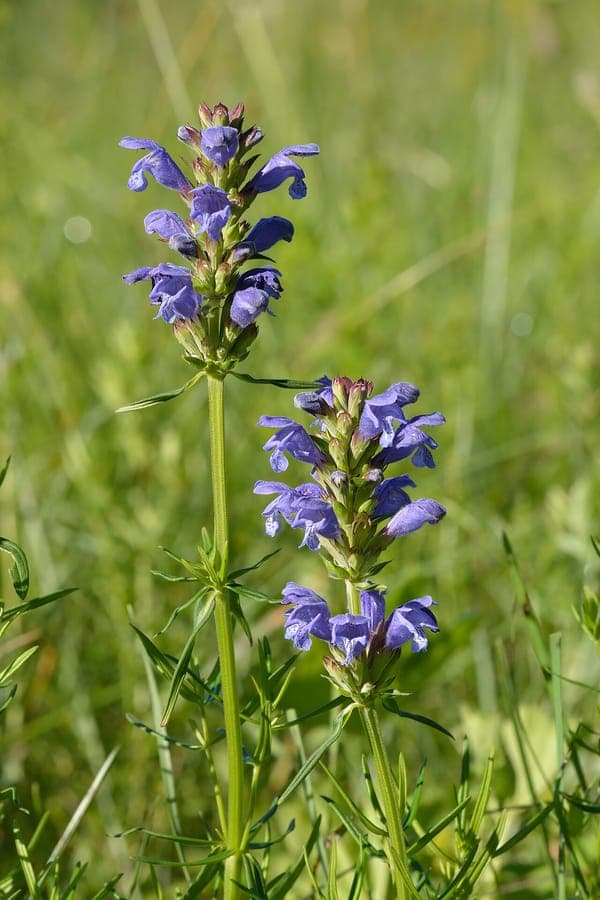
Ivar Leidus / CC BY-SA 3.0, via Wikimedia Commons
Drakblomma: complete guide
Dracocephalum ruyschiana
Want to see Drakblomma: complete guide in your garden?
1 minute, no credit card
Overview
Drakblomma, or Dracocephalum ruyschiana, is a striking perennial that brings a splash of cool blue to the mid to late summer garden. Though not as common as some of the usual border suspects, it's steadily gaining favour among gardeners who appreciate understated elegance and long bloom times. A member of the mint family, Lamiaceae, it shares the aromatic foliage and square stems typical of this group, but without the invasive tendencies of some relatives.
Native to regions stretching from the Baltics to Siberia, Drakblomma is naturally adapted to temperate climates with cool summers and well-defined seasons. It thrives in USDA zones 4 to 8, making it a solid choice for much of Europe and North America. In the garden, it reaches 40–60 cm in height, forming upright clumps with minimal spreading. If you're planning a new border, try sketching a layout on gardenworld.app that includes Drakblomma for structure and colour continuity.
Appearance & bloom cycle
The plant forms slender, erect stems topped with dense whorls of vivid blue flowers from June through September. Each bloom resembles a tiny dragon's head-hence the common name-with a pronounced lower lip that attracts bees and hoverflies. The flowers are held in terminal clusters, creating a misty effect when planted in groups.
Leaves are lance-shaped, mid-green, and slightly hairy, contributing to a soft texture. They emit a faint minty scent when brushed, a subtle bonus for gardeners who enjoy sensory plants. The extended bloom period makes Drakblomma ideal for succession planting, ensuring there's always something flowering in your garden.
Ideal location
Aim for light shade to partial sun-around 6 out of 10 on the light scale. Full morning sun with afternoon shade works best, especially in warmer regions. Avoid deep shade, as this leads to leggy growth and poor flowering. In urban gardens or courtyards, a northeast-facing wall provides ideal filtered light.
It's worth noting that while Drakblomma can handle some sun, scorching afternoon rays in July and August can stress the plant, especially if the soil dries out. Consider pairing it with taller plants like Echinacea or Persicaria that cast light shade later in the day. You can test these combinations on gardenworld.app to visualise spacing and height.
Soil requirements
Drakblomma prefers well-drained, slightly alkaline soil with a pH between 7.0 and 7.5. It tolerates a range of textures but performs best in loamy or sandy soils that don't hold water. Heavy clay should be amended with grit and compost to improve drainage.
Avoid overly rich soils, as excess nitrogen promotes leafy growth at the expense of flowers. A light application of compost in spring is sufficient. If your soil is acidic, a small amount of ground limestone can help shift the pH into the ideal range.
Free design
Want to see Drakblomma: complete guide in your garden? Make a free design now.
Watering
This plant is moderately drought-tolerant once established. Water deeply once a week during dry spells, ensuring moisture reaches the root zone. Let the top 5 cm of soil dry out between waterings to prevent root rot.
Use rainwater if possible, as tap water can raise pH over time. Water at the base to keep foliage dry and reduce disease risk. During wet autumns, no supplemental watering is needed. In containers, ensure drainage holes are unobstructed.
Pruning
Minimal pruning is required. Deadhead spent flower spikes after the first flush in July to encourage a second bloom in late summer. Cut stems back by about one-third to maintain a tidy shape.
In late autumn or early winter, cut all stems down to 5 cm above ground. Leave seed heads over winter if you want to feed finches and other small birds. Avoid pruning during active growth or in freezing conditions.
Maintenance calendar
- january: Dormant – no action needed
- february: Check mulch levels; protect young plants if needed
- march: Remove old foliage; prepare soil for new growth
- april: Plant new specimens; loosen soil around established clumps
- may: Begin regular watering; monitor for aphids
- june: First bloom begins; check for pests
- july: Deadhead after peak bloom; apply light compost if soil is poor
- august: Continue watering during dry spells
- september: Allow late flowers to set seed for wildlife
- october: Begin cutting back; collect seeds if desired
- november: Cut stems to 5 cm; apply compost mulch
- december: Ensure winter drainage; avoid wet soil
Winter hardiness
Hardy to USDA zone 4, Drakblomma withstands temperatures down to -30°C. In milder zones (7–8), it overwinters reliably without protection. Young plants benefit from a light mulch of compost or straw in their first year.
Wet winter soil is the main threat. Ensure good drainage by planting on a slight rise or adding sand to heavy soils. Avoid plastic covers, which trap moisture and encourage rot.
Companion plants
Pair Drakblomma with late-summer bloomers like Sedum 'Herbstfreude', Aster 'Little Carlow', or Persicaria amplexicaulis. For contrast, try golden Rudbeckia or fiery Crocosmia. Grasses like Calamagrostis add movement, while Nepeta provides a complementary scent and flower form.
Avoid aggressive spreaders like mint or tree-of-heaven that can overwhelm it. In dry gardens, combine with Eryngium or Salvia for texture and colour.
Closing
Drakblomma is a reliable, low-maintenance perennial that offers months of colour with little effort. It's a pollinator magnet and fits beautifully in cottage, wildlife, or modern borders. Pick up plants at local garden centres in spring, or order online if not available locally. With the right conditions-well-drained soil, partial sun, and a little deadheading-you'll enjoy its blue haze year after year. Plan your Drakblomma placement with gardenworld.app to get the most out of your garden design.
Want to see Drakblomma: complete guide in your garden? Make a free design now.
Upload a photo, pick a style, and get a photorealistic design with plant list in under a minute.
No credit card required


Similar plants
Apple mint (Mentha x villosa): complete guide
Mentha x villosa
Meet apple mint (Mentha x villosa): a fruity-scented kitchen herb with woolly leaves, perfect for tea and mojitos.
Salvia peyronii: complete guide
Salvia peyronii
Discover Salvia peyronii, a rare Lebanese mountain sage. Growing tips, hardiness, and companion planting for a Mediterranean gravel garden.
Bigleaf mint (Mentha x rotundifolia): complete guide
Mentha x rotundifolia
Discover bigleaf mint: cultivation, care tips, and garden uses. Learn how to grow this aromatic herb with soft, hairy leaves.