
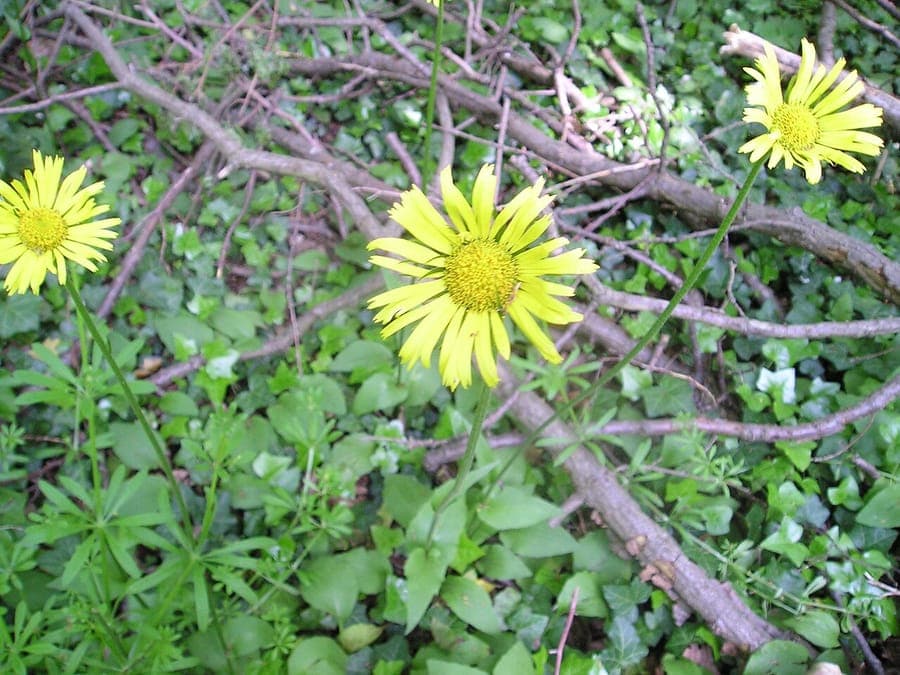
Wikimedia Commons / CC BY-SA 3.0, via Wikimedia Commons
Plantain-leaf leopard's-bane: complete guide
Doronicum plantagineum
Want to see Plantain-leaf leopard's-bane: complete guide in your garden?
1 minute, no credit card
Overview
Doronicum plantagineum, commonly known as plantain-leaf leopard's-bane, is a quiet standout in the spring garden. Unlike flashier members of the Asteraceae family, this species earns its place through reliability and subtle charm. Native to woodlands across southern Europe and North Africa, it thrives in partial shade where many sun-loving perennials would struggle. A herbaceous perennial, it reaches 20–40 cm in height and blooms from late March into May, depending on your zone. It's not loud, but it's deeply dependable - the kind of plant that anchors a border while other stars fade.
On gardenworld.app, you can design a shade garden layout that highlights the quiet beauty of Doronicum plantagineum alongside other early risers.
Appearance & bloom cycle
True to its name, the foliage strongly resembles common plantain (Plantago major) - broad, oval to lance-shaped, dark green, and slightly ribbed. The leaves form a low, semi-evergreen rosette that persists through winter in milder climates. Flower stalks emerge in early spring, quickly shooting up to 30–40 cm. The blooms are a vibrant yellow, 4–6 cm across, with a dark central disc and radiant ray florets. They open flat, catching morning light beautifully.
Flowering lasts from mid-April to early May. After blooming, the flower stems can be trimmed if self-seeding is a concern, but the foliage remains healthy and attractive all season. It doesn't rebloom, but its presence stabilizes the garden visually, bridging the gap between spring bulbs and summer perennials.
Ideal location
Go for partial to full shade - this is not a sun-chaser. Direct afternoon sun, especially in southern exposures, leads to scorched leaf edges and stunted growth. It performs best under deciduous trees, in north- or east-facing borders, or tucked beside taller perennials that provide natural dappled shade.
In urban gardens, it adapts well to narrow side yards or shaded courtyards where heat reflects off walls but doesn't burn. Ensure it receives at least 3–4 hours of indirect light daily to avoid legginess and poor flowering.
Soil requirements
It prefers rich, humus-heavy soil that stays consistently moist but well-drained. Heavy clay is acceptable if not waterlogged; sandy soils need amending with compost, leaf mold, or composted manure to retain moisture. pH range from slightly acidic to neutral (6.0–7.0) is ideal, though it tolerates mildly alkaline conditions if organic matter is sufficient.
Avoid dry, compacted soils under dense evergreens - the competition and lack of moisture make establishment difficult.
Free design
Want to see Plantain-leaf leopard's-bane: complete guide in your garden? Make a free design now.
Watering
During the first growing season after planting, keep the soil evenly moist. Once established, it handles short dry spells well, especially with a mulch layer. During prolonged droughts in late spring or early summer, drooping leaves signal stress - a deep soak at the base once a week will revive it.
Never overhead water; it encourages powdery mildew. Use a soaker hose or water by hand at soil level.
Pruning
Minimal pruning needed. Snip off spent flower stalks after blooming if you want to limit self-seeding. Otherwise, leave the foliage intact - it photosynthesizes through summer and supports root strength for next year. In late autumn or early winter, cut back any browning foliage if aesthetics matter, but it's not required.
Maintenance calendar
- Jan: Monitor for early leaf growth, especially in zone 7 and milder.
- Feb: No action, but check for vole damage near crown.
- Mar: Divide clumps or plant new ones; remove any tattered leaves.
- Apr: Blooming begins; maintain consistent moisture.
- May: Flowers fade; deadhead if desired.
- Jun: Dormancy begins; no feeding.
- Jul–Aug: Dormant; watch for slug damage in wet summers.
- Sep: Apply a thin layer of compost around the base.
- Oct: Leave foliage; mulch lightly with leaf litter.
- Nov: Trim only if needed for tidiness.
- Dec: Protect young plants with dry mulch in zone 5.
Winter hardiness
Hardy to USDA zone 5 (-23°C). In zones 5–7, the foliage often stays semi-evergreen, with new growth appearing as early as February. In colder zones, a light mulch of leaves or straw helps protect the crown. Mature plants are more resilient than newly planted ones.
Flower buds are frost-hardy, so late frosts rarely harm blooming.
Companion plants
Pair with Hellebores, Epimedium, or Anemone nemorosa for a woodland effect. Under trees, it works well with Hostas, Ferns, or Erythronium. Later-blooming perennials like Astilbe or Tiarella fill in behind it without overwhelming.
Avoid invasive spreaders like Vinca minor or aggressive ground covers that outcompete its slow growth.
Closing
Doronicum plantagineum is a low-key but essential perennial for shady corners. Its early yellow flowers lift the spirit in late spring, and its evergreen foliage supports garden structure. It's not flashy, but it's persistent - the kind of plant that earns quiet loyalty from gardeners who value stability.
Plant in groups of 5 or more for impact, and let it naturalize in drifts. You'll find it at garden centres in spring, often near other shade perennials. On gardenworld.app, you can generate a planting plan that matches your soil and light conditions, pairing this species with the right companions for year-round interest.
Want to see Plantain-leaf leopard's-bane: complete guide in your garden? Make a free design now.
Upload a photo, pick a style, and get a photorealistic design with plant list in under a minute.
No credit card required


Similar plants
Calendula stellata: complete guide
Calendula stellata
Complete guide to Calendula stellata, the star-flowered marigold from Sicily: location, soil, watering and companion planting tips.
Korean chrysanthemum: complete guide
Chrysanthemum x rubellum
Chrysanthemum x rubellum is a hardy autumn perennial with single pink to copper flowers from August to November. Care and combinations.
Helianthus divaricatus: complete guide
Helianthus divaricatus
Helianthus divaricatus is a North American woodland sunflower with yellow summer blooms, ideal for naturalistic borders and shady edges.