
Magnus Manske / CC BY-SA 3.0, via Wikimedia Commons
Great leopard's-bane: complete guide
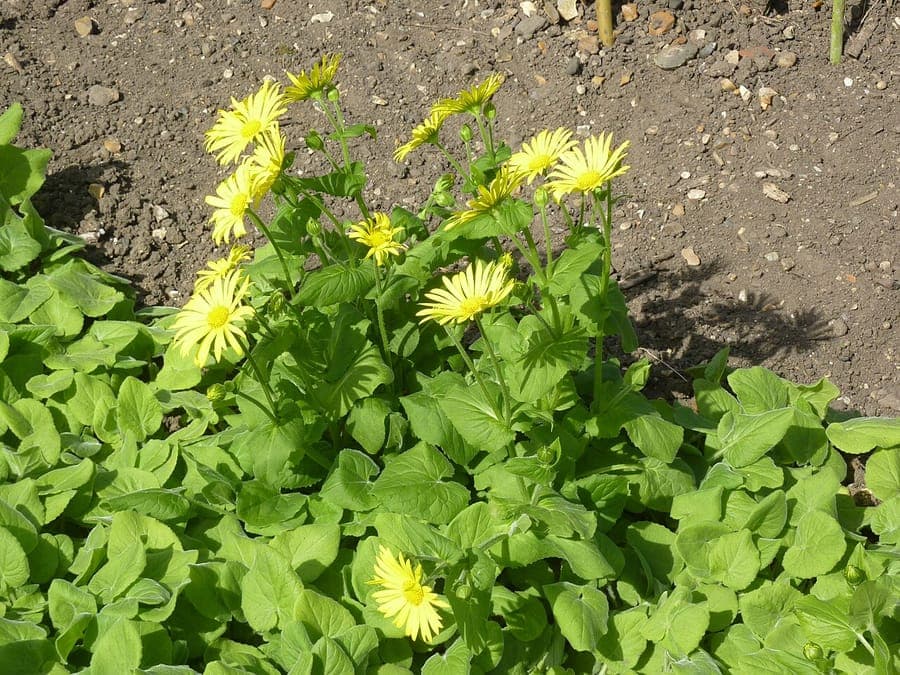
Doronicum pardalianches
Want to see Great leopard's-bane: complete guide in your garden?
1 minute, no credit card
Overview
Great leopard's-bane, or Doronicum pardalianches, is a bold yet well-behaved perennial that brings a jolt of golden yellow to the garden in early spring. Native to alpine regions of Europe and parts of Ukraine and Oregon, it thrives in cool, moist conditions and emerges when few other perennials are ready to shine. Reaching 40–60 cm in height, it's ideal for the middle to front of a border, especially in zones 5 to 8. It's not invasive, doesn't spread aggressively, and dies back neatly in summer - making it a tidy addition to any garden plan.
What sets it apart is its reliability. While some spring bloomers are fussy or short-lived, this plant comes back year after year with minimal fuss. It's not showy in the flashy sense, but its vibrant flowers and lush foliage make it a staple in naturalistic planting schemes. On gardenworld.app, you can design a spring border that highlights its bloom time and pairs it with complementary textures.
Appearance & bloom cycle
The plant forms a rosette of broad, heart-shaped, dark green leaves that hug the ground. From March to May, sturdy, leafless stems rise above, each topped with a single daisy-like flower, bright yellow with a prominent central disc. Flowers are 5–6 cm wide and face upward, catching the low spring light. After blooming, the foliage persists for several weeks before gradually yellowing and collapsing by midsummer.
It doesn't rebloom, so plan ahead for what will cover the space later. Pair it with late-emerging plants like rodgersia or astilbe. The plant self-seeds lightly in ideal conditions, but not enough to be problematic. If you want to prevent seeding, deadhead before the seed heads dry out.
Ideal location
Choose partial to full shade - dappled light under deciduous trees is perfect. It tolerates morning sun but struggles in hot afternoon exposure, especially in clay-heavy or dry soils. Avoid south-facing walls or paved areas that radiate heat. It shines in woodland gardens, shady borders, or under shrubs like rhododendrons.
Urban gardeners will appreciate how well it performs in narrow side yards or under balconies where light is limited. Just make sure the spot doesn't dry out completely. It appreciates consistent moisture and protection from drying winds.
Soil requirements
The soil should be rich, moist, and well-drained with plenty of organic matter. Think loamy soil amended with compost or leaf mould. pH between 6.0 and 7.0 is ideal. Heavy clay can work if it's not waterlogged; sandy soils need regular mulching to retain moisture.
In containers, use a peat-free potting mix with added perlite or coir for drainage. Choose a pot at least 30 cm wide to give roots room. Repot every 2–3 years in autumn or early spring to refresh the soil.
Free design
Want to see Great leopard's-bane: complete guide in your garden? Make a free design now.
Watering
Keep the soil consistently moist, especially during active growth (March–June). Water deeply once or twice a week during dry spells. Use rainwater when possible - Doronicum pardalianches is sensitive to lime and may show leaf scorch with hard tap water.
In summer, when the plant is dormant, reduce watering but don't let the roots dry out completely. Potted plants need more attention - check weekly and water when the top inch of soil feels dry.
Pruning
Pruning is minimal. After flowering, cut back spent stems to the base to maintain neatness and prevent self-seeding. Don't cut back foliage until it turns fully brown - it's still feeding the roots. Once it collapses naturally, clear it away to avoid fungal issues.
If the plant looks leggy or sparse, you can divide it every 3–4 years in early autumn. Lift the clump, split with a sharp spade, and replant sections with fresh compost.
Maintenance calendar
- Jan–Feb: Check for frost heave; mulch if needed.
- Mar–May: Peak bloom. Water regularly, keep soil moist.
- Jun: Flowers fade. Cut back stems. Stop feeding.
- Jul–Aug: Foliage dies back. Reduce watering.
- Sep–Oct: Ideal time to divide or transplant. Add compost.
- Nov–Dec: Apply leaf mulch to protect crowns.
Winter hardiness
Hardy in USDA zones 5–8 (–29°C to –12°C). In colder zones, a winter mulch of dry leaves or straw helps prevent frost damage. Avoid wet, soggy soil in winter - that's more dangerous than cold. In pots, elevate containers to prevent freezing of the base and wrap with hessian if exposed.
Companion plants
Combine with other shade-lovers: hellebores, epimedium, pulmonaria, and ferns work beautifully. Early alliums add structure, while hostas and heucheras fill the gap after dieback. Avoid aggressive spreaders like mint or goutweed that can overwhelm it.
For a natural look, plant in loose drifts under trees. It contrasts well with plants that have fine foliage or silver leaves, such as brunnera or lamium.
Closing
Great leopard's-bane is a quiet achiever - not the loudest voice in the border, but one of the most dependable. It delivers bright colour when the garden needs it most and asks for little in return. Buy it in spring from local garden centres when it's in bloom, so you can see the true flower colour. And remember, on gardenworld.app you can map out a seasonal planting plan that ensures your garden never has a dull moment - with Doronicum pardalianches leading the spring charge.
Want to see Great leopard's-bane: complete guide in your garden? Make a free design now.
Upload a photo, pick a style, and get a photorealistic design with plant list in under a minute.
10,000+ gardens designed already
No credit card required


Similar plants
Calendula stellata: complete guide
Calendula stellata
Complete guide to Calendula stellata, the star-flowered marigold from Sicily: location, soil, watering and companion planting tips.
Korean chrysanthemum: complete guide
Chrysanthemum x rubellum
Chrysanthemum x rubellum is a hardy autumn perennial with single pink to copper flowers from August to November. Care and combinations.
Helianthus divaricatus: complete guide
Helianthus divaricatus
Helianthus divaricatus is a North American woodland sunflower with yellow summer blooms, ideal for naturalistic borders and shady edges.