
J.M.Garg / CC BY 3.0, via Wikimedia Commons
Dodonaea viscosa: complete guide
Dodonaea viscosa
Want to see Dodonaea viscosa: complete guide in your garden?
1 minute, no credit card
Dodonaea viscosa, commonly known as Florida hopbush, is a remarkable shrub originating from tropical and subtropical coastal regions worldwide. This is a plant that thrives in warm conditions and excels in drought-prone landscapes. While not a traditional choice in northern Europe, it deserves serious consideration for gardeners designing low-maintenance, water-wise gardens or those with container gardening in mind.
Appearance and flowering
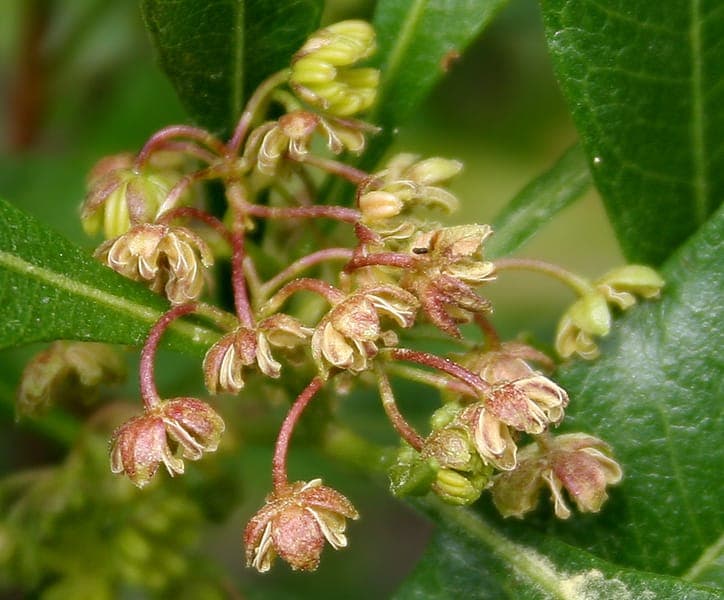
Dodonaea viscosa grows into a compact, densely branched shrub typically reaching 1.5 to 3 meters in height. The leaves are lanceolate, glossy green, and distinctively sticky to the touch (hence the botanical name 'viscosa'). This sticky waxy coating on the foliage creates a striking sheen and helps the plant conserve water in hot, arid conditions. Flowers are small, yellowish, and rather inconspicuous, but the plant produces showy, reddish to purplish-brown seed capsules with papery wings that are highly decorative and excellent for cut arrangements. These winged fruits remain on the plant for weeks.
Ideal location
Florida hopbush loves full sun. Position this plant in a warm, sunny spot with good air circulation. In Mediterranean climates of southern France, Spain, and southern Italy, it thrives outdoors year-round. In Belgium and the Netherlands, it is best grown in large containers and brought indoors during winter, or planted only in very sheltered south-facing locations against a wall. The plant is sensitive to hard freezes below negative 5 degrees Celsius and prefers USDA zones 9-11.
Soil requirements
Dodonaea viscosa prefers very well-draining soil. Heavy clay is problematic; sandy to lightly rocky soil with a pH of neutral to slightly acidic is ideal. Always amend potting soil generously with coarse sand and perlite to prevent any water stagnation. The plant tolerates nutrient-poor soils without issue.
Watering
Once established, Florida hopbush is extremely drought-tolerant. During the first growing period (4-6 weeks after planting), water regularly to establish roots properly. After that, reduce watering frequency dramatically. In summer, you can keep conditions slightly moister, but never allow water to pool around the base. For container plants: water thoroughly but allow the top 3-4 centimeters of soil to dry between waterings. A drip irrigation system is ideal for garden installations.
Free design
Want to see Dodonaea viscosa: complete guide in your garden? Make a free design now.
Pruning and maintenance
Dodonaea viscosa grows compactly and requires minimal pruning. In early spring (March-April), you may lightly cut back growth to maintain shape. Avoid heavy pruning, as recovery is relatively slow. Remove dead or damaged branches anytime. If you want to encourage a more formal structure, guide the young plant with gentle, regular pruning.
Maintenance calendar
January-February: Check container plants for waterlogging; position in bright locations. March-April: Begin light pruning, repot if needed, apply a balanced slow-release fertilizer. May-June: Water regularly and apply growth fertilizer through June. July-August: Keep soil moister during dry spells; watch for scale insects. September-October: Gradually reduce feeding; inspect for pests. November-December: Do not feed; move container plants indoors or provide excellent protection.
Winter hardiness
Dodonaea viscosa is not winter-hardy in most of northern Europe. In USDA zones 9-11 (Mediterranean southern Europe), it can remain outdoors, but in zones 6-8 (Netherlands, Belgium), it must be protected or moved indoors for winter. In containers, bring it inside by October and place in a bright, cool location (10-15 degrees Celsius) where you water sparingly. This enforces dormancy and encourages vigorous spring growth.
Companion plants
Florida hopbush combines beautifully with other heat-loving species: Cistus (rockrose), Santolina (cotton-lavender), Teucrium (germander), Rosmarinus officinalis (rosemary), and Helichrysum (curry plant). In containers, pair it with Fuchsia, Bougainvillea, or other summer terrace plants for striking color contrasts.
In summary
Dodonaea viscosa is a frost-sensitive, low-maintenance shrub with significant potential for gardens in increasingly warm climates. Its drought tolerance and compact growth habit make it ideal for sustainable garden designs. Provide sunshine, excellent drainage, and you will enjoy years of pleasure from this beautiful plant.
Want to see Dodonaea viscosa: complete guide in your garden? Make a free design now.
Upload a photo, pick a style, and get a photorealistic design with plant list in under a minute.
No credit card required


Similar plants
Acer pycnanthum: complete guide
Acer pycnanthum
Acer pycnanthum, the Japanese swamp maple, is a fast-growing tree with early red flowers and brilliant autumn color, ideal for damp garden settings.
Freeman maple: complete guide
Acer × freemanii
Everything about the Freeman maple (Acer x freemanii): a fast-growing shade tree with spectacular autumn colour for large gardens.
Wild ackee: complete guide
Cupania americana
A comprehensive guide to Cupania americana, a tropical tree from the Sapindaceae family with conspicuous white flowers and brown fruits, native to tropical America.