
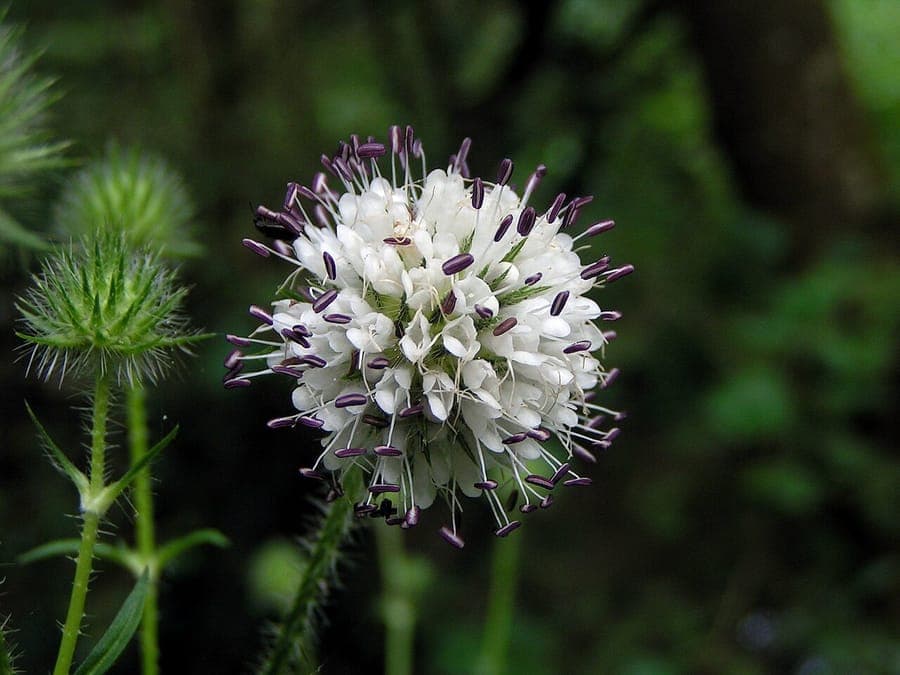
No machine-readable author provided. Pethan assumed (based on copyright claims). / CC BY-SA 3.0, via Wikimedia Commons
Small teasel: complete guide
Dipsacus pilosus
Want to see Small teasel: complete guide in your garden?
1 minute, no credit card
Overview
Small teasel, or Dipsacus pilosus, is a herbaceous perennial native to much of Central and Western Europe, including the UK, Germany, France and Belgium. Unlike its larger cousin Dipsacus fullonum, this species stays more compact and refined, reaching 60–100 cm in height. It's often found in dry grasslands, roadside verges, and open woodland edges. In garden settings, it's prized for its architectural form, long blooming season, and exceptional value to pollinators. If you're planning a wildlife-friendly border, consider using gardenworld.app to map out spacing and companion plants that match the height and bloom time of small teasel.
Appearance & bloom cycle
Small teasel forms upright, hairy stems with opposite, lance-shaped leaves that clasp the stem and collect rainwater - an adaptation that may deter crawling pests. From June through September, it produces tight, egg-shaped flower heads, 4–6 cm wide, covered in delicate white florets. These are encased in long, spiny bracts that give the plant a striking, almost prehistoric look. The blooms are rich in nectar and attract bumblebees, honeybees, hoverflies, and butterflies like the small tortoiseshell. After flowering, the seed heads dry and persist well into winter, offering visual interest and food for finches and other seed-eating birds.
Ideal location
This plant thrives in full sun to light shade, ideally at a light level of 7 out of 10. A south- or southeast-facing spot that gets 5–6 hours of direct sunlight daily is ideal. Too much shade results in weak, floppy stems and reduced flowering. Small teasel works well in dry borders, cottage gardens, or naturalistic planting schemes. Allow 40 cm spacing between plants to prevent overcrowding. On gardenworld.app, you can design a low-maintenance border that includes small teasel alongside other late-summer bloomers, ensuring year-round structure.
Soil requirements
Dipsacus pilosus prefers well-drained, neutral to slightly alkaline soils with a pH between 7.0 and 7.5. It tolerates poor to moderately fertile conditions and does best when not overfed. Heavy clay soils should be amended with grit or coarse sand to improve drainage. Avoid rich, heavily amended garden soils - these encourage lush foliage but weak stems that may require staking. A sandy loam or chalky soil is perfect, especially in drier garden zones.
Watering
Once established, small teasel is highly drought-tolerant and rarely needs supplemental watering. During the first growing season, water weekly during dry spells to help roots develop. After that, rainfall is usually sufficient. Overwatering, especially in poorly drained soils, can lead to root rot. Water at soil level in the morning to reduce fungal risk, and avoid wetting the foliage.
Free design
Want to see Small teasel: complete guide in your garden? Make a free design now.
Pruning
Pruning is minimal. For a tidier appearance, cut back spent flower heads in late autumn or early winter. If you want to limit self-seeding, remove the heads before seeds fully ripen (late August to early September). Leave some seed heads standing for winter wildlife - goldfinches love them. Use clean, sharp secateurs and cut just above a leaf node to encourage bushier growth if needed.
Maintenance calendar
- Jan: Check for old stems; remove any damaged parts.
- Feb: No action required.
- Mar: Clear debris; watch for emerging shoots.
- Apr: Monitor growth; ensure good air circulation.
- May: Flower buds form; reduce watering if soil stays moist.
- Jun: Blooming starts; keep soil on the drier side.
- Jul: Peak bloom; observe pollinator activity.
- Aug: Seeds ripen; deadhead if self-seeding is unwanted.
- Sep: Flowering ends; leave or cut stems.
- Oct: Clean up garden debris; leave some structure for winter.
- Nov: Cut back remaining stems if desired.
- Dec: Dormant period; no care needed.
Winter hardiness
Small teasel is hardy in USDA zones 5–9 (-20°C to -1°C). It survives typical UK and Central European winters without protection. The plant dies back to ground level, with new growth emerging from the crown in spring. In wet winters, poor drainage is the main risk - ensure the site doesn't become waterlogged. The dried flower heads add winter texture and shelter for overwintering insects.
Companion plants
Pair small teasel with late-summer perennials like Echinacea, Rudbeckia, Verbena bonariensis, or tall grasses such as Molinia or Deschampsia. These create a dynamic mix of height, texture, and bloom time. Avoid overly aggressive spreaders like mint or goldenrod that can overwhelm it. For a meadow-style look, combine with wildflowers like knapweed (Centaurea nigra) or oxeye daisy (Leucanthemum vulgare).
Closing
Small teasel is a quiet achiever in the garden - not flashy, but full of ecological value and subtle beauty. Its ability to thrive in dry, sunny spots with little care makes it ideal for modern, sustainable gardening. Let it self-seed modestly or control spread by deadheading. You can find Dipsacus pilosus at garden centres across the UK, especially in summer. With the right conditions, it will return reliably year after year, adding structure and life to your borders. Use gardenworld.app to plan a planting scheme that balances aesthetics and habitat - because great gardens work for both people and pollinators.
Want to see Small teasel: complete guide in your garden? Make a free design now.
Upload a photo, pick a style, and get a photorealistic design with plant list in under a minute.
No credit card required


Similar plants
Yellow honeysuckle (Lonicera tragophylla): complete guide
Lonicera tragophylla
Meet yellow honeysuckle (Lonicera tragophylla): a Chinese climber with large golden flowers that thrives in partial shade.
Lonicera korolkowii: complete guide
Lonicera korolkowii Stapf
Discover blueleaf honeysuckle, a vigorous shrub with beautiful flowers. Guide on growing, shaping and why this Asian climbing plant is perfect for gardens.
Lonicera oblongifolia: complete guide
Lonicera oblongifolia Hook.
Discover swamp fly honeysuckle, a North American woodland plant. Guide on growing, caring and why this native species is valuable for gardens.