
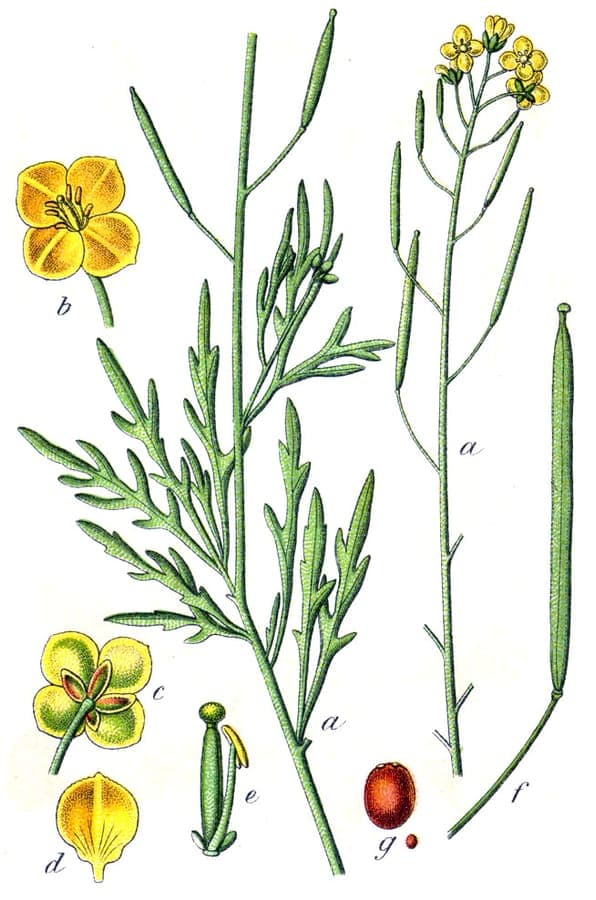
Johann Georg Sturm (Painter: Jacob Sturm) / Public domain, via Wikimedia Commons
Lincoln's-weed: complete guide
Diplotaxis tenuifolia
Want to see Lincoln's-weed: complete guide in your garden?
1 minute, no credit card
Overview
Lincoln's-weed (Diplotaxis tenuifolia) is a resilient perennial that slips under the radar in many UK and North European gardens, despite its rugged beauty and low upkeep. Native to southern Europe - from Albania to France - this member of the Brassicaceae family thrives in dry, rocky conditions and has adapted well to urban cracks and dry garden borders. It's not a true weed, despite the name, but a valuable garden plant with architectural foliage and cheerful yellow blooms.
Growing between 40 and 60 cm in height, Lincoln's-weed blooms from May through August, sometimes extending into September in mild, sunny locations. It's hardy down to USDA zone 6, making it suitable for most temperate garden zones. The plant dies back in winter but returns reliably in spring, often self-seeding in gravel paths or between stones.
Unlike flashy hybrids, this plant brings subtle strength. Its narrow, deeply lobed leaves resemble wild rocket, and the scent when bruised is peppery - a familiar trait among brassicas. Gardeners looking for drought-tolerant, pollinator-friendly plants should give it serious consideration.
On gardenworld.app, you can explore garden designs featuring Lincoln's-weed in gravel beds or naturalistic plantings, helping you visualise how it fits within your space.
Appearance & bloom cycle
The plant forms upright, branching stems with finely divided leaves that give it a feathery texture. The foliage is mid- to dark green, turning slightly purplish in full sun. In late spring, clusters of small yellow flowers appear at stem tips. Each flower has four petals and measures about 1 to 1.5 cm across.
The bloom period is long, and deadheading encourages a second flush in late summer. Even after flowering, the seed pods add visual interest, splitting open to scatter seeds - nature's way of spreading the colony. If you prefer control, cut back spent stems before pods mature.
This plant's real charm lies in its resilience. It doesn't wilt under heat, and slugs tend to avoid it. The combination of form, function, and hardiness makes it a quiet standout.
Ideal location
Full sun is best - aim for at least 6 hours of direct light. Lincoln's-weed handles partial shade but blooms less and grows leggy. It excels in dry, exposed sites: south-facing walls, gravel gardens, or raised beds with sharp drainage.
Avoid damp, shaded corners or heavy clay soils that stay wet. These conditions invite root rot and fungal issues. Instead, think Mediterranean-style planting: lean soils, minimal water, maximum sun.
For gardeners designing low-water spaces, Lincoln's-weed is a no-brainer. Pair it with Sedum, Eryngium, or Thymus for a textured, eco-conscious border. Try simulating your layout on gardenworld.app to test combinations before planting.
Free design
Want to see Lincoln's-weed: complete guide in your garden? Make a free design now.
Soil requirements
This plant prefers lean, well-drained soil. Sandy or gravelly mixes work best. The pH range should be neutral to slightly alkaline (6.5–7.5). Avoid rich compost-heavy soils - they promote soft growth that collapses easily.
If your garden has clay soil, amend it with sharp sand and grit to improve drainage. A raised bed with a 10 cm layer of crushed stone beneath soil can also help. Root health depends on dry feet, so don't skimp on drainage.
Watering
Water sparingly. Young plants need weekly watering in their first growing season during dry spells. Once established, Lincoln's-weed survives on rainfall alone. Overwatering is the fastest way to kill it.
During extended droughts, give a deep soak once every two weeks - about 5 litres per plant. Use rainwater if possible, as tap water with high lime content can affect soil pH over time.
Pruning
Pruning isn't essential, but cutting back after the first bloom improves appearance and may trigger a second flush. In late July, trim stems by one-third using clean, sharp shears.
In early spring, clear away dead foliage to make room for new growth. Wear gloves - the sap can irritate sensitive skin.
Maintenance calendar
- January: No action. Check for winter damage.
- February: Remove debris. Prepare soil if replanting.
- March: Clear old leaves. Add a thin layer of compost.
- April: Sow seeds or transplant. Water young plants weekly.
- May: Blooming begins. Monitor for pests.
- June: Peak bloom. No feeding needed.
- July: Deadhead after first flush. Water only if extremely dry.
- August: Second bloom possible. Remove seed pods if self-sowing is unwanted.
- September: Allow some seed spread for next year.
- October: Reduce watering. Leave some foliage for winter cover.
- November: No care. Dormant phase.
- December: Inspect for frost heave.
Winter hardiness
Lincoln's-weed survives down to -20°C (USDA zone 6). In colder areas, mulch lightly with gravel or straw to prevent frost heave. The foliage may die back, but the crown survives. Avoid covering with wet mulch - it traps moisture and causes rot.
Companion plants
Pair with other drought-tolerant species: Echinacea, Nepeta, Verbena bonariensis, or Ornithogalum. Avoid moisture-loving plants like hostas or astilbes. For a natural rock garden, combine with Sedum and Thymus.
The plant's height and airy form make it ideal for mid-border placement. It contrasts well with spiky alliums or soft mounds of oregano.
Closing
Lincoln's-weed deserves a place in more gardens. It's tough, unfussy, and supports pollinators without demanding attention. While not common in mainstream garden centres, it's available through specialist nurseries or seed suppliers.
In the UK and Ireland, check garden centres with a focus on native or Mediterranean plants. Trained staff may carry it seasonally. For planting plans and design ideas, visit gardenworld.app - a tool that helps match plants like Diplotaxis tenuifolia to your garden's light and soil conditions.
Want to see Lincoln's-weed: complete guide in your garden? Make a free design now.
Upload a photo, pick a style, and get a photorealistic design with plant list in under a minute.
No credit card required


Similar plants
Brassica cretica: complete guide
Brassica cretica
Brassica cretica, the Cretan cabbage, grows wild on Aegean cliffs. Discover how to grow this drought-tolerant, yellow-flowered Mediterranean perennial.
Corsican cabbage: complete guide
Brassica insularis
Corsican cabbage is a rare Mediterranean rock cabbage with white flowers and blue-green leaves. Location, soil and winter protection.
Prostrate cabbage: complete guide
Brassica procumbens
Prostrate cabbage is a creeping North African cliff plant with yellow flowers. Discover location, soil type and winter protection.