
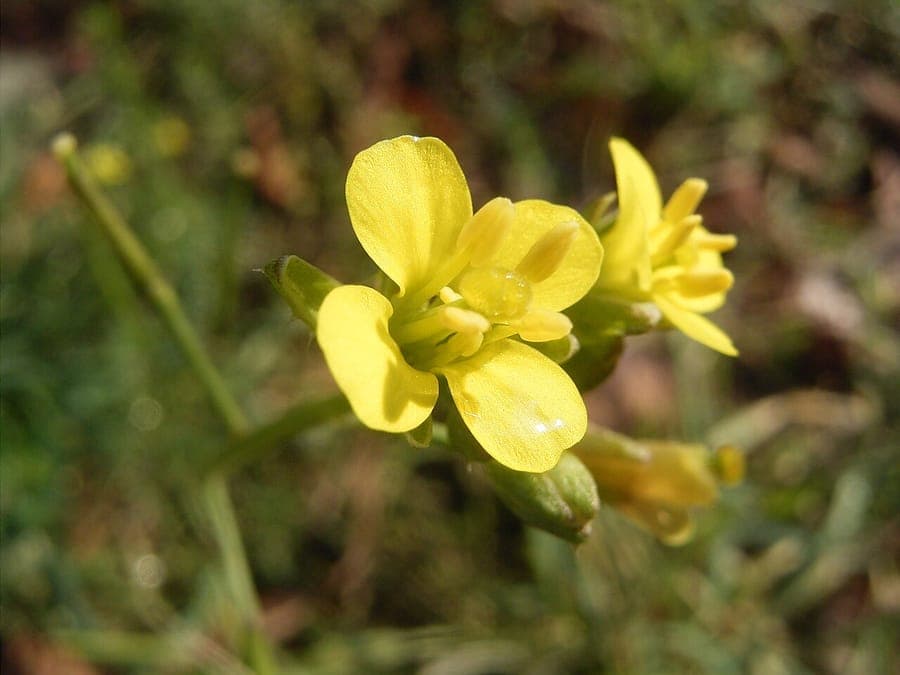
No machine-readable author provided. TeunSpaans assumed (based on copyright claims). / CC BY 2.5, via Wikimedia Commons
Teetulpa-weed: complete guide
Diplotaxis muralis
Want to see Teetulpa-weed: complete guide in your garden?
1 minute, no credit card
Overview
Teetulpa-weed, or Diplotaxis muralis, is a modest annual from the Brassicaceae family that often flies under the radar in gardens across Europe. Commonly dismissed as a weed, it's actually a resilient, low-effort plant that thrives in neglected corners, cracks in walls, and dry pathways. Native to southern and central Europe, it has naturalised in the UK and can be found along roadsides, coastal cliffs, and urban pavements.
What surprises many is that Teetulpa-weed is edible. The young leaves have a peppery kick, similar to wild rocket, and work well in salads or as a garnish. While you won't find it in most garden centres, it's worth considering as a functional, self-sustaining addition to informal or wildlife-friendly spaces.
On gardenworld.app, you can design a garden layout that embraces self-seeding plants like Teetulpa-weed, helping you create a naturalistic, low-maintenance outdoor space.
Appearance & bloom cycle
Teetulpa-weed grows between 15 and 40 cm tall, with branching stems and deeply lobed, grey-green leaves that form a basal rosette. From June to September, it produces clusters of small, four-petalled yellow flowers. These are classic brassica blooms - simple but attractive to bees, hoverflies, and other pollinators.
The flowering period is long, especially if you deadhead regularly. Seeds mature from late August and are dispersed by wind or water. The plant self-seeds readily, so if you don't want it popping up everywhere, cut back the flower stems before seeds set. Otherwise, it can become a persistent volunteer in gravel paths or rockeries.
Ideal location
Full sun is best - aim for at least 6 hours of direct light per day. Teetulpa-weed excels in dry, exposed areas where other plants struggle. Think stone walls, pavement cracks, or gravel borders. It's perfect for coastal gardens, urban courtyards, or rural cottage plots with poor soil.
Avoid shady, damp spots. It won't thrive in heavy shade or under dense canopy. If you're designing a wildlife garden, consider placing it near native grasses or low-growing perennials. On gardenworld.app, you can visualise how to integrate such hardy species into your planting scheme without overcrowding.
Soil requirements
This plant loves poor, well-drained soil. Sandy, gritty, or stony substrates are ideal. It tolerates a pH range from 6.0 to 7.8 and handles light salinity - great for seaside gardens. Avoid rich, moisture-retentive soils, as they encourage rot and weaken the plant.
If growing in containers, mix equal parts loam-based compost and horticultural grit. Ensure pots have drainage holes. Teetulpa-weed doesn't need feeding; in fact, too many nutrients can reduce flower and seed production.
Free design
Want to see Teetulpa-weed: complete guide in your garden? Make a free design now.
Watering
Once established, it needs little to no watering. During dry spells in the first few weeks after germination, give it a light soak once a week. After that, rainfall is usually sufficient. Overwatering is a bigger risk than drought - soggy soil leads to root rot and fungal issues.
Use rainwater when possible, especially in hard water areas, to prevent lime buildup in the soil.
Pruning
Pruning isn't essential, but cutting back flower stems before seed set helps control spread. You can also harvest young leaves for eating - this encourages bushier growth and delays flowering. Use clean scissors or pinch leaves off with your fingers. Remove any yellowing or damaged foliage to keep the plant tidy and reduce disease risk.
Maintenance calendar
- Jan: Dormant; no action needed
- Feb: Check for early seedlings in mild areas
- Mar: Seedlings may appear; thin if overcrowded
- Apr: Growth begins; water sparingly if dry
- May: Monitor for pests; remove competing weeds
- Jun: Flowers start; ensure good air circulation
- Jul: Peak bloom; deadhead to prolong flowering
- Aug: Seeds ripen; cut stems if preventing self-seed
- Sep: Final flowering; collect seeds if desired
- Oct: Seed dispersal; watch for new seedlings
- Nov: Plants die back; leave some for insects
- Dec: Dormant; clear debris if needed
Winter hardiness
As an annual, Teetulpa-weed doesn't survive winter as a mature plant. However, seeds overwinter in crevices and germinate in spring. In milder regions (USDA zones 7–9), young seedlings may appear as early as December. The plant tolerates light frosts down to -5°C at the seedling stage.
In colder areas, it behaves as a true annual, completing its life cycle within one season. Mulching isn't needed and may trap moisture.
Companion plants
Pair Teetulpa-weed with drought-tolerant species like thyme, sedum, or sea holly. In a vegetable patch, it can grow alongside radishes or lettuce - its pungent scent may deter slugs and aphids. Avoid moisture-loving plants like hostas or astilbes.
It also works well in gravel gardens with Verbascum, Eryngium, or native grasses. Its informal habit blends naturally with wildflowers like daisies or yarrow.
Closing
Teetulpa-weed may not win any beauty contests, but it's a tough, useful plant that asks for little and gives back in flavour and resilience. Don't overlook it just because it grows wild - with a bit of intention, it can be a functional part of your garden ecosystem.
For inspiration on how to place it alongside other low-maintenance plants, visit gardenworld.app. Their design tools help you plan around natural colonisers, making your garden both practical and harmonious.
Want to see Teetulpa-weed: complete guide in your garden? Make a free design now.
Upload a photo, pick a style, and get a photorealistic design with plant list in under a minute.
No credit card required


Similar plants
Brassica cretica: complete guide
Brassica cretica
Brassica cretica, the Cretan cabbage, grows wild on Aegean cliffs. Discover how to grow this drought-tolerant, yellow-flowered Mediterranean perennial.
Corsican cabbage: complete guide
Brassica insularis
Corsican cabbage is a rare Mediterranean rock cabbage with white flowers and blue-green leaves. Location, soil and winter protection.
Prostrate cabbage: complete guide
Brassica procumbens
Prostrate cabbage is a creeping North African cliff plant with yellow flowers. Discover location, soil type and winter protection.