
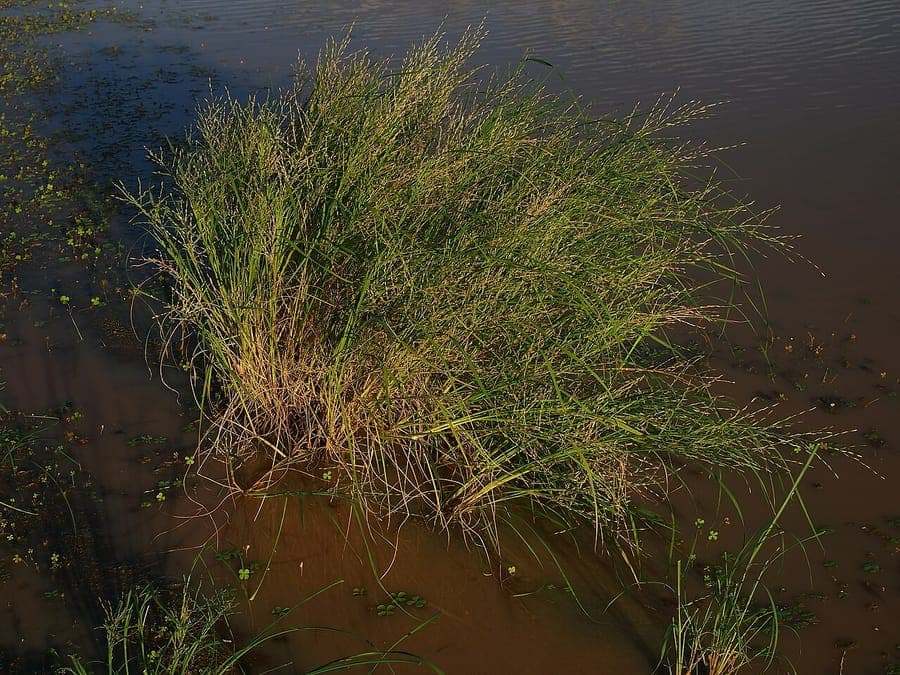
Mark Marathon / CC BY-SA 4.0, via Wikimedia Commons
Brown beetle-grass (Diplachne fusca): complete guide
Diplachne fusca
Want to see Brown beetle-grass (Diplachne fusca): complete guide in your garden?
1 minute, no credit card
Overview
Brown beetle-grass (Diplachne fusca) is a versatile ornamental grass with a remarkably wide distribution spanning tropical Africa to subtropical North and Central America. This grass is valued for its fine, brown flowering panicles and exceptional drought tolerance. The plant reaches 60-100 cm in height and brings elegant movement and texture to warm garden borders and container displays.
Appearance and bloom
Brown beetle-grass grows in loosely clumped habit, reaching 60-100 cm height. The plant forms slender, gray-green leaves that extend along the stems. Flowers appear as delicate brown panicles from July through October, remaining ornamental for months. The panicles are extremely refined, waving gracefully in breezes and adding movement to garden scenes.
Ideal location
Brown beetle-grass thrives in:
- Full sun (minimum 6-8 hours direct light)
- Warm position; the plant loves heat
- Protection from extreme wind exposure
- Open, dry growing conditions
- Excellent drainage essential
Soil requirements
Plant brown beetle-grass in well-draining, poor to moderately fertile soil. This grass is highly tolerant of poor soil quality and thrives even on very dry, rocky or sandy ground. Heavy clay should be amended with sand and gravel. The plant thrives in mineral-rich, nutrient-poor conditions.
Watering
Brown beetle-grass is exceptionally drought-tolerant once established. During the first growing season:
- Water regularly until well-established
- Once growth becomes active, reduce watering significantly
- In summer and autumn, minimal water needed
- This is a very drought-loving grass
- Overwatering must be avoided
Pruning and maintenance
Brown beetle-grass requires minimal maintenance. Leave dead flowers and foliage standing through winter for structure and bird food. In early spring (March-April), cut the plant back to 5-10 cm height. This stimulates fresh growth and dense clump formation.
Free design
Want to see Brown beetle-grass (Diplachne fusca): complete guide in your garden? Make a free design now.
Maintenance calendar
- April-May: Growth begins; plant emerges from dormancy
- June-July: Rapid growth; leaf formation
- July-October: Flowering; brown panicles appear
- October-March: Dead foliage and panicles remain standing
- March: Cut back to ground level
Winter hardiness
Brown beetle-grass is hardy to USDA Zone 8-9 (-12 to -7 degrees C). In cold regions it may be a heat-loving perennial better grown in containers for winter protection, or treated as an annual. In southern regions and warmer climates it thrives as a true perennial grass.
Tropical and subtropical heritage
As a grass of tropical and subtropical regions, brown beetle-grass prefers warm growing conditions. It performs beautifully in containers that can be brought indoors for winter, ideal for colder regions.
Ecological value
This grass species provides bird food through seed production in autumn. Dead panicles offer overwintering sites for beneficial insects.
Companion plants
Combine brown beetle-grass with:
- Agapanthus: for blue contrast
- Salvia nemorosa: for purple accents
- Gaura lindheimeri: for airy white flowers
- Coreopsis (tickseed): for yellow contrast
- Sedum: for succulent textures
Container cultivation
Brown beetle-grass performs beautifully in large containers (minimum 30-40 cm diameter). Use well-draining potting compost. Water moderately during growth, almost dry in autumn and winter. Containers can overwinter outdoors in protected locations or be brought indoors in very cold regions.
Propagation
Brown beetle-grass germinates readily from seed. Sow in spring on warm, moist seed compost. Division of established clumps is also possible in spring.
Closing thoughts
Brown beetle-grass is an excellent choice for heat-loving gardeners and dry borders. With full sun, well-draining soil, and minimal watering, this grass will produce elegant brown panicles year after year. Perfect for dry gardens, Mediterranean gardens, and warm front borders. It brings graceful movement to autumn and winter when many other plants quieten down. An underused gem that deserves greater recognition.
Want to see Brown beetle-grass (Diplachne fusca): complete guide in your garden? Make a free design now.
Upload a photo, pick a style, and get a photorealistic design with plant list in under a minute.
No credit card required


Similar plants
Sporobolus pungens: complete guide
Sporobolus pungens
Sporobolus pungens is a stoloniferous Mediterranean coastal grass with outstanding salt and drought tolerance, perfect for seaside and dry gardens.
Mediterranean aegilops: complete guide
Aegilops biuncialis
Everything about Aegilops biuncialis, a Mediterranean annual grass with ornamental spikes and outstanding drought tolerance for dry gardens.
Silver bluestem: complete guide
Bothriochloa saccharoides
Full guide to Bothriochloa saccharoides (silver bluestem): site, soil, watering, winter hardiness, pruning, and garden companions.