
jayeshpatil912 / CC BY 2.0, via Wikimedia Commons
Diospyros malabarica: complete guide
Diospyros malabarica
Want to see Diospyros malabarica: complete guide in your garden?
1 minute, no credit card
Overview
Diospyros malabarica, commonly called Malabar ebony or Indian persimmon, is a majestic tropical tree native to the warm regions of South Asia - particularly India, Bangladesh, Myanmar, Thailand, and the Malay Archipelago. This tree belongs to the Ebenaceae family, the same family as African ebony. The name 'malabarica' refers to the Malabar coast in India, where it was originally found.
The tree is appreciated for both its decorative value and its edible fruits. In tropical and subtropical gardens, it is a beloved choice for shade, wild bird food, and exotic appeal.
Appearance and Bloom
Diospyros malabarica grows into a majestic tree with a broad, rounded crown. Under ideal conditions, it can reach 10-15 meters in height, though it also typically remains at 6-10 meters.
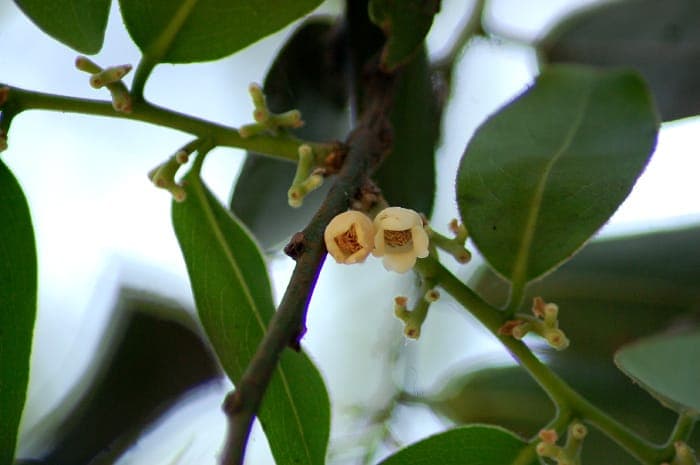
The leaves are oblong-oval, smooth green, and approximately 8-12 cm long. They grow alternately on the branches. The bark is dark brown to black, giving the tree a dignified, elegant appearance.
The flowers are small, yellowish-white, and can be easily overlooked. They appear during spring and early summer. Male and female flowers usually grow on separate trees.
The fruits are the most striking feature. They are round to oval, approximately 4-6 cm in diameter, and are yellow to orange when ripe. The flesh is soft, sugar-rich, and edible. The fruits ripen during autumn to winter.
Ideal Location
Diospyros malabarica requires a fully sunny location. The tree thrives best in warm climates with sustained summer temperatures above 20°C. In Europe, it can only grow in very warm regions or in a greenhouse on the property.
Provide protection from strong winds, especially when the tree is young. A location with some windbreak on the north or west side is ideal.
Soil
Diospyros malabarica grows best in well-draining, fertile soil with a pH of 6.0 to 7.0. The tree accepts various soil types, including sandy, clay, and loamy soils, as long as drainage is good.
When planting, add organic matter - compost or rotted manure - to improve nutrition and water retention. This helps the tree establish itself faster.
Free design
Want to see Diospyros malabarica: complete guide in your garden? Make a free design now.
Watering
During the first year after planting, the tree needs regular water. Water when the top inch of soil feels dry. This may be two to three times per week in very warm climates.
Once established, the tree is drought-tolerant, although it prefers regular water during growing periods. In dry seasons, water deeply once per week.
Reduce watering in winter months as the tree slows its growth.
Pruning
Pruning is not strictly required, but it helps maintain form and health. Remove dead or damaged wood and thin the crown after harvest to allow light and air through the framework.
Young trees can be pruned to build strong structure. Prune just after harvest in winter.
Maintenance Calendar
Spring (March-May): Growth season. Regular watering. Apply slow-release fertilizer for nutrition. Check for pests.
Summer (June-August): Continued growth. Regular watering in dry periods. Shade may be beneficial in extremely hot climates.
Autumn (September-October): Flowering may occur. Fruit ripening. Begin reducing watering.
Winter (November-February): Tree enters dormancy. Minimal watering. No fertilizing.
Winter Hardiness
Diospyros malabarica is not winter-hardy in temperate European climates. Temperatures below 10°C stop growth, and temperatures below 0°C can cause serious damage or death.
In more temperate climates, the tree must grow in containers and be moved indoors in winter, or remain outdoors only in very sheltered, south-facing locations.
Companion Plants
In tropical and subtropical gardens, Diospyros malabarica combines well with:
- Other tropical fruit trees such as Mangosteen or Rambutan
- Shade-tolerant underplanting such as Caladium or Ferns
- Coconut palms and other tropical elements
The tree itself provides much shade, so underplanting must be shade-adapted.
Closing
Diospyros malabarica is an impressive choice for tropical and subtropical gardens. With its majestic form, decorative bark, and edible fruits, it brings a piece of tropical Asia to warmer gardens. For Northern European garden owners, it can be a beautiful container plant, moved to sheltered winter quarters.
For purchase: Intratuin (in tropical section), Gamma, and gardenworld.app.
Want to see Diospyros malabarica: complete guide in your garden? Make a free design now.
Upload a photo, pick a style, and get a photorealistic design with plant list in under a minute.
No credit card required


Similar plants
Mabolo: complete guide
Diospyros discolor
Diospyros discolor, or Mabolo, is an exotic tropical fruit tree with distinctive velvety fruits. Learn cultivation, care, and harvesting techniques for this unique Southeast Asian treasure.
Diospyros mespiliformis: complete guide
Diospyros mespiliformis
African ebony brings dramatic structure to tropical landscapes. Discover distinctive foliage, attractive fruit production, and how to cultivate this impressive specimen.
American Persimmon: complete guide
Diospyros virginiana
The American Persimmon is a cold-hardy fruit tree with delicious, sweet fruits and autumn color. Learn how to grow this native tree successfully in your garden.