
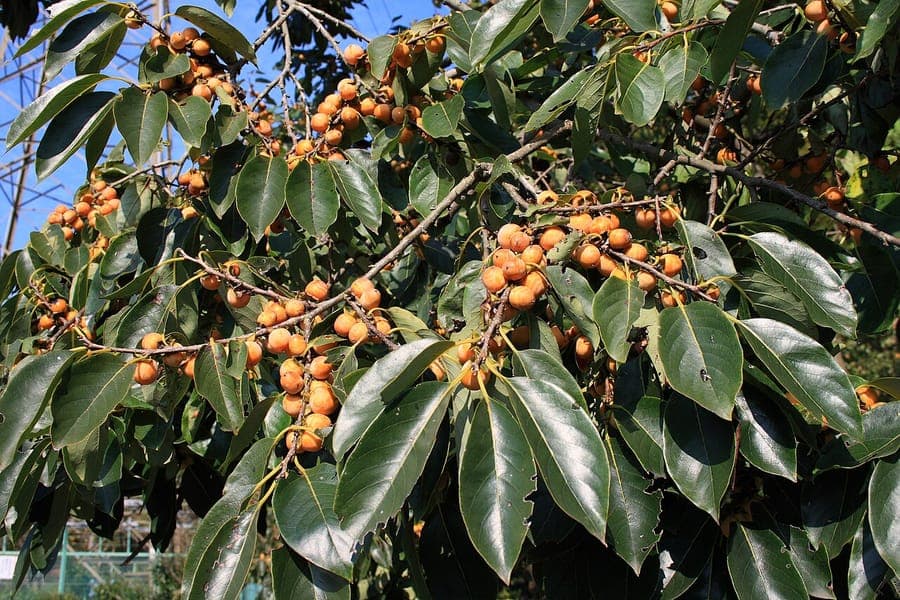
Σ64 / CC BY-SA 3.0, via Wikimedia Commons
Lotus persimmon: complete guide
Diospyros lotus
Want to see Lotus persimmon: complete guide in your garden?
1 minute, no credit card
Overview
The lotus persimmon (Diospyros lotus) is a quiet achiever in the garden - not flashy, but deeply reliable. Unlike its showier cousin, the Asian persimmon, this species thrives on neglect, making it ideal for gardeners who value resilience over spectacle. Native to parts of Central and East Asia, it's adapted to hot, dry summers and cold winters, surviving USDA zones 6 to 9. In temperate climates, it grows to 20–33 ft (6–10 m) tall with a spread of 16–23 ft (5–7 m), forming a rounded, open crown that casts light shade.
You can use gardenworld.app to map out a garden design that suits the lotus persimmon's growth pattern, especially if you're planning a drought-tolerant or wildlife-friendly space.
Appearance & bloom cycle
This tree shines in autumn, when its glossy green leaves turn brilliant yellow and golden orange. The leaves are oval, 2–4 inches (5–10 cm) long, and drop slowly, extending the fall display. In early summer, small, creamy-yellow flowers appear - not showy, but fragrant enough to attract bees and hoverflies. They bloom from late June to mid-July, after the leaves have fully emerged.
By October, the tree produces small, round fruits about 0.8 inches (2 cm) in diameter. They start green, ripen to orange, and soften to a sweet, date-like flavor when fully mature. Unripe fruit is astringent, so wait until they're soft to the touch. While not grown commercially, they're a treat for kids or foragers. Birds also enjoy them, so don't expect to harvest much if you're sharing with nature.
Ideal location
Full sun is best - aim for at least 6 hours of direct sunlight daily. This maximizes fruit set and intensifies autumn color. The tree tolerates partial shade, but growth will be slower and less dense. Give it room to spread; avoid planting too close to buildings or fences. A spacing of at least 15 ft (4.5 m) from structures is wise to prevent root pressure or shading issues.
It works well as a standalone specimen in a lawn, at the edge of a woodland, or in a large container for patios (when young). In urban gardens, it handles air pollution and compacted soil better than many fruit trees.
Soil requirements
The lotus persimmon isn't picky about soil type. It grows in sandy loam, clay loam, and even heavy clay - as long as drainage is good. Soggy soil, especially in winter, leads to root rot. The ideal pH range is 5.5 to 7.5. If your soil is pure sand or extremely heavy clay, amend it with compost at planting time to improve structure and moisture retention.
Avoid high-nitrogen fertilizers. This tree doesn't need rich soil. In fact, overly fertile conditions can encourage leafy growth at the expense of fruiting. A light top-dressing of compost every 2–3 years is sufficient.
Free design
Want to see Lotus persimmon: complete guide in your garden? Make a free design now.
Watering
Young trees need regular watering during their first year - once a week during dry spells. Use deep watering: apply 5–10 gallons (19–38 liters) slowly to encourage deep root development. After the first year, the tree becomes highly drought-tolerant. Mature specimens rarely need supplemental water, except during prolonged droughts lasting 6 weeks or more.
Don't water in winter unless the ground is dry and thawed. Overwatering in cold months is a common mistake that harms roots. If you must water, do it during a mild spell in December or January.
Pruning
Minimal pruning is best. The natural shape is attractive, so avoid heavy cutting. Remove only dead, damaged, or crossing branches. Prune in late winter (February) or early spring before bud break. Use clean, sharp tools to prevent disease transmission.
Don't top the tree or cut back healthy tips - fruit forms on new wood. If you're training a young tree, focus on establishing a strong central leader and remove competing stems early. After year three, let it grow freely.
Maintenance calendar
- January: Inspect for winter damage. No watering or feeding.
- February: Prune dead wood. Final chance before spring.
- March: Loosen soil around the base. No fertilizer needed.
- April: Watch for bud swell. Check for aphids.
- May: Treat aphid outbreaks with insecticidal soap if necessary.
- June: Flowers appear. No intervention required.
- July: Peak bloom. Water young trees in heatwaves.
- August: Fruit begins to develop. Avoid pruning.
- September: Foliage starts turning. No feeding.
- October: Fruit ripens. Harvest when soft. Leaves drop gradually.
- November: Clean up fallen leaves or leave as mulch.
- December: Dormant period. No action unless extreme drought.
Winter hardiness
Hardy in USDA zones 6–9 (-23°C to -1°C). In zone 6, young trees may suffer bark splitting on the south side due to freeze-thaw cycles. Wrap the trunk with tree tape in November if you're in a colder microclimate. Mature trees handle cold well, but avoid exposed, windy sites.
In the UK and northern Europe, it survives most winters without issue. Problems arise only during extended cold snaps below -20°C with drying winds. In such cases, provide temporary wind protection with burlap.
Companion plants
Pair the lotus persimmon with drought-tolerant perennials and shrubs. Good matches include lavender (Lavandula angustifolia), Russian sage (Perovskia atriplicifolia), yarrow (Achillea millefolium), and ornamental grasses like Miscanthus. Underplant with creeping thyme (Thymus serpyllum) or bugleweed (Ajuga reptans), keeping a foot of space from the trunk to prevent moisture buildup.
Avoid aggressive spreaders like mint or bamboo. Use gardenworld.app to test plant pairings and create a balanced layout that prevents root competition.
Closing
The lotus persimmon earns its place with quiet strength. It doesn't demand attention, yet delivers autumn color, wildlife value, and low upkeep. It's a smart choice for sustainable gardens, urban yards, or heritage landscapes. Plant it in fall or early spring. In the UK and US, look for it at garden centres like OBI, Hornbach, Intratuin, or Truffaut - sometimes listed under specialty fruit trees.
Want to see Lotus persimmon: complete guide in your garden? Make a free design now.
Upload a photo, pick a style, and get a photorealistic design with plant list in under a minute.
No credit card required


Similar plants
Diospyros malabarica: complete guide
Diospyros malabarica
Malabar ebony: a tropical tree from Asia with narrow leaves and edible fruits. For warmer climates. Decorative tree form and bird-attracting qualities.
Mabolo: complete guide
Diospyros discolor
Diospyros discolor, or Mabolo, is an exotic tropical fruit tree with distinctive velvety fruits. Learn cultivation, care, and harvesting techniques for this unique Southeast Asian treasure.
Diospyros mespiliformis: complete guide
Diospyros mespiliformis
African ebony brings dramatic structure to tropical landscapes. Discover distinctive foliage, attractive fruit production, and how to cultivate this impressive specimen.