
Wikimedia Commons / CC BY-SA 3.0, via Wikimedia Commons
Black-bindweed: complete guide
Dioscorea communis
Want to see Black-bindweed: complete guide in your garden?
1 minute, no credit card
Overview
Black-bindweed, or Dioscorea communis, is a vigorous perennial vine that often shows up uninvited in British and European gardens. Native to woodlands across southern and central Europe, it thrives in damp, shady spots and can quickly dominate a border if left unchecked. While some gardeners treat it as a weed, others value its fast coverage and wild aesthetic. It's not edible-every part of the plant is toxic-so keep it away from pets and kids. Still, its lush foliage and subtle charm make it a compelling choice for naturalistic planting schemes. On gardenworld.app, you can design a garden layout that uses Black-bindweed as a dynamic vertical element, balancing its growth with other perennials.
This member of the Dioscoreaceae family spreads via underground rhizomes and climbing stems that twine counterclockwise. It's often mistaken for bindweed, but the leaves are more triangular and the flowers are small and green, not pink. Once established, it's tough to remove, so plant it with intention.
Appearance & bloom cycle
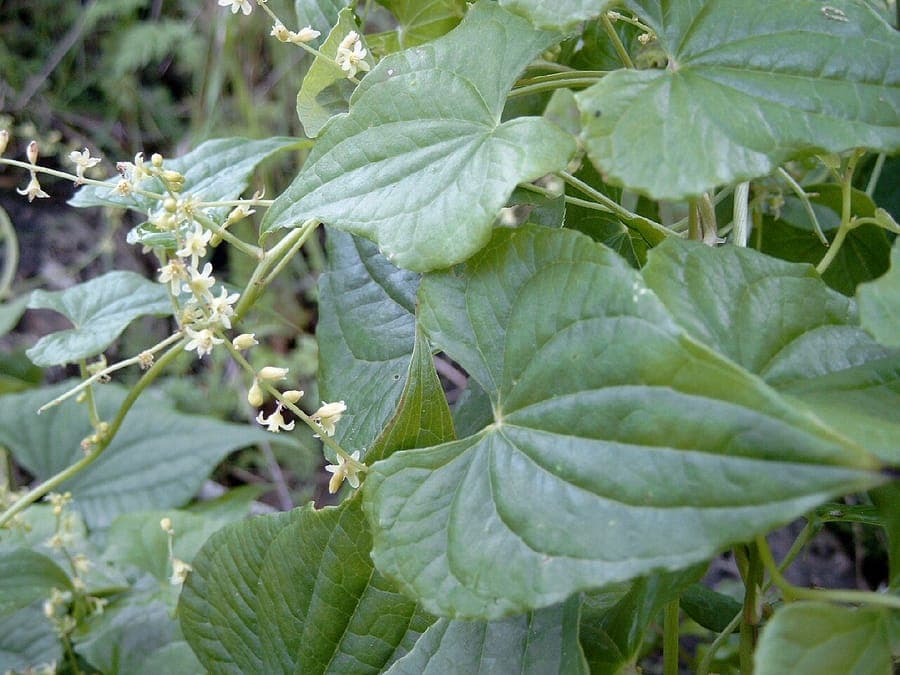
Black-bindweed forms long, climbing stems that can reach 2–3 meters in a single season. The leaves are alternate, heart-shaped with pointed tips, and grow up to 8 cm across. They're bright green, slightly glossy, and emerge in early spring. From March to July, small greenish flowers appear in loose, hanging racemes. They're not showy, but they carry a faint musky scent, especially in the evening.
After flowering, the plant produces clusters of small, round berries that ripen from green to deep purple and finally black. These berries are highly poisonous-do not consume. Birds sometimes eat them without issue, but they pose a serious risk to children and pets. The foliage remains attractive into autumn before turning yellow and dying back completely in winter.
Ideal location
Black-bindweed prefers partial to full shade, scoring around a 6 on the light scale (out of 10). It performs best in dappled woodland conditions, making it ideal for planting under trees, along fences, or beside shaded pergolas. Avoid full sun, especially in southern regions, as it can scorch the leaves and dry out the soil too quickly.
Give it a sturdy support structure-wooden trellises, wire mesh, or even young trees work well. Because it climbs by twining, it needs something slender enough to wrap around. Plan for its spread: it can easily smother nearby plants. Use gardenworld.app to map out spacing and support structures so your Black-bindweed complements rather than competes with your garden design.
Free design
Want to see Black-bindweed: complete guide in your garden? Make a free design now.
Soil requirements
This plant isn't fussy about soil type as long as it's moist and well-drained. The ideal pH range is 7.0 to 7.5-neutral to slightly alkaline. In acidic soils (below 6.5), growth may be stunted. If your soil is too acidic, consider adding garden lime in autumn to gradually raise the pH.
For best results, plant in humus-rich soil amended with compost or leaf mould. Avoid dry, sandy soils unless you're committed to regular watering. Clay soils are acceptable if they don't become waterlogged in winter.
Watering
Black-bindweed likes consistent moisture. Water deeply once a week during dry spells, especially in the first year after planting. Established plants are more resilient but still benefit from supplemental watering in prolonged droughts. Use rainwater when possible, as the plant can be sensitive to high levels of chlorine or lime in tap water.
Mulch around the base in spring with well-rotted compost or leaf litter to retain moisture and suppress competing weeds. Don't let mulch touch the stems directly to avoid rot.
Pruning
Pruning isn't required, but it helps manage size and density. Cut back stems to 30–50 cm above ground in late winter or early spring before new growth emerges. This encourages bushier, healthier regrowth and reduces self-seeding.
Wear gloves when handling the plant-its sap can irritate sensitive skin. Dispose of cuttings carefully; don't compost them, as fragments can regrow.
Maintenance calendar
- Jan: Check root zone, remove winter debris
- Feb: No action needed unless mild
- Mar: Begin pruning; watch for new shoots
- Apr: Monitor for slugs; maintain soil moisture
- May: No pruning; observe flowering
- Jun: Ensure support is secure; check for overcrowding
- Jul: Flowers present; avoid wetting foliage
- Aug: Minimal care; water in dry periods
- Sep: Berries ripen; do not harvest
- Oct: Foliage yellows; prepare for dieback
- Nov: Clear dead leaves; apply mulch
- Dec: Dormant phase; inspect for damage
Winter hardiness
Black-bindweed is hardy in USDA zones 6–9. In the UK (zones 8–9), it survives winter with no protection. The top growth dies back, but the roots remain alive and resprout in spring. In colder zones, a thick mulch layer can help insulate the crown.
Companion plants
Pair Black-bindweed with shade-tolerant perennials like Epimedium, Hosta, or Ferns. Avoid delicate plants that can't handle competition. It works well with woody climbers like Ivy or Climbing Hydrangea if given enough space. Use vertical layering in your design to prevent overcrowding.
Closing
Black-bindweed isn't for every garden, but if you're aiming for a wild, woodland feel, it's hard to beat. It's fast, tough, and thrives where other plants struggle. Just plant it wisely-give it room, support, and keep an eye on its spread. Buy plants from reputable garden centres like those found in your local area, where you can get advice on placement and care. With the right approach, Black-bindweed can be a functional and beautiful part of your garden's ecosystem.
Want to see Black-bindweed: complete guide in your garden? Make a free design now.
Upload a photo, pick a style, and get a photorealistic design with plant list in under a minute.
No credit card required


Similar plants
Cush-cush yam: complete guide
Dioscorea trifida
Everything about Dioscorea trifida, the tropical cush-cush climbing yam with ornamental lobed leaves and edible tubers from South America.
Dioscorea villosa: complete guide
Dioscorea villosa
Discover Dioscorea villosa (Wild yam), an elegant climbing vine from North America. Growing tips, care, and ornamental applications.
Dioscorea hispida: complete guide
Dioscorea hispida Dennst.
Explore the Asiatic bitter yam, an exotic climbing tuber with dramatic foliage. Perfect for warm-season growing and tropical front yard effects.