
User:Haplochromis / CC BY 2.5, via Wikimedia Commons
Woolly digitalis: complete guide
Digitalis lanata
Want to see Woolly digitalis: complete guide in your garden?
1 minute, no credit card
Overview
Woolly digitalis (Digitalis lanata) is a striking, clump-forming perennial native to rocky hillsides and open woodlands of southeastern Europe, including Greece, Bulgaria, and Turkey. In the garden, it brings architectural interest with its velvety, silver-grey foliage and upright flower spikes. Unlike the more common foxglove (Digitalis purpurea), this species is more compact and resilient, thriving in dry, sunny conditions. It's a smart pick for gardeners seeking structure without high maintenance.
All parts of the plant are toxic if ingested, so keep it away from curious pets and toddlers. But its nectar-rich blooms are a magnet for bees, bumblebees, and hummingbirds. You'll often see it used in cottage gardens, gravel beds, and drought-tolerant designs. On gardenworld.app, you can create a planting plan that positions woolly digitalis where it shines-paired with plants that complement its texture and bloom time.
Appearance & bloom cycle
Digitalis lanata grows 60–80 cm tall and spreads about 40 cm wide. It forms a basal rosette of densely woolly, lance-shaped leaves that are soft to the touch and silvery in colour. These leaves persist through winter in milder climates, adding off-season interest.
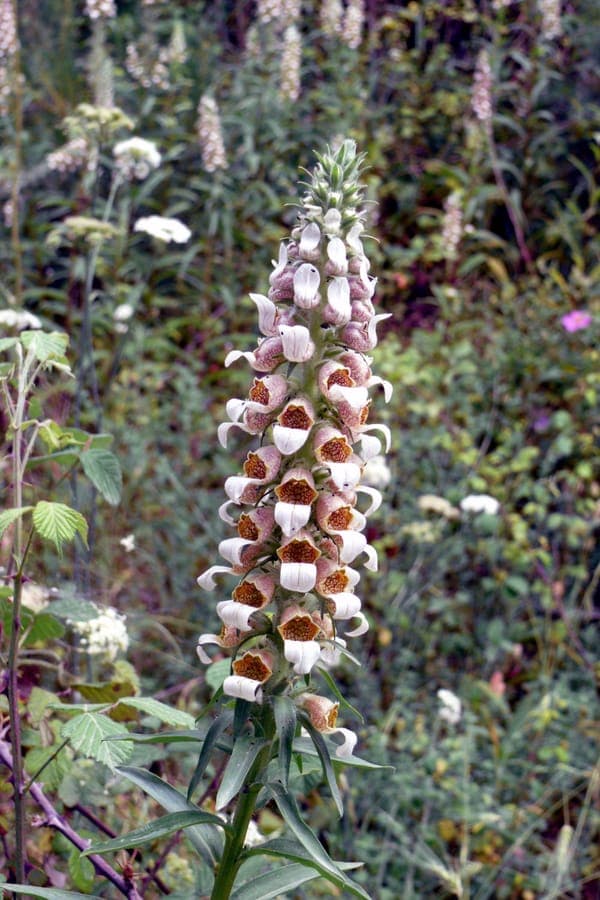
From late June to August, it sends up sturdy, slightly arching flower spikes bearing tubular, bell-shaped blooms. The flowers are typically creamy white to pale yellow or soft pink, often with maroon spotting inside. Each spike holds multiple flowers, opening from the base upward. The bloom period lasts 4–6 weeks. After flowering, seed pods form and can be left for winter structure or removed to prevent self-seeding.
Ideal location
Plant woolly digitalis in full sun (at least 6 hours of direct light) to light shade. It performs best in sunny spots with good air circulation, which helps prevent powdery mildew-a common issue in humid summers. In hotter climates like southern Europe, afternoon shade can prevent leaf scorch.
It works well in the middle to back of mixed borders, on dry slopes, or among shrubs. Avoid deep shade, which leads to leggy growth and poor flowering. Good drainage is non-negotiable. If you're planting in a container, choose one at least 30 cm deep to accommodate its taproot. On gardenworld.app, you can simulate sun exposure across your garden to find the perfect spot for this sun-loving perennial.
Soil requirements
This digitalis prefers well-drained, light to medium soils. Sandy loam or gravelly mixes are ideal. It tolerates poor soil but struggles in heavy clay unless amended with grit or composted bark. The pH range should be slightly acidic to neutral (5.5–7.0).
Avoid rich, water-retentive soils-these encourage root rot. When planting, don't enrich the hole with compost; instead, backfill with native soil. A light mulch of gravel or crushed stone helps retain heat and discourages weeds without trapping moisture.
Free design
Want to see Woolly digitalis: complete guide in your garden? Make a free design now.
Watering
Once established, woolly digitalis is highly drought-tolerant. Water weekly during the first growing season, especially in dry spells. After that, it rarely needs supplemental watering except during prolonged droughts (3+ weeks without rain).
Water at the base to keep foliage dry and reduce fungal risk. Use rainwater if possible-this plant is sensitive to lime and chlorine in tap water. Overhead watering in the evening should be avoided.
Pruning
Pruning is minimal. After blooming, cut flower spikes down to the basal rosette to tidy up the plant or encourage light self-seeding. If you want to prevent spreading, remove all spent spikes before seeds form.
In early spring, remove any winter-damaged or decaying leaves. Wear gloves-skin irritation is possible with prolonged contact.
Maintenance calendar
- January: Check for damaged foliage. No action needed.
- February: Leave old stems for insect habitat.
- March: Remove dead leaves. Apply slow-release organic fertiliser sparingly.
- April: Watch for seedlings. Thin or transplant as needed.
- May: Monitor for powdery mildew in damp weather.
- June–August: Peak bloom. Water only in extended drought.
- September: Cut back flower stems for neatness or leave for winter texture.
- October: Allow leaf litter to protect the crown.
- November–December: No maintenance required.
Winter hardiness
Digitalis lanata is hardy in USDA zones 5–8. In zone 5, mulch lightly with dry leaves or straw to protect young plants during severe cold. Established plants usually survive without protection. The main threat is wet, frozen soil-ensure good drainage to prevent root rot.
In colder zones, avoid heavy winter mulch that holds moisture. Let the plant breathe.
Companion plants
Pair woolly digitalis with other drought-tolerant perennials. Excellent companions include Nepeta 'Walker's Low', Echinacea purpurea, Salvia nemorosa, and Stachys byzantina. Its silver foliage contrasts beautifully with dark-leaved Heuchera or purple Verbena bonariensis.
Ornamental grasses like Calamagrostis x acutiflora or Deschampsia cespitosa add movement and complement its upright form. Avoid moisture-loving plants like hostas or astilbes-they create conflicting care needs.
Closing
Woolly digitalis is a standout for low-effort, high-impact gardening. It combines beauty, resilience, and ecological value in one package. With its soft texture and long bloom time, it's perfect for naturalistic schemes and wildlife-friendly spaces.
You can find Digitalis lanata at garden centres like B&Q, Wyevale, or online nurseries from April onwards. Look for healthy rosettes with no signs of mildew. On gardenworld.app, build a custom border that highlights woolly digitalis alongside other sun-loving, drought-resistant plants for a year-round display.
Want to see Woolly digitalis: complete guide in your garden? Make a free design now.
Upload a photo, pick a style, and get a photorealistic design with plant list in under a minute.
No credit card required


Similar plants
White Beardtongue: complete guide
Penstemon albidus
Discover white beardtongue (Penstemon albidus) - elegant perennial with white to cream flowers. Drought-resistant, perfect for prairie and dry gardens.
Longsepal Beardtongue: complete guide
Penstemon calycosus
Discover longsepal beardtongue (Penstemon calycosus) - beautiful perennial with lilac-blue flowers. For partial shade and moist soil. Ideal for naturalized.
Penstemon cusickii: complete guide
Penstemon cusickii
Discover Cusick's beardtongue, a compact alpine flowering plant with violet-pink blooms. Perfect choice for rock gardens and water-wise landscaping.