
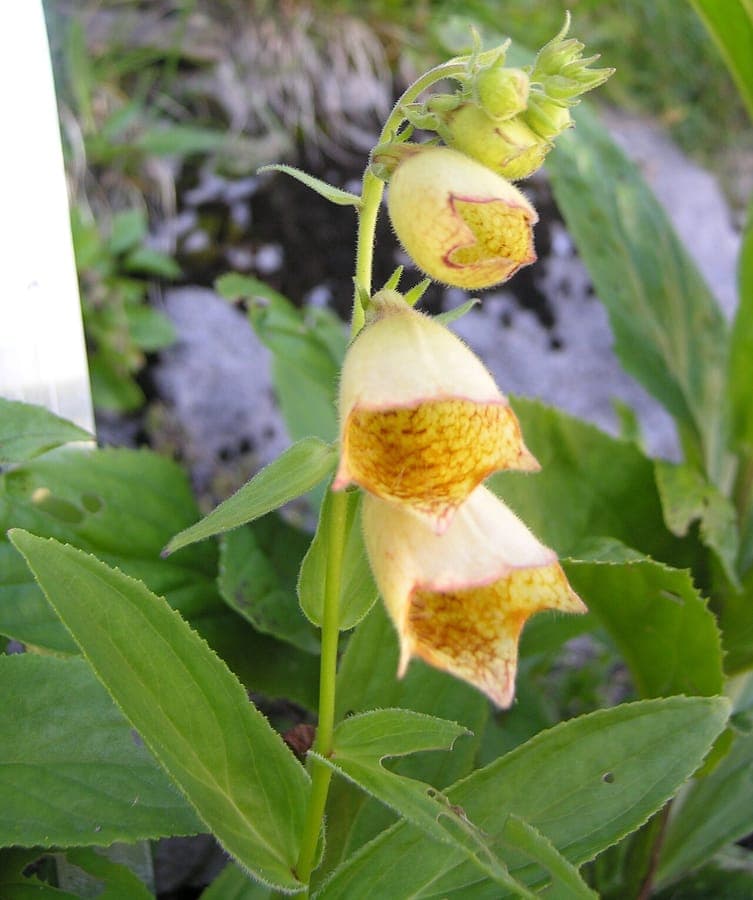
Audrius Meskauskas (Audriusa) / CC BY-SA 3.0, via Wikimedia Commons
Large yellow foxglove: complete guide
Digitalis grandiflora
Want to see Large yellow foxglove: complete guide in your garden?
1 minute, no credit card
Overview
Large yellow foxglove (Digitalis grandiflora) stands out as a graceful alternative to its more common purple cousin. Native to woodlands and forest edges across Central and Eastern Europe, this biennial thrives in temperate gardens where it adds height and soft colour without overwhelming the border. It typically flowers in its second year, though under ideal conditions it may persist as a short-lived perennial. Gardeners appreciate its gentle presence and lower spread compared to Digitalis purpurea, making it a more manageable choice for structured or naturalistic plantings.
Unlike the bold spikes of its relatives, Digitalis grandiflora blooms with a subtlety that suits modern garden design. Its pale yellow flowers bring warmth to shady corners, and because it self-seeds less aggressively, it won't take over your beds. If you're planning a layered planting scheme, gardenworld.app lets you visualise how this foxglove fits into your shade garden with realistic height and bloom timing.
Appearance & bloom cycle
This foxglove reaches 60–90 cm in height, with arching flower spikes that bloom from late June through August. The bell-shaped flowers are soft yellow, around 4–5 cm long, and flecked with brownish spots inside – a beacon for bumblebees and solitary bees. The blooms are arranged in loose, one-sided racemes, giving them a relaxed, natural look.
The foliage forms a basal rosette in the first year, with lance-shaped, dark green leaves that are slightly hairy and woolly underneath. In the second year, the flowering stems emerge, carrying smaller leaves along the stalk. The plant dies back after seeding, but may overwinter as a leaf rosette in milder climates.
Ideal location
Choose partial shade to full shade for best results. Large yellow foxglove performs well under deciduous trees, along fence lines, or in woodland gardens. It tolerates morning sun but struggles in hot afternoon sun, especially in USDA zones 7 and above. A spot with dappled light or filtered shade works best. Avoid dry, exposed areas where the soil bakes in summer.
It's perfect for cottage gardens, naturalised areas, or structured borders where vertical interest is needed. Use it to add rhythm behind lower-growing perennials. With gardenworld.app, you can test different placements digitally before planting, ensuring proper spacing and visual balance.
Free design
Want to see Large yellow foxglove: complete guide in your garden? Make a free design now.
Soil requirements
The soil should be moist but well-drained, rich in organic matter. A loamy or sandy loam with added compost works well. Avoid heavy clay that stays waterlogged, as this can rot the roots. A pH between 6.0 and 7.5 is ideal. While the plant isn't a heavy feeder, a light application of compost in spring supports healthy growth.
Keep in mind: all parts of Digitalis grandiflora are toxic if ingested. Handle with care, and keep away from pets and small children who might be tempted to taste the appealing bells.
Watering
Water regularly during dry spells, especially in the first year and during flowering. Aim for deep watering once or twice a week rather than frequent light sprinkles. Mulch with bark or leaf mould to retain moisture and suppress weeds. Don't let the soil dry out completely, but avoid waterlogging.
Pruning
After flowering, cut back the spent spikes to encourage tidiness and limit self-seeding. If you want a few seedlings next year, leave one or two stems to mature and drop seed. In late winter or early spring, remove any winter-damaged leaves. Don't cut back the entire plant in autumn – the basal rosette often survives mild winters and gives a head start in spring.
Maintenance calendar
- February–March: Remove old foliage, add a thin layer of compost.
- April–May: Watch for new growth. Protect young leaves from slugs. Mulch if needed.
- June–August: Peak bloom period. Water during dry weeks. Check for aphids or powdery mildew in humid conditions.
- September–October: Cut back flower stalks or leave for self-seeding. Apply light mulch.
- November–January: Minimal care. Plant is dormant. Ensure good drainage to prevent rot.
Winter hardiness
Hardy in USDA zones 4 to 8. It reliably survives winter in most of the UK, northern and central Europe, and much of North America. The foliage may turn brown but often remains intact, protecting the crown. No special winter protection is needed, even in harsh conditions.
Companion plants
Pair with shade-loving perennials like ferns, hellebores, hostas, and tiarellas. Early spring bulbs such as daffodils or crocus provide understorey interest before the foxglove grows tall. Add geraniums (cranesbills) for contrasting foliage and late-season colour. Avoid invasive species or overly competitive plants that could overshadow it.
Closing
Large yellow foxglove brings elegance and pollinator appeal to shady areas without dominating the scene. It's low maintenance, long-blooming, and fits seamlessly into a range of garden styles. Buy plants in spring from garden centres like those stocking OBI or Hornbach in Europe, or start from seed. With thoughtful placement and basic care, Digitalis grandiflora becomes a quiet highlight in your garden year after year.
Want to see Large yellow foxglove: complete guide in your garden? Make a free design now.
Upload a photo, pick a style, and get a photorealistic design with plant list in under a minute.
No credit card required


Similar plants
White Beardtongue: complete guide
Penstemon albidus
Discover white beardtongue (Penstemon albidus) - elegant perennial with white to cream flowers. Drought-resistant, perfect for prairie and dry gardens.
Longsepal Beardtongue: complete guide
Penstemon calycosus
Discover longsepal beardtongue (Penstemon calycosus) - beautiful perennial with lilac-blue flowers. For partial shade and moist soil. Ideal for naturalized.
Penstemon cusickii: complete guide
Penstemon cusickii
Discover Cusick's beardtongue, a compact alpine flowering plant with violet-pink blooms. Perfect choice for rock gardens and water-wise landscaping.