
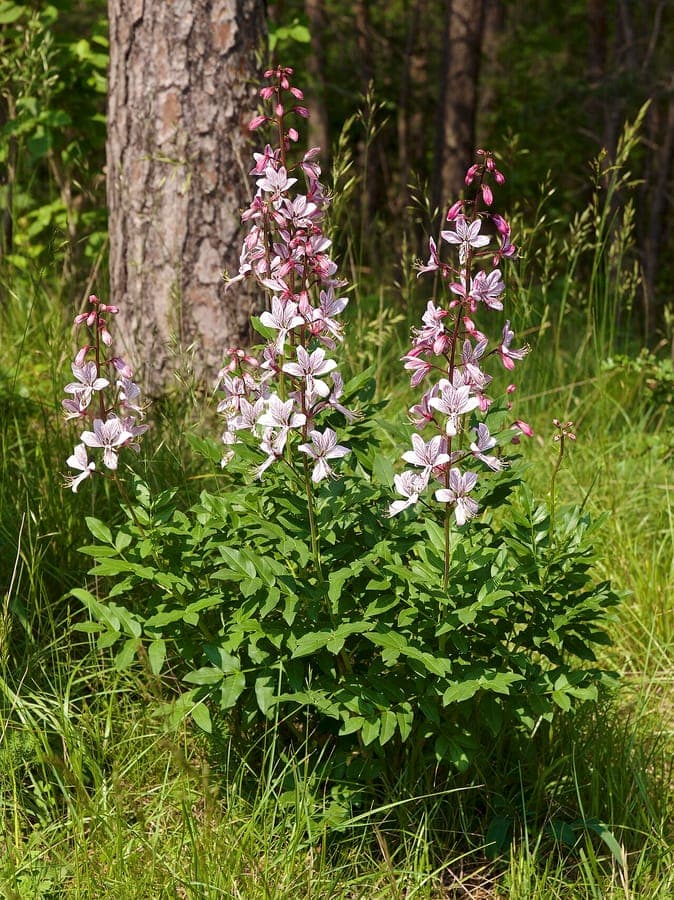
Jörg Hempel / CC BY-SA 3.0 de, via Wikimedia Commons
Burningbush: complete guide
Dictamnus albus
Want to see Burningbush: complete guide in your garden?
1 minute, no credit card
Overview
Dictamnus albus, commonly known as Burningbush, is a bold and aromatic perennial that brings drama to sun-drenched borders. Despite the fiery name - inspired by tales of its volatile oils igniting in hot sun - actual combustion is extremely rare. What's not rare is its striking presence: upright form, citrus-scented foliage, and tall flower spikes that bloom in early summer. This plant is a slow starter but rewards patience with years of reliable performance.
Native to rocky slopes across southeastern Europe, Burningbush thrives in well-drained, alkaline soils and full sun. It grows 60–100 cm tall and develops a deep, woody rootstock that dislikes disturbance. Once planted, it's best left undisturbed - moving it often leads to failure.
On gardenworld.app, you can design a border layout that fits Burningbush perfectly, factoring in root depth and companion spacing.
Appearance & bloom cycle
Burningbush features pinnate, fern-like leaves with 5–7 leaflets, giving it a fine-textured look. The foliage is dark green and emits a strong lemon or bergamot scent when brushed. This aroma comes from oil glands on the leaves, which also make the plant deer and rabbit resistant.
From late June to mid-July, it sends up dense racemes of white or pale pink flowers, 15–25 cm long. Each spike holds 20–30 individual blooms with a distinctive two-lipped structure, resembling miniature lupines. The flowers are highly attractive to bees and hoverflies. After blooming, seed pods form and dry slowly, often ejecting seeds up to a meter away when mature.
This plant blooms only once per season and doesn't rebloom, so timing is key. Avoid cutting back too early - wait until after seeds have dispersed if you want self-sowing.
Ideal location
Burningbush needs at least 6 hours of direct sun daily (light level 6–10). A south- or west-facing spot works best. It tolerates light shade but will grow leggy and flower poorly. Avoid low-lying areas where water collects; this plant hates wet feet, especially in winter.
It's ideal for gravel gardens, rockeries, or the middle of a mixed border. Because it's slow to establish, give it space - at least 50 cm from neighbors. Avoid planting beneath dense tree canopies or near aggressive spreaders like mint or bamboo.
Check sun exposure patterns on gardenworld.app to ensure your site gets enough light for strong growth.
Free design
Want to see Burningbush: complete guide in your garden? Make a free design now.
Soil requirements
This plant demands alkaline soil with a pH between 7.5 and 8.0. It struggles in acidic conditions - yellowing leaves are a common sign of low pH. Amend acidic soils with ground limestone before planting.
The soil must be sharply drained. Mix in grit, sand, or small gravel if planting in clay. Avoid rich compost-heavy mixes; too much organic matter encourages weak growth and rot. A lean, rocky substrate mimics its natural habitat.
Watering
Water regularly during the first growing season, especially in dry spells. After that, Burningbush is highly drought tolerant. Established plants rarely need supplemental water unless facing prolonged drought (3+ weeks without rain).
When you do water, soak deeply to encourage deep rooting. Never let the base sit in water. Overhead watering in cool, humid weather increases fungal risk.
Pruning
Pruning isn't necessary. Only remove dead or damaged stems in early spring before new growth emerges. Avoid cutting into old wood - the plant doesn't regenerate well from hard pruning.
Leave seed heads intact through winter for visual interest and self-seeding. If you want to prevent spread, cut stems down after flowering.
Maintenance calendar
- Jan: Check for winter damage, keep area clear of wet mulch
- Feb: Inspect root zone, avoid foot traffic
- Mar: Light cleanup, no feeding
- Apr: Watch for slugs, water if dry
- May: Monitor for bud development, reduce irrigation
- Jun: Bloom begins, ensure good air circulation
- Jul: Peak flowering, enjoy pollinators
- Aug: Seed maturation, avoid soil disturbance
- Sep: Seeds disperse, seedlings may appear
- Oct: Cut back or leave for winter structure
- Nov: Final moisture check
- Dec: Protect from ice buildup, no pruning
Winter hardiness
Burningbush is hardy in USDA zones 4–8 (-34°C to -12°C). In zone 7 and above, it overwinters easily. Top growth dies back completely in fall; the rootstock survives underground. Avoid moist mulches - use dry leaves or straw if needed. Wet crowns lead to rot.
Companion plants
Pair with other drought-tolerant sun-lovers: Salvia x sylvestris, Echinacea, ornamental grasses like Panicum, or Allium. These share similar soil and water needs. Avoid plants that require frequent division or heavy feeding, as digging nearby can damage Burningbush roots.
Try planting combos on gardenworld.app to visualize spacing and seasonal interest.
Closing
Burningbush isn't for impatient gardeners - it takes 2–3 years to settle and bloom well. But once established, it's a low-maintenance standout. Buy from trusted garden centres, avoid overwatering, and give it space. With the right start, it can thrive for 10+ years in your garden.
Want to see Burningbush: complete guide in your garden? Make a free design now.
Upload a photo, pick a style, and get a photorealistic design with plant list in under a minute.
No credit card required


Similar plants
Thamnosma montana: complete guide
Thamnosma montana
Everything about Thamnosma montana, the aromatic turpentine broom from the Mojave Desert. Location, soil, care and companion planting explained.
Narrow-leaved fringed rue: complete guide
Ruta angustifolia
Everything about Ruta angustifolia: location, soil, watering, pruning and winter care for this Mediterranean subshrub.
Mountain rue: complete guide
Ruta montana
A complete guide to Ruta montana: best location, soil, watering, pruning and overwintering of this aromatic Mediterranean subshrub.