
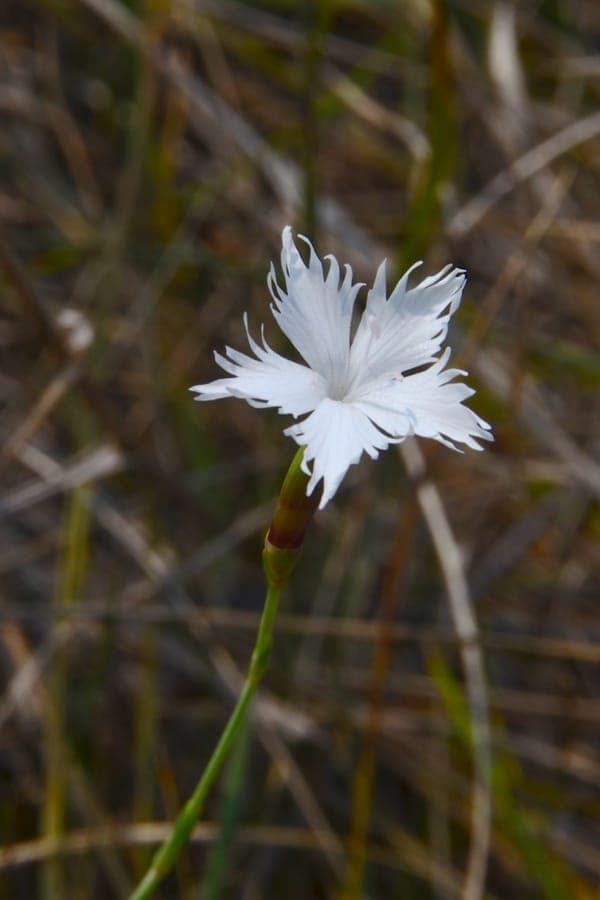
Radio Tonreg from Vienna, Austria / CC BY 2.0, via Wikimedia Commons
Late pink: complete guide
Dianthus serotinus
Want to see Late pink: complete guide in your garden?
1 minute, no credit card
Overview
Late pink (Dianthus serotinus) is a rare and elegant alpine plant native to central Europe, particularly Austria, Hungary and the Balkans. This compact plant is known for its delicate pink to red flowers that appear late in the season (August-September).
The plant forms a compact, dense cushion of fine-leaved vegetation. It grows only 15-30 centimeters high and remains very compact. Late pink is frost-hardy and ideal for rock gardens and alpine borders.
Appearance and bloom
Late pink has very fine, linear (thread-like) leaves that are green in color. The leaves form dense, compact cushions. The plant reaches a maximum height of 25 centimeters.
The flowers are pink to red in color, often with darker spots or bands. The flowers are about 1-1.5 centimeters in diameter. The scent is pleasant and delicate.
Blooming takes place from August to October, which is late in the season.
Ideal location
Late pink grows best in a full sun location. A minimum of six hours of direct sunlight per day is necessary. The plant can also grow in light shade, but will be less floriferous.
Ensure an open, well-ventilated spot. The plant appreciates dryness in moderation. Avoid dense shade.
Soil
Late pink is very undemanding regarding soil type. The plant grows best in well-draining, moderately fertile soil. Sand, gravel and fine gravel are ideal.
The plant does not tolerate fertile soil well. Neutral to slightly alkaline soil is preferred.
Free design
Want to see Late pink: complete guide in your garden? Make a free design now.
Watering
Once established, late pink is very drought-tolerant. After planting, water regularly until the plant is well-established (approximately one season). After that, additional watering is not necessary.
In container cultivation, water regularly. Ensure water drains well. Excessive water is harmful.
Pruning
Late pink undergoes minimal pruning. Remove only dead or damaged leaves. The plant naturally maintains a compact form.
After blooming, spent flowers can be removed to keep the plant tidier.
Maintenance calendar
Spring (March-May): Minimal care needed. Plant begins to grow. No feeding necessary.
Summer (June-July): Water regularly during dry periods. Plant grows slowly.
Fall (August-October): Plant blooms. Reduce watering. No feeding.
Winter (November-February): Minimal care. Plant is dormant. Frost-hardy.
Winter hardiness
Late pink is exceptionally frost-hardy. The plant tolerates temperatures down to minus 20 degrees Celsius. Throughout Europe, the plant grows without special winter protection.
Even young plants tolerate frost well.
Companion plants
Late pink combines beautifully with other alpine plants: sedums, saxifrages, alpine primulas. It also works well with silver-leaved plants.
The pink to red flowers look nice together with other mountain plants.
Conclusion
Late pink is an elegant choice for rock gardens and alpine borders. The late blooming period makes it unique among Dianthus species. For garden design enthusiasts who want alpine beauty, late pink is an excellent choice. Where to buy: Specialized alpine nurseries have this available online.
Want to see Late pink: complete guide in your garden? Make a free design now.
Upload a photo, pick a style, and get a photorealistic design with plant list in under a minute.
No credit card required


Similar plants
Dianthus karami: complete guide
Dianthus karami
Dianthus karami is a rare Lebanese mountain pink with fringed pink blooms on limestone cliffs, ideal for rock gardens and troughs.
Sicilian pink: complete guide
Dianthus siculus
Discover Dianthus siculus, an elegant purple bloomer from Sicily. Cultivation, June-September flowering and garden combinations.
Alpine mouse-ear chickweed: complete guide
Cerastium pedunculatum
Full growing guide for Cerastium pedunculatum: ideal location, soil, watering, winter hardiness, and companion plants for rock gardens.