
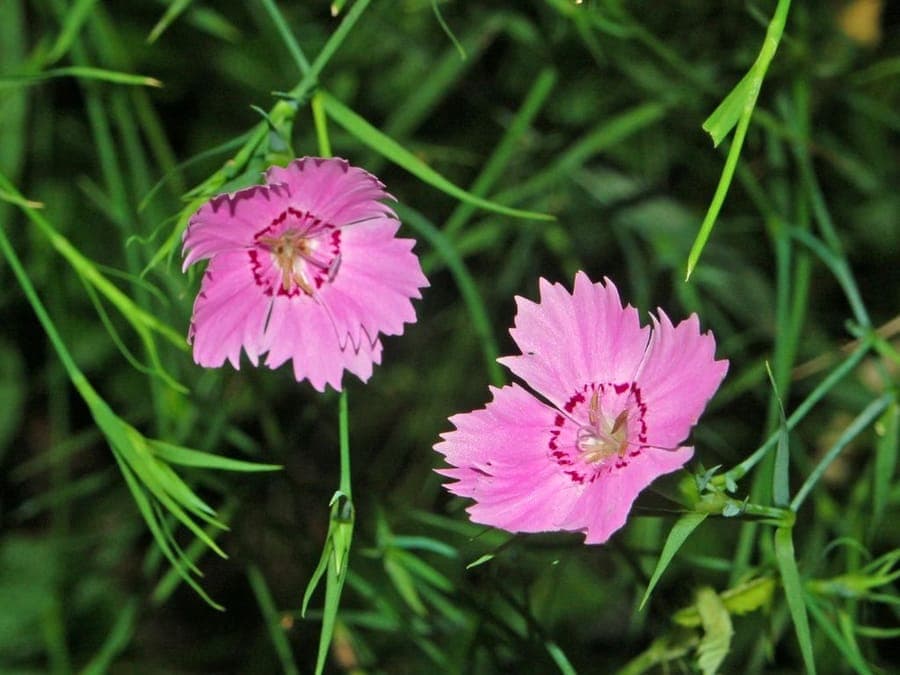
Hectonichus / CC BY-SA 3.0, via Wikimedia Commons
Ragged pink: complete guide
Dianthus seguieri
Want to see Ragged pink: complete guide in your garden?
1 minute, no credit card
Overview
Dianthus seguieri, commonly known as Ragged pink, is a hardy perennial forb native to the grasslands and hills of southern Europe. Found naturally in France, Italy, Spain, and Switzerland, it's a resilient plant that brings a soft, wild charm to sunny garden borders. Belonging to the Caryophyllaceae family, it's closely related to pinks and carnations but with a more modest, naturalised appearance. If you're after a low-maintenance, long-blooming plant that thrives in dry conditions, this is one to consider.
On gardenworld.app, you can design a border layout that highlights the airy texture and bloom rhythm of Dianthus seguieri. It works especially well in gravel gardens or between paving stones.
Appearance & bloom cycle
This herbaceous plant grows 25–40 cm tall with a spread of up to 30 cm. The foliage is narrow, linear, and grey-green, forming low clumps from which slender, upright stems rise. From June to August, it produces loose clusters of 3–4 cm wide flowers in a soft, rich purple. What sets it apart is the deeply fringed or 'ragged' edges of the petals - a trait that gives the plant its common name.
The blooms have a light, clove-like fragrance, most noticeable in the evening. While the peak bloom is in July, deadheading encourages a second flush in late summer. Individual plants can live 4–6 years with proper care, slowly spreading by seed but not aggressively.
Ideal location
Full sun is non-negotiable for Dianthus seguieri. It needs at least 6 hours of direct sunlight daily to flower well. In partial shade, stems become leggy and flowering diminishes. Ideal spots include dry borders, rock gardens, or the front of sunny perennial beds.
Avoid sheltered, humid corners where airflow is limited. Good air circulation prevents fungal diseases. If you're planning a new border, use gardenworld.app to map light patterns across your garden and find the sunniest zones.
Soil requirements
Well-drained soil is essential. Sandy or gravelly loam works best. The plant tolerates poor soils and prefers a pH between 6.0 and 7.5. Heavy clay or water-retentive soils must be amended with grit or coarse sand to improve drainage.
Avoid rich, compost-heavy mixes - too much organic matter leads to lush foliage but fewer flowers. A light gravel mulch helps suppress weeds and keeps the crown dry, which is crucial in winter.
Free design
Want to see Ragged pink: complete guide in your garden? Make a free design now.
Watering
Once established, Dianthus seguieri is drought-tolerant. Water young plants weekly during the first growing season, especially in dry spells. After that, natural rainfall is usually sufficient. When you do water, soak the base deeply but infrequently - about once every 7–10 days during prolonged drought.
Overwatering is a common mistake. Wet foliage invites fungal issues like powdery mildew. Water in the morning so leaves dry by evening.
Pruning
Deadhead regularly from June through August to prolong blooming. Cut spent flowers just above a leaf node with clean snips. In autumn, trim back any remaining stems to 5 cm above ground level to tidy the plant and reduce disease risk.
Avoid heavy pruning in late fall; the remaining stubs can trap moisture. A light spring clean-up is safer if the plant looks messy.
Maintenance calendar
- Jan: Check for crown rot in wet winters.
- Feb: No action needed.
- Mar: Remove old foliage; prepare soil for new growth.
- Apr: Light feeding with low-nitrogen fertiliser (optional).
- May: Monitor young plants for slugs; water if dry.
- Jun: Bloom begins; deadhead to encourage repeat flowering.
- Jul: Peak bloom; watch for aphids.
- Aug: Continue deadheading; check soil moisture.
- Sep: Allow late blooms to set seed or cut back for neatness.
- Oct: Leave some seed heads for birds; apply gravel mulch.
- Nov: Ensure drainage is clear; avoid wet crowns.
- Dec: Minimal care; protect from waterlogging.
Winter hardiness
Dianthus seguieri is hardy in USDA zones 5 to 8. In zone 7 (most of the UK and Pacific Northwest), it survives winter with no protection if the soil drains well. In colder zones, a light mulch of grit or crushed stone helps prevent frost heave.
The plant dies back in winter but re-sprouts from the base in spring. Avoid organic mulches like bark or compost - they hold moisture and can rot the crown.
Companion plants
Pair with drought-tolerant perennials like Salvia nemorosa, Verbena bonariensis, or Eryngium. These share similar sun and soil needs and extend the bloom season. Low-growing sedums and grasses like Festuca ovina also complement its texture.
Avoid moisture-loving plants like hostas or astilbes, as their watering needs conflict with Dianthus. Stick to a dry, sunny planting scheme for best results.
Closing
Dianthus seguieri brings subtle beauty and resilience to the summer garden. Its fringed pink blooms and tidy habit make it a standout in low-water landscapes. Whether you're refreshing a border or designing a new gravel garden, this plant deserves a spot.
Find it at garden centres across the UK and US. Look for reputable suppliers who label plants with the full botanical name to avoid mix-ups with similar Dianthus species.
Want to see Ragged pink: complete guide in your garden? Make a free design now.
Upload a photo, pick a style, and get a photorealistic design with plant list in under a minute.
No credit card required


Similar plants
Dianthus karami: complete guide
Dianthus karami
Dianthus karami is a rare Lebanese mountain pink with fringed pink blooms on limestone cliffs, ideal for rock gardens and troughs.
Sicilian pink: complete guide
Dianthus siculus
Discover Dianthus siculus, an elegant purple bloomer from Sicily. Cultivation, June-September flowering and garden combinations.
Alpine mouse-ear chickweed: complete guide
Cerastium pedunculatum
Full growing guide for Cerastium pedunculatum: ideal location, soil, watering, winter hardiness, and companion plants for rock gardens.