
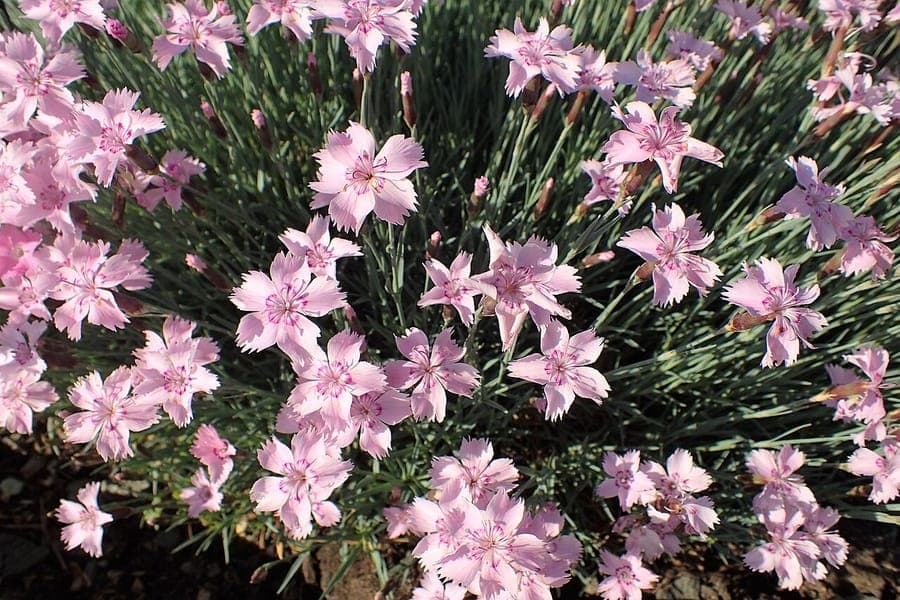
Krzysztof Ziarnek, Kenraiz / CC BY-SA 4.0, via Wikimedia Commons
Clove pink: complete guide
Dianthus plumarius
Want to see Clove pink: complete guide in your garden?
1 minute, no credit card
Overview
Dianthus plumarius, commonly known as Clove pink, is a cherished perennial that brings old-world charm and modern resilience to garden borders. Native to rocky slopes in Austria, Hungary, Italy and former Yugoslavia, this herbaceous plant has adapted to harsh, dry conditions-making it a reliable performer in UK, US and European gardens alike. Growing 20–30 cm tall and spreading 25–35 cm, it forms neat, cushion-like mounds of narrow, grey-green evergreen foliage. The plant belongs to the Caryophyllaceae family and is especially loved for its fragrant, spiced-scented blooms that resemble cloves-hence the common name.
Clove pink thrives in cottage gardens, rockeries and gravel beds. It's perfect for edging paths or tucking between stones. Once established, it asks for little but gives plenty in return: months of flowers, pollinator appeal and year-round structure. Whether you're a beginner or a seasoned gardener, this is a plant that earns its place.
On gardenworld.app, you can design a layout that highlights Clove pink in a drought-tolerant planting scheme, helping you visualise spacing and companion choices.
Appearance & bloom cycle
The flowers of Dianthus plumarius appear from May to June, sitting proudly above the foliage on sturdy stems. The blooms are typically deep purple with fringed, notched petals-classic dianthus form. Some varieties may have pink or white edges, adding subtle contrast. The scent is spicy and aromatic, often strongest in the morning and evening.
Each flower lasts around 7–10 days, but deadheading promptly can encourage a lighter second flush in late summer. This isn't guaranteed, but it's worth the effort. The narrow, linear leaves remain evergreen through winter, forming a low, dense mat that suppresses weeds and adds texture even when not in bloom.
Ideal location
Full sun is non-negotiable. Clove pink needs at least 6 hours of direct sunlight daily to bloom well and stay compact. In partial shade, the plant becomes leggy, flops over and is more prone to fungal diseases like rust. A south- or west-facing spot is ideal. Avoid sites with reflected heat from walls unless there's good airflow-stuffy, humid microclimates invite disease.
This plant excels in rock gardens, raised beds, or between paving stones. If you're planting in a humid region, ensure morning sun hits the foliage to dry dew quickly. Good air circulation is just as important as light.
On gardenworld.app, you can upload your garden photo and simulate how sunlight moves across your space-perfect for placing Clove pink where it'll thrive.
Soil requirements
Drainage is everything. Clove pink hates wet feet. It prefers lean, gritty, alkaline to neutral soil (pH 6.5–7.5). Heavy clay or water-retentive soils must be amended with horticultural grit, coarse sand or small gravel. A 5–10 cm drainage layer at the base of the planting hole makes a big difference.
Avoid rich compost or manure-too much fertility leads to lush foliage but fewer flowers. Instead, use a top dressing of gravel or crushed oyster shell to keep the crown dry and the look tidy.
Free design
Want to see Clove pink: complete guide in your garden? Make a free design now.
Watering
Water regularly during the first six weeks after planting, especially in dry springs. Once established, Clove pink is highly drought tolerant. Mature plants rarely need supplemental watering, except during prolonged dry spells (3+ weeks without rain). When you do water, soak deeply at the base-never wet the foliage.
Overwatering is the number one cause of failure. If in doubt, wait. These plants prefer to dry out between drinks.
Pruning
Deadheading is key. After the main bloom in June, cut back flower stems to just above the foliage. This prevents seed formation and encourages bushier growth. Use sharp, clean secateurs to avoid disease.
In early spring (March), lightly trim back any winter-damaged leaves or straggly growth. Don't cut into old wood-this plant doesn't regenerate well from bare stems. A light trim keeps the mound tight and healthy.
Maintenance calendar
- January–February: Check for frost damage. Remove any dead leaves.
- March: Light pruning. No feeding needed.
- April: Watch for new growth. Water if spring is dry.
- May–June: Peak bloom. Deadhead weekly.
- July: Cut back spent flower stems. Water only in drought.
- August–September: Possible second bloom. Monitor for pests.
- October–December: Leave undisturbed. Foliage protects the crown.
Winter hardiness
Clove pink is hardy in USDA zones 3–8. It can survive temperatures down to -40°C if the soil drains well. In zones 7–8 (most of the UK and US mid-Atlantic), it overwinters easily. The main threat is wet, frozen soil-so avoid mulching with moisture-retaining materials like bark or leaves.
In containers, plants are more vulnerable. Elevate pots on feet to prevent waterlogging, and place them against a sheltered wall. Avoid winter wet at all costs.
Companion plants
Pair Clove pink with other sun-loving, drought-tolerant perennials. Good companions include Lavender (Lavandula angustifolia), Catmint (Nepeta), Sedum 'Autumn Joy', and Thyme (Thymus vulgaris). The contrasting textures-spiky, fuzzy, fleshy-create visual interest.
Avoid invasive spreaders like mint or goldenrod. Stick to well-behaved plants that won't smother the clove pink's tidy form.
Closing
Dianthus plumarius is a low-maintenance, high-reward plant. It blooms reliably, smells divine, and survives tough conditions. With proper placement and minimal care, it'll return year after year. Buy healthy plants from garden centres in late spring-look for compact, unflowered specimens with no yellowing leaves. Brands like Intratuin, Gamma, OBI and Hornbach often carry it, but local independents may have better stock. And remember: on gardenworld.app, you can plan your entire border around Clove pink, get planting tips, and set seasonal reminders for deadheading and pruning.
Want to see Clove pink: complete guide in your garden? Make a free design now.
Upload a photo, pick a style, and get a photorealistic design with plant list in under a minute.
No credit card required


Similar plants
Dianthus karami: complete guide
Dianthus karami
Dianthus karami is a rare Lebanese mountain pink with fringed pink blooms on limestone cliffs, ideal for rock gardens and troughs.
Sicilian pink: complete guide
Dianthus siculus
Discover Dianthus siculus, an elegant purple bloomer from Sicily. Cultivation, June-September flowering and garden combinations.
Alpine mouse-ear chickweed: complete guide
Cerastium pedunculatum
Full growing guide for Cerastium pedunculatum: ideal location, soil, watering, winter hardiness, and companion plants for rock gardens.