
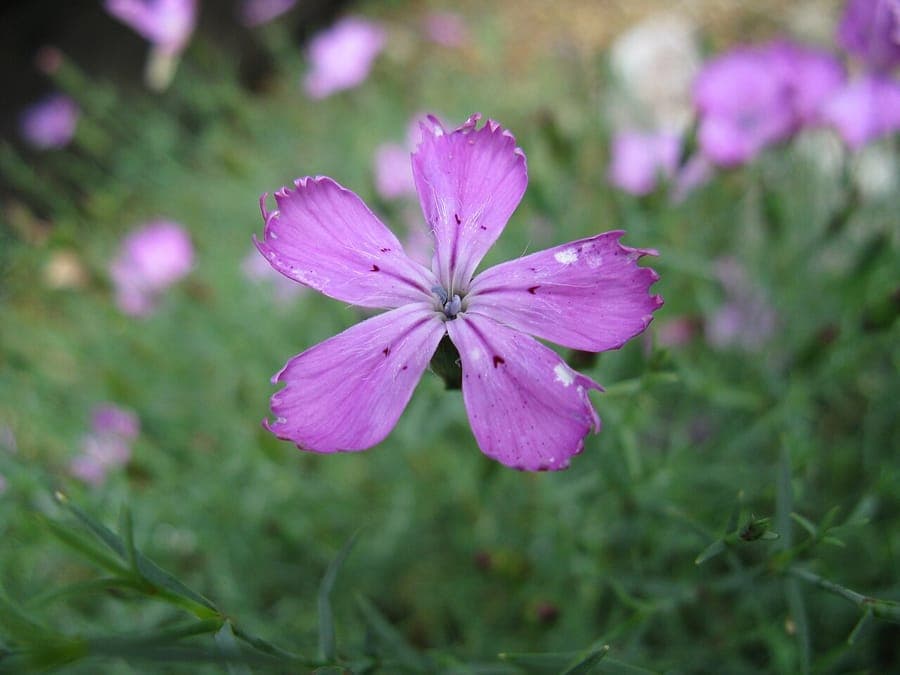
KENPEI / CC BY-SA 3.0, via Wikimedia Commons
Dianthus nardiformis: complete guide
Dianthus nardiformis
Want to see Dianthus nardiformis: complete guide in your garden?
1 minute, no credit card
Overview
Dianthus nardiformis, commonly known as Garofiță pitică or dwarf carnation, is a fascinating alpine dianthus from the Caryophyllaceae family. Native to Eastern Europe, particularly the mountain regions of Romania and Bulgaria, this unique mountain plant is beloved by alpine flora specialists for its extreme compactness and charming purple flowers.
Dianthus nardiformis is ideal for gardeners wanting to cultivate the most compact alpine plants. With its densely packed rosette pattern and long flowering period, this plant is perfect for rock gardens, alpine troughs, and small containers. The plant tolerates severe mountain conditions and is extremely hardy.
Appearance and Bloom
Dianthus nardiformis grows into an extremely compact, densely packed plant reaching only 10-15 cm in height with a diameter of about 15-20 cm. The leaves are extremely fine, almost needle-like, stiff and dark green, forming a characteristic, very densely growing rosette pattern. This almost cactus-like appearance makes the plant highly suitable for small spaces and alpine troughs.
Flowers appear in pink to red-purple tones, carried as single blooms. They have a pleasant spicy fragrance. The flowering period extends from July to September, providing an exceptionally long blooming period for an alpine carnation. The flowers are small but numerous, creating a beautiful color effect above the compact foliage.
Ideal Location
Dianthus nardiformis thrives in full sun locations with a minimum of 6-8 hours of direct sunlight daily. The plant prefers even more sun and grows well in very sunny mountain positions. Full sun ensures optimal blooming and extremely compact growth. Plant the dwarf carnation on south-facing slopes with full sunny exposure.
The plant is highly suitable for rock gardens, alpine troughs, and very small containers. It also grows well on stone walls and in crevices where dry, well-draining soils exist. Avoid shady places completely, where the plant will grow weak and flower poorly.
Free design
Want to see Dianthus nardiformis: complete guide in your garden? Make a free design now.
Soil
Dianthus nardiformis requires very well-draining soil and cannot tolerate wet conditions. A mixture of porous sand, gravel, and minimal peat moss or compost serves as an ideal growing medium. The plant grows best in alpine growing medium specially designed for mountain plants. Heavy clay soils must be substantially improved with minerals and sand.
Soil pH can range from acidic to neutral (pH 5.5-7.5). The key requirement is excellent drainage. In container cultivation, alpine potting soil or a mixture with perlite and sand works best.
Watering
Once established, Dianthus nardiformis is very drought-tolerant and requires only minimal supplemental watering. Water thoroughly at planting and keep the soil moist until roots are deeply established, usually 2-3 weeks. Afterward, water only during prolonged drought.
In containers, you must be more careful with water than in rock gardens. Let the soil nearly dry out between waterings. The plant tolerates drought much better than wet soil.
Pruning
Dianthus nardiformis requires minimal pruning and maintenance. After flowering, spent flowers can be carefully removed. Avoid heavy pruning, which can weaken the plant. The plant naturally forms a perfect, compact growth pattern.
Annual maintenance is minimal thanks to the plant's very robust nature.
Maintenance Calendar
Spring: Plant outdoors after the frost period. Water carefully. Summer: Minimal watering. Check for pests. Autumn: Growth slows. Reduce watering. Winter: Minimal watering. Check container plants for adequate moisture.
Winter Hardiness
Dianthus nardiformis is extremely hardy to zone 3 (-40°C) and thus very suitable for even colder regions. The plant can remain outdoors in virtually all European climates. In very wet winters, problems can occur if the soil does not drain well.
Companion Plants
Dianthus nardiformis grows well alongside other very compact alpine plants such as sedums, saxifrages, and very small alpine phlox. In rock gardens, it combines well with yellow alpine flowering plants. Plant it with other very drought-tolerant mountain plants.
Closing
Dianthus nardiformis is a wonderful plant that brings genuine mountain character to your garden. This extremely compact alpine jewel combines beauty, drought tolerance, and reliability. Start growing this fascinating alpine plant today. Discover how alpine flora can transform your garden on gardenworld.app. Read more plant guides on gardenworld.app and find your next favorite mountain plant today.
Want to see Dianthus nardiformis: complete guide in your garden? Make a free design now.
Upload a photo, pick a style, and get a photorealistic design with plant list in under a minute.
No credit card required


Similar plants
Dianthus karami: complete guide
Dianthus karami
Dianthus karami is a rare Lebanese mountain pink with fringed pink blooms on limestone cliffs, ideal for rock gardens and troughs.
Sicilian pink: complete guide
Dianthus siculus
Discover Dianthus siculus, an elegant purple bloomer from Sicily. Cultivation, June-September flowering and garden combinations.
Alpine mouse-ear chickweed: complete guide
Cerastium pedunculatum
Full growing guide for Cerastium pedunculatum: ideal location, soil, watering, winter hardiness, and companion plants for rock gardens.