
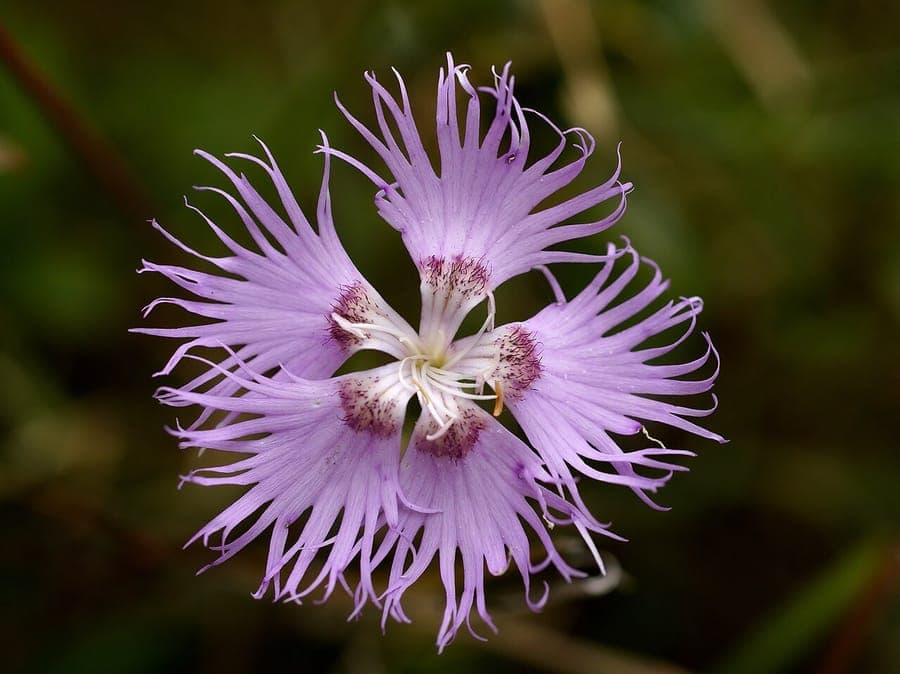
Hans Hillewaert / CC BY-SA 3.0, via Wikimedia Commons
Fringed pink: complete guide
Dianthus hyssopifolius
Want to see Fringed pink: complete guide in your garden?
1 minute, no credit card
Overview
Fringed pink (Dianthus hyssopifolius) is a creeping perennial native to rocky slopes in southern France, Portugal, and Spain. It thrives in harsh, dry conditions where many other plants struggle. With a compact growth habit reaching just 10–15 cm in height and spreading up to 30 cm wide, this plant fits perfectly in rock gardens, wall crevices, or as a ground cover in well-drained borders. It's a member of the Caryophyllaceae family, closely related to carnations and pinks, but far more delicate in appearance.
The plant forms tight mats of narrow, needle-like evergreen foliage that stays fresh year-round in mild climates. Its common name comes from the finely fringed edges of its pink flowers, which bloom in early to mid-summer. Unlike showier Dianthus varieties, this species has a wild, natural charm that works beautifully in informal or alpine-style gardens. On gardenworld.app, you can design a planting scheme that highlights its texture and seasonal rhythm without overcrowding.
Appearance & bloom cycle
Fringed pink has stiff, linear leaves that are dark green to grey-green, densely packed along trailing stems. The foliage emits a faint spicy scent when brushed, typical of many Dianthus species. From late May to mid-August, depending on the climate, it produces clusters of small, fragrant flowers on short stems just above the foliage.
Each flower is about 2–3 cm across, with five notched petals in soft pink to magenta, deepening toward the center. The edges are finely cut, giving the bloom a lacy, ruffled look - hence "fringed." The scent is mild but noticeable on warm afternoons. After blooming, seed capsules develop and split open in autumn, potentially self-seeding in gravelly or sandy areas.
Ideal location
Full sun is non-negotiable. This plant needs at least 6–8 hours of direct sunlight daily to bloom well and stay compact. In partial shade, it becomes leggy, blooms sparsely, and is more prone to fungal issues. South- or west-facing slopes, rock walls, or raised beds with good air circulation are ideal.
In cooler, wetter regions (like the UK or Pacific Northwest), grow it in a raised bed or container to ensure proper drainage. Urban gardeners can use it along paved paths or in troughs where reflected heat boosts performance. If you're planning a Mediterranean-inspired garden, check gardenworld.app for layout ideas that pair this plant with drought-tolerant companions.
Soil requirements
Well-drained soil is critical. Heavy clay or water-retentive soils will cause root rot, especially in winter. The ideal mix is gritty: amend garden soil with coarse sand, perlite, or crushed gravel (up to 30%). A pH between 6.5 and 8.0 is tolerated, with a preference for neutral to slightly alkaline conditions.
If planting in a rock garden, add a 5–10 cm layer of drainage material like scoria or broken brick beneath the topsoil. For containers, use a cactus or alpine mix with extra perlite. Avoid peat-based soils that hold too much moisture.
Free design
Want to see Fringed pink: complete guide in your garden? Make a free design now.
Watering
Once established, Fringed pink is highly drought-tolerant. Water young plants weekly during their first growing season, especially in dry spells. After that, rain is usually sufficient. In prolonged drought (3+ weeks without rain), give a deep soak every 10–14 days.
Always water at the base to keep foliage dry and prevent fungal diseases. Overhead watering should be avoided. In containers, check soil moisture by inserting a finger 2–3 cm deep - water only if dry. A light topdressing of gravel helps reduce evaporation without trapping moisture.
Pruning
Pruning is minimal but beneficial. After flowering ends (late August to early September), shear the plant back by half or to about 5 cm above the ground. This encourages dense new growth and prevents the center from becoming woody and bare.
Use clean, sharp shears and disinfect between cuts if disease is suspected. Deadheading during bloom can extend flowering slightly, but isn't essential. Avoid heavy pruning in late autumn, as new growth may not harden before winter.
Maintenance calendar
- January: Dormant. Check for heaving in frost-prone areas.
- February: Monitor for rot in wet winters; ensure snow doesn't linger.
- March: Remove any dead foliage; prepare soil for new growth.
- April: Watch for seedlings; thin or transplant as needed.
- May: Apply a light application of low-nitrogen, slow-release fertiliser (once only).
- June–July: Peak bloom. Water only if extremely dry.
- August: Cut back after flowering. Rake lightly to remove debris.
- September: Reduce watering. Avoid feeding.
- October–December: Leave undisturbed. Mulch lightly with gravel in exposed sites.
Winter hardiness
Fringed pink is hardy in USDA zones 6b to 9. In zone 6b, it may need winter protection such as a dry mulch of evergreen boughs or straw. In zones 7–9, it typically survives with no care, provided the soil drains well.
Wet winter soil is the biggest threat - not cold. In rainy climates, elevate the planting site or use containers that can be moved. Potted plants should be placed on feet and wrapped in bubble wrap during hard freezes.
Companion plants
Pair with other sun-loving, drought-tolerant perennials. Excellent choices include Thymus vulgaris, Sedum rupestre, Helianthemum, and Cerastium tomentosum. Avoid moisture-loving plants like astilbe or ferns.
Lavender, nepeta, and small alliums create a harmonious look. For a curated planting plan, visit gardenworld.app and use the companion finder tool to match growth rates and water needs.
Closing
Fringed pink is a quiet standout - not flashy, but endlessly reliable and beautiful in the right setting. Its low profile, long bloom time, and pollinator appeal make it a smart choice for sustainable gardens. It's especially useful in challenging spots where soil is thin and dry.
You can find Dianthus hyssopifolius at garden centres across the UK and US, particularly in spring. Independent nurseries and alpine plant specialists often carry it. If you're unsure about spacing or design, gardenworld.app offers visualisation tools to help you place it perfectly in your garden layout.
Want to see Fringed pink: complete guide in your garden? Make a free design now.
Upload a photo, pick a style, and get a photorealistic design with plant list in under a minute.
No credit card required


Similar plants
Dianthus karami: complete guide
Dianthus karami
Dianthus karami is a rare Lebanese mountain pink with fringed pink blooms on limestone cliffs, ideal for rock gardens and troughs.
Sicilian pink: complete guide
Dianthus siculus
Discover Dianthus siculus, an elegant purple bloomer from Sicily. Cultivation, June-September flowering and garden combinations.
Alpine mouse-ear chickweed: complete guide
Cerastium pedunculatum
Full growing guide for Cerastium pedunculatum: ideal location, soil, watering, winter hardiness, and companion plants for rock gardens.